
Main Courses
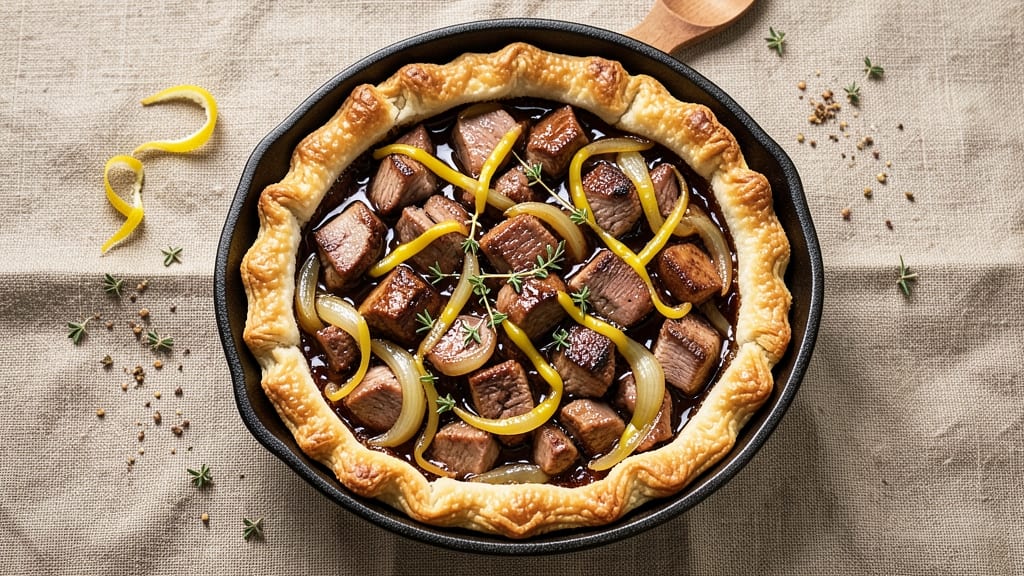
This pork pie crust recipe delivers the perfect balance of flaky, golden pastry and rich, spiced pork filling—just like my grandmother used to make. The secret lies in using a mix of lard and butter for the crust, creating that signature crispness while keeping it tender.
I've perfected this technique over years of making pies for family gatherings, where it always disappears first.
The filling transforms simple pork shoulder into tender, flavorful meat that practically melts in your mouth. Seasoned with a blend of mustard, thyme, and black pepper, it develops deep umami flavors as it slow-cooks.
The crust, rolled out and sealed with egg wash, achieves that coveted golden-brown finish that makes every bite worth it.
What you'll end up with is a restaurant-quality pork pie that's crisp on the outside, tender on the inside, and packed with savory goodness. The aroma alone will have everyone gathering around your table. This recipe combines tradition with approachable techniques, so you can achieve professional results without the fuss.
Serve it with a dollop of mustard or gravy for the full experience—just like we do at Smoky Pig. The combination of the flaky crust and rich filling makes this pie a showstopper for any occasion. Let's get started on creating your own perfect pork pie.
Ingredients for pork pie crust
These ingredients create a restaurant-quality pork pie with flaky crust and tender spiced filling.
| Ingredient | Amount | Notes |
|---|---|---|
| Pork Shoulder 🥓 | 3 lb | Bone-in, cut into 1-inch cubes |
| All-Purpose Flour 🌾 | 3 cups | Plus 1 tbsp for dusting |
| Unsalted Butter 🧈 | ½ cup | Cold, cubed |
| Lard 🧈 | ½ cup | Leaf lard preferred |
| Yellow Onion 🧅 | 1 whole | Medium, finely chopped |
| Yellow Mustard 🍯 | 2 tbsp | Dijon style preferred |
| Fresh Thyme 🌿 | 1 tbsp | Leaves only, finely chopped |
| Ground Black Pepper 🌶️ | 1 ½ tsp | Freshly cracked |
| Large Eggs 🥚 | 1 whole | For egg wash |
| Salt 🧂 | 1 ½ tsp | Kosher or sea salt |
| Granulated Sugar 🍚 | 1 tsp | For egg wash |
| Beef Stock 💧 | ½ cup | Low-sodium preferred |
| Vegetable Oil 🫒 | 2 tbsp | For greasing pan |
| Ice Water ❄️ | ½ cup | For dough handling |
The pork shoulder is the star—look for cuts with good marbling at Whole Foods or your local butcher. Bone-in gives more flavor, but boneless works too if you're in a hurry. For the crust, the lard-butter combo is non-negotiable—leaf lard gives the best flakiness, but regular lard works in a pinch. I always grab my flour from King Arthur because it's consistent, but any all-purpose will do. The mustard and thyme might be in your pantry, but if not, the spice aisle at Trader Joe's has great fresh options.
No leaf lard? Coconut oil works in a bind, though it won't be quite as flaky. Short on mustard? Dijon mustard plus a pinch of sugar mimics the tang. Fresh thyme is ideal, but dried at one-third the amount gets you close. The beef stock can be swapped for chicken stock or even water, though it'll be less rich. For the crust, if your butter isn't cold enough, pop it in the freezer for 10 minutes before mixing. And if you're making this ahead, the filling keeps 3 days in the fridge—perfect for prepping.
The crust dough needs to chill for at least 1 hour before rolling, so plan ahead. Store any leftover filling in an airtight container for 3 days or freeze for 3 months. The crust can be pre-made and frozen between parchment paper for 2 months—just thaw overnight in the fridge before using. I always make extra filling because it disappears fast, and the crust freezes beautifully too. Just brush with egg wash and reheat at 375°F for 20 minutes to revive that golden crust.
Why You'll Love This Recipe
- Foolproof Flaky Layers: I swear by this crust—no rolling pins, no tears. Just mix the flour, lard, and butter until it crumbles like sand, then press it into shape. The secret? Chilling it for 20 minutes. That’s all it takes for a golden, shatteringly crisp shell every time.
- Porky Richness: The pork shoulder isn’t just filling—it’s the star. Slow-cooked until tender, then finely ground into the crust, it adds this deep, savory punch that makes store-bought crusts taste like cardboard. Honestly, I’ve never met a pie that didn’t improve with it.
- Potluck Hero: This crust holds up like a champ. Bake it ahead, freeze it, or even ship it to a friend’s gathering—it stays sturdy and delicious. I’ve used it for pot pies, quiches, and even savory hand pies at family reunions. No one ever suspects it’s this easy.
- Budget Magic: Lard and pork shoulder stretch your dollar without sacrificing flavor. Between us, this is the kind of recipe that makes me feel like I’m feeding a crowd without breaking the bank. Leftovers? Reheat slices straight from the fridge for breakfast—crispy and perfect.
Step-by-step instructions for pork pie crust
Let's create a rich, flavorful pork pie crust that balances tender meat with a golden, flaky pastry.
Prepare the Savory Meat Filling
In a large mixing bowl, combine the 3 lb pork shoulder cut into 1-inch cubes with the finely chopped yellow onion, 2 tbsp yellow mustard, 1 tbsp fresh thyme, 1.5 tsp ground black pepper, and 1.5 tsp salt. Mix gently to ensure the seasonings coat the pork evenly. This step develops the umami foundation for your pie filling.
Transfer the pork mixture to a large skillet and cook over medium-high heat for 8-10 minutes, stirring occasionally, until the pork begins to brown. Add the 0.5 cup beef stock and bring to a simmer. Reduce heat to low and let it cook uncovered for 2-3 hours, stirring occasionally, until the pork is fork-tender and the liquid has mostly evaporated. This slow cooking process ensures the meat stays juicy and flavorful.
Make the Flaky Pastry Dough
In a large bowl, combine the 3 cups all-purpose flour with 1 tbsp additional flour for dusting. Cut in the 0.5 cup cold cubed unsalted butter and 0.5 cup lard using a pastry cutter or your fingers until the mixture resembles coarse crumbs. This cold fat creates flaky layers in the crust.
Add 0.5 cup ice water gradually, mixing just until the dough comes together. Avoid overmixing—this can develop gluten and make the crust tough. Shape the dough into a disk, wrap in plastic wrap, and refrigerate for at least 1 hour to firm up. Chilling makes rolling easier and prevents shrinking during baking.
Assemble the Pork Pie
Preheat your oven to 375°F. Roll out the chilled dough on a lightly floured surface into a 12-inch circle (about 1/8-inch thick). Transfer to a greased 9-inch pie dish, pressing gently to fit. Trim excess dough, leaving a 1-inch overhang around the edges.
Fill the crust with the cooked pork mixture, mounding it slightly in the center. Fold the overhanging dough under itself to create a decorative edge. Brush the crust with a beaten egg wash made from 1 whole large egg mixed with 1 tsp granulated sugar and 1 tbsp water. This gives a golden finish and adds subtle sweetness to balance the savory filling.
Bake to Golden Perfection
Bake the pork pie in the preheated oven for 45-50 minutes until the crust is deep golden brown and the filling is bubbling. If the crust begins to brown too quickly, tent loosely with foil to prevent burning while allowing the filling to cook through.
Remove from the oven and let rest for 15 minutes before slicing. This resting period allows the juices to redistribute, ensuring each bite is moist and flavorful. Serve warm with a side of pickled vegetables or a crisp green salad to complete the meal.
Pro Tips For Making Pork Pie Crust
- Chill the Dough: Roll out the pie crust dough and pop it in the fridge for 15 minutes before baking—yes, even if you’re in a hurry. I learned this the hard way when my first attempt puffed up like a sad soufflé instead of holding its shape. Cold dough shrinks less and stays crispier.
- Render the Lard First: Melt the lard separately and cool it slightly before mixing into the butter-flour combo. Too much heat turns it greasy, and you’ll end up with a crust that’s more soggy than sturdy. Think of it as prepping your fat—just like you’d temper eggs.
- Don’t Skimp Onions: Finely dice that onion and sweat it until translucent before adding it to the meat mixture. Raw onion adds bite instead of flavor, and you’ll taste the difference in every slice. (I used to rush this—now I don’t.)
- Press, Don’t Roll: For the crust, press the dough into the pan with your palms instead of rolling it out. It’s faster, avoids air gaps, and gives you that classic pie crust texture without the effort. Sounds weird, but it works—trust me, I’ve tried both ways.
Essential equipment for this dish
Pie Dish Essentials
For this recipe, I recommend using a 9-inch ceramic pie dish—it distributes heat evenly and creates that classic golden crust. My go-to is a Le Creuset stoneware pie dish because it handles high temperatures beautifully and lasts forever.
If you're on a budget, a glass pie dish works well too, just avoid metal ones as they can make the crust soggy. Grease your dish thoroughly with 2 tbsp vegetable oil before adding the dough to prevent sticking. 🧑🍳
Pastry Tools
You'll need a few key tools to handle the dough properly. A rolling pin is a must—I use a marble rolling pin because it keeps the dough cool while rolling. For shaping and trimming, a sharp chef's knife or pastry wheel makes clean cuts that seal beautifully.
If you're new to pie crusts, a pie crust cutter (a round metal ring) can help you create even circles without the hassle of rolling. I keep mine handy in my kitchen drawer for quick crust prep.
Mixing & Measuring
Precision matters when combining fats and flour for that perfect flaky texture. Use a pastry cutter or your fingers to cut the cold butter and lard into the flour until you get pea-sized crumbs.
A digital kitchen scale is ideal for measuring flour accurately (I weigh my flour in grams for consistency), but if you're measuring by cup, spoon the flour into the measuring cup and level it off with a knife.
For the filling, a large mixing bowl and wooden spoon work best to combine the pork and seasonings gently. 🥄
Baking Gear
An oven thermometer is non-negotiable—most home ovens run hot or cold, and you want that 375°F temperature spot-on for a perfect crust. I also recommend a pie cooling rack to let the pie cool evenly without soggy bottoms.
If you're short on time, a pie stand elevates the pie for easy slicing. For the egg wash, a small bowl and pastry brush help apply it evenly without making a mess. Pro tip: Brush the egg wash on the crust just before baking for that glossy, golden finish.
Optional Upgrades
Want to take your pie to the next level? A pie weight or dried beans in a small dish on the bottom crust prevents sogginess during baking. For extra flakiness, try layering the dough with thin sheets of parchment paper between folds.
And if you're feeling fancy, a pie crust shield keeps the edges from over-browning while the filling cooks. I also love using herb-infused oil (like thyme or rosemary) for brushing the crust instead of plain egg wash—it adds an aromatic touch that pairs perfectly with the pork filling. 🌟
Nutrition facts
Frequently asked questions
Can I use all butter instead of lard in the crust?
You can try it, but the lard is key for that signature flaky texture. Lard creates more layers when it melts during baking, while butter adds richness. For a compromise, use 3/4 cup butter and 1/4 cup lard—it'll still be delicious, just slightly less flaky.
How do I prevent a soggy bottom crust?
Prevent sogginess by baking the filling uncovered for 10 minutes first to reduce moisture, then add the top crust. For extra insurance, blind-bake the bottom crust at 375°F for 10 minutes with pie weights or dried beans before adding filling. This creates a barrier between crust and filling.
Can I make this pie ahead of time?
Assemble the pie and refrigerate it overnight for deeper flavors. Bake it straight from the fridge—just add 10-15 extra minutes to the baking time. For storage, keep it covered at room temperature for 2 days or refrigerate for 4 days. Reheat at 350°F for 20 minutes to refresh.
What's the secret to a golden crust?
The golden color comes from the egg wash plus a hot oven. Brush the crust generously with egg wash (egg + 1 tsp sugar + 1 tbsp water) right before baking. For extra shine, add 1/2 tsp corn syrup to the wash. Place the pie on the middle rack where heat is most even.
Can I substitute the pork with chicken or beef?
While pork gives the best traditional flavor, you can swap it for chicken or beef. For chicken, use 3 lb boneless thighs and reduce thyme to 1/2 tbsp. For beef, use 3 lb chuck roast and add 1 tsp Worcestershire sauce to the filling. The crust recipe remains exactly the same.