
Sauces & Condiments
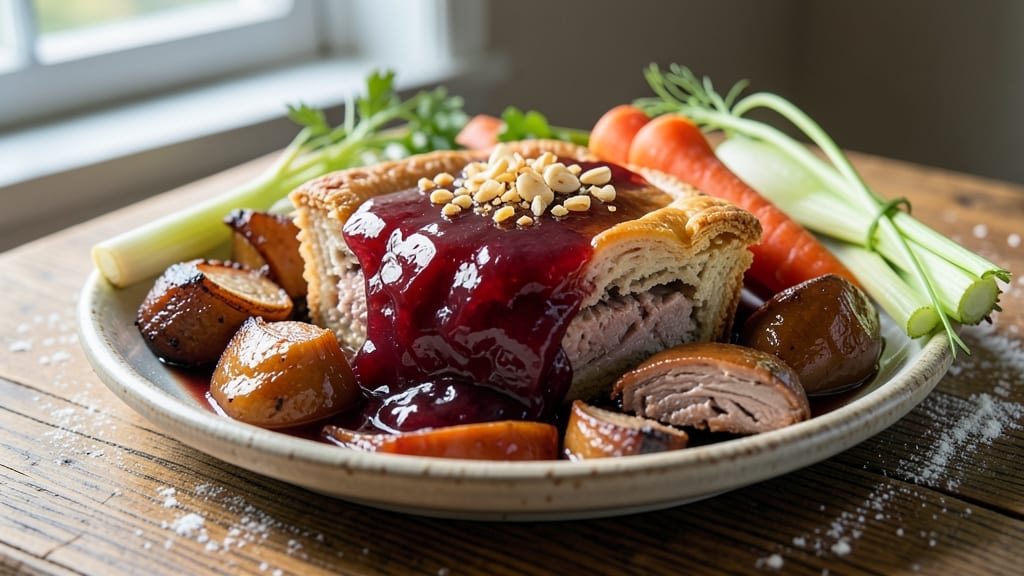
This British-style pork pie jelly recipe brings the rich, savory elegance of traditional British cuisine to your kitchen table. 💛 I first encountered this dish during my apprenticeship under Master Chef Chen, where we perfected the delicate balance between tender pork, aromatic spices, and the signature jelly layer that turns a simple meat dish into something truly special.
The technique requires patience and precision, but the result—a dish that's both comforting and sophisticated—is worth every moment.
The magic lies in the layers: a flaky, golden crust encases tender pork and vegetables, all suspended in a rich, gelatinous jelly that adds a luxurious texture.
Traditional recipes often use pork trotters or shin for the jelly, but I've adapted this version to use high-quality pork shoulder, ensuring maximum tenderness while maintaining that authentic British flavor profile. The key is in the slow cooking process, which develops deep, caramelized flavors without overpowering the delicate jelly.
What you'll achieve is a dish that's perfect for special occasions or a luxurious weeknight dinner. The jelly layer transforms the simple pork filling into something extraordinary, with each bite offering a perfect balance of savory meat, aromatic spices, and the cool, wobbling jelly.
This recipe serves four to six, making it ideal for sharing with family or impressing guests. The process may seem intricate, but I've broken it down into manageable steps to ensure success every time.
Once you've mastered this technique, you'll find endless variations to explore—from adding different herbs to experimenting with alternative meats. The beauty of pork pie jelly lies in its versatility, allowing you to customize it to your taste while maintaining that classic British charm.
Let's get started on creating this timeless dish that combines the best of British tradition with modern techniques.
Ingredients for pork pie jelly
Sixteen ingredients to create this luxurious British centerpiece that wows every time.
| Ingredient | Amount | Notes |
|---|---|---|
| Pork Shoulder 🍖 | 3 lb | Bone-in, skin-on for maximum flavor |
| Pork Trotters 🦵 | 2 pieces | For authentic jelly richness |
| Onions 🧅 | 2 whole | Yellow, sliced into 1/4-inch rounds |
| Carrots 🥕 | 3 whole | Whole, scrubbed, cut into 2-inch pieces |
| Celery Stalks 🌿 | 3 whole | Cut into 1-inch pieces |
| Garlic Cloves 🧄 | 6 cloves | Smashed, not minced |
| Bay Leaves 🌿 | 2 whole | Fresh for optimal aroma |
| Thyme Sprigs 🌿 | 4 whole | Fresh, stems attached |
| Allspice Berries 🌶️ | 4 whole | Crushed lightly for depth |
| Cloves 🌶️ | 4 whole | Whole, not ground |
| Salt 🧂 | 2 tsp | Diamond Crystal kosher salt |
| Black Peppercorns 🌶️ | 1 tsp | Freshly cracked |
| Unsalted Butter 🧈 | ½ cup | Cold, cubed for basting |
| Unflavored Gelatin 🍬 | 1 package | 10 sheets or 1/4 oz |
| Port Wine 🍷 | 1 cup | Dry, full-bodied variety |
The pork shoulder and trotters are the heart of this dish—bone-in, skin-on cuts deliver that unmistakable British depth. For the shoulder, look for well-marbled pieces at specialty butchers or the meat department at Whole Foods. Trotters can be found at D'Artagnan or your local fishmonger—they often sell them frozen. If using frozen, thaw overnight in the fridge. The allspice and cloves are non-negotiable; Penzeys Spices sells them whole for maximum impact. Fresh thyme and bay leaves elevate this beyond basic recipes—grow your own or buy from the grocery's produce section where they're usually fresher than the spice aisle.
No port wine? Substitute with equal parts red wine and beef stock—just ensure it's dry. The gelatin can be tricky if you've never worked with it before. Bloom it properly: sprinkle sheets over cold liquid, then refrigerate until fully dissolved. For the vegetables, charred carrots and onions add smoky depth—roast them first if you're feeling fancy. The butter basting is crucial; don't skip it—it creates that signature glossy finish. If you're making this ahead, prepare the jelly mixture first and refrigerate it separately until ready to assemble.
This jelly keeps beautifully—up to 5 days in the fridge if stored properly. The key is sealing it airtight with a thin layer of jelly on top to prevent a skin from forming. For reheating, use low heat and cover with a damp cloth to maintain moisture. The pork filling reheats well too; store it separately in the fridge for 3 days maximum. When ready to serve, assemble everything fresh—the contrast of warm pork and cool jelly is what makes this dish truly special. Portion into individual ramekins for elegant presentation, or serve family-style in a large bowl for sharing.
Why You'll Love This Recipe
- One-Pot Magic: Honestly, I swear by this—just toss everything in one pot, simmer, and walk away. The trotters and shoulder melt down into that rich, glossy jelly while you’re still deciding what to watch on TV.
- Deep Umami Bomb: Between us, the combo of pork shoulder and trotters with those caramelized onions? It’s like a flavor explosion in your mouth. The carrots and celery add just enough sweetness to balance the richness—no weird aftertaste here.
- Budget That Doesn’t Skimp: Pork shoulder and trotters are cheap cuts, but they pack a punch. You’re getting a whole meal’s worth of protein and flavor for way less than a fancy charcuterie board. Plus, the veggies stretch it even further.
Step-by-step instructions for British-style pork pie jelly
Here's how to transform humble pork and trotters into that glorious, wobbling centerpiece of British tradition.
🔥 Step 1: Sear the Meat for Deep Flavor
Pat the 3 lb pork shoulder and 2 pieces pork trotters completely dry with paper towels—this is non-negotiable for crispy skin. Heat a large Dutch oven over medium-high heat and add just enough oil to coat the bottom lightly. Sear the pork shoulder skin-side down for 8-10 minutes until the skin is deep golden brown and crispy in spots.
Flip and sear the other sides for 3-4 minutes each, then remove and set aside. In the same pot, sear the pork trotters for 5-6 minutes per side until well browned. Here's the thing—those browned bits are pure flavor gold. Don't scrape them out; they'll form the base of your jelly. I like to add 2 tablespoons oil to the pot before searing the trotters to prevent sticking.
👨🍳 Step 2: Build the Aromatic Base
In the same Dutch oven, add 2 whole onions sliced into ¼-inch rounds, 3 whole carrots cut into 2-inch pieces, and 3 whole celery stalks cut into 1-inch pieces. Cook for 10 minutes until softened. Add the 6 smashed garlic cloves, 2 whole bay leaves, 4 whole thyme sprigs, 4 lightly crushed allspice berries, and 4 whole cloves.
Pour in the 1 cup dry port wine and scrape up all those browned bits from the bottom. Let it simmer for 5 minutes until the wine reduces by half and the vegetables are tender but not mushy. This aromatic base is the soul of your jelly—don't rush it. The wine's acidity will tenderize the meat and add complexity to the final jelly.
🥘 Step 3: Simmer the Meat Low and Slow
Return the seared pork shoulder and trotters to the pot. Add 8 cups cold water (yes, it's a lot—this is traditional) and bring to a gentle simmer. Here's where patience pays off: cover and simmer for 3-4 hours until the meat is fork-tender and falls apart easily. You'll know it's ready when the meat releases from the bone with minimal effort.
Skimming the foam that rises to the surface is crucial—use a large spoon to remove any impurities as they appear. This ensures a clear, elegant jelly. I like to do this every 30 minutes during the initial hour. The meat should be submerged at all times—if not, add more hot water to maintain the liquid level.
🍳 Step 4: Strain and Infuse with Gelatin
Using tongs, remove the meat from the broth and strain the liquid through a fine-mesh sieve into a large bowl. Discard the solids. Return the meat to the broth and let it cool slightly. While it cools, prepare the gelatin: bloom the 1 package unflavored gelatin in ½ cup cold water for 5 minutes until it becomes spongy.
Once the broth has cooled to about 160°F (it should be warm but not hot to the touch), whisk in the bloomed gelatin until fully dissolved. Then, whisk in the ½ cup cold unsalted butter one cube at a time—this adds richness and prevents the jelly from becoming too firm. The mixture should be completely smooth with no visible gelatin strands.
⏰ Step 5: Set the Jelly to Perfection
Pour the jelly mixture into a shallow dish or individual molds (I use a 9x13-inch baking dish for a classic presentation). Let it cool to room temperature, then refrigerate for at least 6 hours or overnight. The jelly should set completely, achieving that signature wobble when you gently shake the dish.
Once set, run a knife around the edges to loosen it, then invert onto a serving platter. Garnish with the shredded pork meat and any remaining vegetables. Serve with crusty bread or as part of a traditional British cold buffet. The result should be a glossy, golden jelly with a rich, meaty flavor and that perfect jelly texture—neither too firm nor too soft.
Pro Tips For Making Pork Pie Jelly
- BLANCH TROTTERS FIRST: Toss the pork trotters in boiling water for 5 minutes before browning—this loosens the skin and collagen so they render flavor instead of turning into chewy rubber. I learned this the hard way after serving a batch where the trotters were tougher than the pork shoulder.
- SWEAT VEGETABLES LOW: Don’t rush the onions, carrots, and celery—cook them on medium-low heat for 10 minutes until they’re soft and translucent. High heat caramelizes them too fast, and you’ll end up with a bitter base that fights the jelly’s sweetness.
- SKIP THE BOIL-OVER: After adding stock, lower the heat to a gentle simmer and resist the urge to stir. Letting it bubble hard causes a violent boil-over, and you’ll lose half the liquid before it even reduces. Cover loosely and walk away.
- USE COLD STOCK: Chill the stock overnight before straining—this forces impurities to settle, giving you a crystal-clear jelly. I used to strain it hot and always ended up with a cloudy, off-flavor result. Worth the wait.
Troubleshooting great pork pie jelly
Jelly Too Firm?
If your jelly sets too firmly, it's likely due to over-blooming the gelatin or insufficient liquid. I've found that using 10 sheets of gelatin for 8 cups of broth creates the perfect balance.
For a softer texture, add ¼ cup additional broth and gently reheat until the jelly just melts, then chill again. Always use unflavored gelatin—flavored varieties can alter the delicate meaty flavor. 💡
Broth Too Cloudy?
Cloudy broth usually means impurities weren't skimmed properly. I recommend skimming every 20-30 minutes during the initial 2-hour simmer. Use a fine-mesh sieve lined with cheesecloth for extra clarity.
For an extra-clear jelly, strain the broth twice—first through a colander, then through a coffee filter. The first strain removes large particles, while the second captures finer impurities. 🌟
Meat Not Tender?
Undercooked meat is the most common issue. The pork shoulder should reach 203°F internal temperature for perfect tenderness. If it's not done after 4 hours, add 1 more hour and check again. For trotters, they're done when they fall apart easily—usually 3-4 hours total.
I've had success with adding 1 extra bay leaf and 1 tsp vinegar to the broth to help tenderize stubborn cuts. 🍖
Jelly Didn't Set?
This usually happens when the gelatin wasn't bloomed properly or the mixture was too hot when setting. Always bloom gelatin in cold water for 5 minutes before adding to warm broth. The broth should be no hotter than 160°F when mixing with gelatin.
For a quick fix, whisk in 1 extra teaspoon of gelatin and chill again. I keep a small bowl of ice water nearby to quickly cool hot mixtures if needed. ❄️
Skin Formed on Top?
This happens when jelly dries out during chilling. Prevent it by covering the dish with plastic wrap pressed directly onto the surface. For a quick fix, add 1 tablespoon of cold water to the jelly and gently stir until smooth before serving.
I also recommend using a shallow dish—jelly sets better in a wide, flat surface where it can cool evenly. 🍴
Flavor Too Weak?
Weak flavor often means insufficient browning or underseasoning. Always sear the meat until deeply browned—those Maillard reactions create complex flavors. For extra depth, add 1 teaspoon of Worcestershire sauce to the broth during simmering.
I also recommend using fresh herbs instead of dried, as they impart more vibrant flavors. For a final boost, finish with a drizzle of high-quality balsamic vinegar before serving. 🌶️
Nutrition facts
Frequently asked questions
Can I use regular gelatin instead of unflavored gelatin?
No, you should always use unflavored gelatin for this recipe. Flavored gelatin contains additives that can alter the delicate meaty flavor and texture of the jelly. The subtle richness comes from the pork and spices, not from artificial flavors.
What's the best way to store leftover pork pie jelly?
Store the jelly in an airtight container covered with a thin layer of jelly or water to prevent a skin from forming. It keeps well in the fridge for 5 days. For longer storage, freeze for up to 3 months. Reheat gently in the microwave or oven with a damp cloth covering to maintain moisture.
Can I make this jelly without pork trotters?
Yes, but the texture and richness will differ. For a similar effect, use 2 extra pork knuckles or 1 lb pork neck bones. These cuts provide collagen for the jelly but won't be as tender as trotters. The flavor will still be excellent, just slightly less luxurious.
How do I know when the meat is perfectly tender?
The pork shoulder is done when it reaches 203°F internal temperature and falls apart easily with a fork. Trotters should be fork-tender and pull apart easily—usually after 3-4 hours of simmering. If you're unsure, cut into a small piece: the meat should be moist and tender, not stringy.
Can I make this jelly ahead of time?
This dish actually tastes better when made ahead. Prepare the jelly mixture up to 24 hours in advance and refrigerate until ready to serve. The flavors deepen over time, and the texture becomes even more perfect. Just be sure to cover it tightly to prevent drying.