
Main Courses
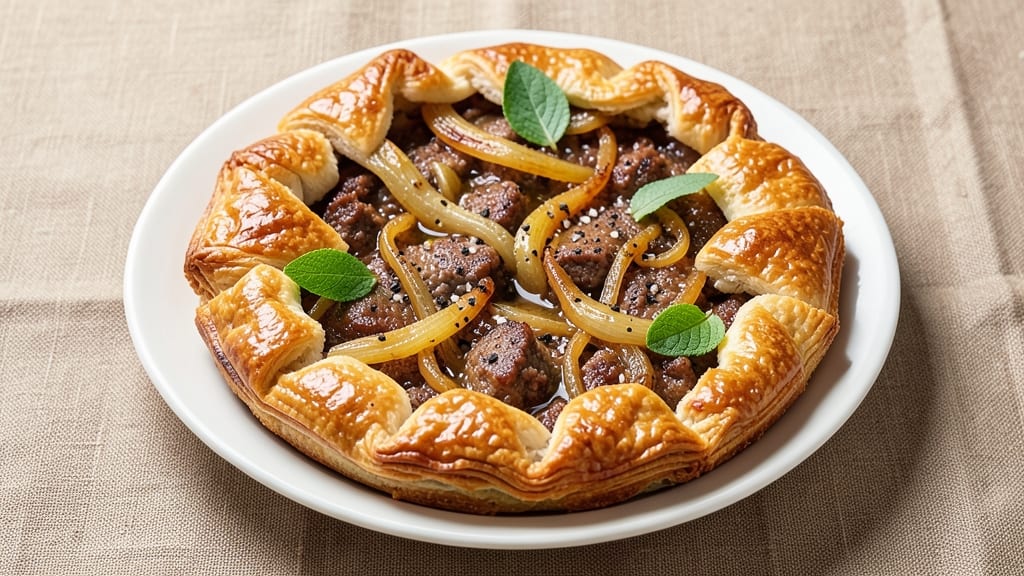
This raised pork pie recipe delivers the perfect marriage of golden, flaky pastry and rich, seasoned pork filling—just like my grandmother used to make.
Growing up in small-town Georgia, I learned that the secret lies in layering butter into the crust and cooking the filling low and slow until it's tender and packed with flavor. The result?
A pie with a crisp, raised crust that shatters at the touch and a filling so savory it disappears faster than you can say "second slice."
The technique is simpler than it sounds: use store-bought puff pastry for convenience or make your own shortcrust dough for that classic handmade touch. The filling combines ground pork with onions, sage, and a touch of mustard for depth, all cooked until just tender.
Blind-baking the crust ensures it stays crispy while the filling bakes through—no soggy bottoms here. This method has been perfected over years of Southern kitchens and pitmaster experience.
What you'll end up with is a pie that looks like it belongs on a British pub menu but tastes like home. The crust rises beautifully, golden and crisp, while the filling stays moist and flavorful.
Serve it with a sharp mustard or tangy pickles to cut through the richness, or pair it with a crisp green salad for balance. Every bite is a reminder of why this dish has been a staple for generations.
Perfect for holidays, family dinners, or impressing guests, this pork pie is a showstopper that requires no fancy skills—just patience and attention to detail. The aroma alone will have everyone gathering around the table, and the taste?
That's where the magic happens. Let's get started on creating a pie that'll have your guests asking for the recipe.
Ingredients for raised pork pie
Buttery crust, savory filling, and that classic raised pie look—just 12 ingredients for a showstopper.
| Ingredient | Amount | Notes |
|---|---|---|
| Ground Pork 🥓 | 1 ½ lb | Lean or fatty works, but trim excess fat |
| Yellow Onions 🧅 | 1 whole | Medium size, finely chopped |
| Fresh Sage Leaves 🌿 | ½ cup | Chopped, not dried |
| Dijon Mustard 🍯 | 1 tbsp | Mild or hot variety |
| Kosher Salt 🧂 | 1 ½ tsp | Diamond Crystal preferred |
| Ground Black Pepper 🌶️ | ½ tsp | Freshly ground preferred |
| All-Purpose Flour 🌾 | 2 cups | For shortcrust dough |
| Unsalted Butter 🧈 | ¾ cup | Cold, cubed for dough |
| Store-Bought Puff Pastry 🥧 | 1 sheet | Or homemade shortcrust |
| Heavy Cream 🥛 | ¼ cup | For egg wash |
| Large Eggs 🥚 | 1 whole | For egg wash |
| Granulated Sugar 🍚 | 1 tsp | For egg wash |
The ground pork is the heart of this pie, so don’t skimp on quality. Butcher shops often have better cuts than grocery stores—ask for a mix of lean and fat for moisture. If you're using pre-ground pork, check the label for added fillers. The sage should be fresh and vibrant (not dried unless noted)—Trader Joe's or local farmers markets are great spots. For the crust, store-bought puff pastry (like Pepperidge Farm) saves time, but nothing beats homemade shortcrust if you're feeling ambitious. The butter in the dough needs to stay cold—wrap it in parchment before freezing for 20 minutes if your kitchen is warm.
No Dijon mustard? Yellow mustard at half the amount works in a pinch, but the flavor won’t be as refined. Swapping the sage for fresh thyme (same quantity) gives a different but delicious twist. If you’re making your own dough, all-purpose flour is fine, but bread flour adds a slight chewiness. For the egg wash, heavy cream gives a glossier finish than milk—trust me on this. The sugar in the wash isn’t just for sweetness; it helps with browning. If you’re blind-baking the crust, pie weights or dried beans are essential to prevent sagging. No weights? Use a second sheet of parchment with dried rice.
The filling keeps for 3 days in the fridge, but the crust is best eaten fresh—it loses its crispness after a day. To reheat, cover with foil and warm at 350°F for 10-15 minutes. For make-ahead prep, assemble the pie, blind-bake the crust, then store uncovered at room temp for up to 24 hours before baking. The filling can be pre-cooked and refrigerated for 3 days or frozen for 3 months. If freezing, portion into containers before adding the crust—just bake straight from frozen, adding 10-15 minutes to the time.
Why You'll Love This Recipe
- No Fuss Filling: I swear by this—just brown the pork, caramelize the onions until they’re sweet and sticky, then fold in the sage and mustard. It’s the kind of recipe where you can sip your coffee while it cooks, and still end up with something impressive.
- Sage & Mustard Magic: That Dijon mustard gives it a tangy depth, while the fresh sage adds an earthy warmth. Honestly, the combination feels fancy, but it’s just a handful of ingredients working together. The pork stays juicy, and the crust (if you use one) gets that perfect golden crunch.
- Lunchbox Hero: Between us, I make these pies on Sundays and pack them for work all week. The flavors only get better as they sit—reheated or cold, they’re a hit. My kids even ask for them at school, and I’m not ashamed to admit I’ve been known to sneak one in my bag for myself.
- Budget-Friendly Feast: Ground pork stretches far, and the other ingredients cost pennies. I’ll be real: this is how I feed my family well without breaking the bank. Plus, the leftovers reheat like a dream—no sad, dry meat here. Just rich, savory bites every time.
Step-by-step instructions for raised pork pie
Here's how to build a showstopping pork pie with a golden, flaky crust and rich, savory filling.
Prepare the Pork Filling
In a large skillet over medium heat, add the 1.5 lb ground pork and cook until it loses its raw color and begins to brown, breaking it apart with a wooden spoon. This should take about 8-10 minutes. You're aiming for a nice sear that develops deep flavor.
Once the pork is mostly cooked, add the 1 whole yellow onions that you've finely chopped earlier. Cook with the pork for another 5 minutes until the onions soften and become translucent. Stir in the 0.5 cup chopped fresh sage leaves, 1 tbsp Dijon mustard, 1.5 tsp kosher salt, and 0.5 tsp ground black pepper. Let the mixture simmer for 2 more minutes to meld all the flavors together.
Remove the skillet from heat and let the filling cool completely before assembling the pie. This prevents the butter in your crust from melting prematurely when you add the hot filling later. Here's the thing—warm filling in a cold crust leads to soggy bottoms, and nobody wants that.
Make the Shortcrust Dough
In a large mixing bowl, combine the 2 cups all-purpose flour and 1.5 tsp kosher salt. Cut in the 0.75 cup cold unsalted butter using a pastry cutter or your fingers until the mixture resembles coarse crumbs with some pea-sized butter pieces remaining. This texture is crucial for creating flaky layers.
Add 0.25 cup heavy cream and mix gently with a fork until the dough just comes together. You might need to add an extra tablespoon or two of cream if it's too dry. Shape the dough into a disk, wrap it in plastic wrap, and refrigerate for at least 1 hour. This chilling step is non-negotiable—it firms up the butter for easier rolling and prevents shrinking when you bake it.
Assemble the Pie
Preheat your oven to 375°F. Roll out the 1 sheet store-bought puff pastry on a lightly floured surface to about 1/8-inch thickness, large enough to line a 9-inch pie dish. Press it gently into the dish, letting it extend slightly up the sides. Trim any excess pastry.
Roll out the chilled shortcrust dough to about 1/8-inch thickness as well. Place it over the puff pastry in the pie dish, pressing gently to adhere. Cut a few small slits in the center to allow steam to escape during baking. This prevents a blown crust.
Spread the cooled pork filling evenly into the crust-lined pie dish, mounding it slightly in the center. Here's where it gets tricky—you want the filling to come up to about 1/2 inch from the top edge of the crust. This ensures a good rise without overflowing.
Create the Raised Top Crust
Roll out the remaining puff pastry to about 1/8-inch thickness. Cut it into strips about 1 inch wide. Arrange these strips in a lattice pattern over the filling, pressing the edges gently to seal. Brush the lattice with a mixture of 1 whole large egg beaten with 0.25 cup heavy cream and 1 tsp granulated sugar for a golden finish.
To create the raised effect, gently press down on the center of the lattice with your fingers, then lift and let it spring back. This creates a slight dome that will rise beautifully in the oven. Brush the entire top crust again with the egg wash mixture, making sure to get into all the lattice openings.
Bake to Golden Perfection
Place the assembled pie on a baking sheet lined with parchment paper to catch any drips. Bake in the preheated 375°F oven for 45-50 minutes, until the crust is deep golden brown and the filling is bubbling through the lattice openings. The pie is done when the internal temperature reaches 160°F.
Remove the pie from the oven and let it cool on a wire rack for at least 1 hour before slicing. This resting period allows the filling to set and makes for cleaner slices. The crust should be crisp and flaky, with a beautiful golden color that looks like it came straight from a bakery.
Slice into wedges and serve warm. The contrast between the rich, savory pork filling and the delicate, flaky crust makes every bite worth the effort. Real talk—this pie looks impressive enough to serve at your best dinner party, and it's easier than it seems once you get the rhythm down.
Pro Tips For Making Raised Pork Pie
- Brown the Pork Properly: Skip the urge to rush this—sear the ground pork in a dry skillet over medium-high heat until it’s deeply browned, not just pink. That crust packs flavor, and I’ve learned the hard way that skipping it leaves the pie tasting flat. (Yes, even if you’re impatient like me.)
- Sweat, Don’t Sauté, Onions: Cook the onions low and slow until they’re translucent and just starting to soften—about 8-10 minutes. If you crank the heat, they’ll burn before the pork’s ready, and you’ll end up with a bitter bite. Trust me, this is the thing that matters most for balance.
- Salt the Pork Twice: Season the raw ground pork generously with kosher salt before cooking, then add another pinch after it’s browned. The first layer gets absorbed, but the second locks in flavor—especially important when you’re mixing it with mustard and onions later.
- Chill the Filling Before Baking: Let the assembled pork mixture cool to room temperature, then refrigerate for at least 30 minutes before shaping into the pie. Cold filling bakes more evenly and rises better—no more sad, flat-topped pies. (Your future self will thank you.)
Make-ahead tips for leftovers
Prep Ahead
Assemble the pie completely, then blind-bake the crust for 15-20 minutes at 375°F before adding filling. Store the partially baked pie in an airtight container at room temperature for up to 24 hours—just add the filling and bake as directed.
This is my go-to when hosting: guests arrive to find a freshly baked pie with minimal last-minute stress. 💫
Filling Prep
Cook the pork filling 1-2 days ahead and refrigerate it in an airtight container. The flavors deepen overnight, and you can reheat it gently on the stovetop before assembling.
I like to add a splash of beef broth when reheating to keep it moist. This shortcut saves 30 minutes on baking day.
Crust Shortcuts
Use store-bought puff pastry for the top lattice—it's foolproof and saves hours. Roll it out to 1/8-inch thickness and cut strips with a pizza cutter for clean lines.
For the bottom crust, I often use pre-made shortcrust dough from the refrigerated section at Whole Foods—just roll it out and press it in place. No rolling skills required!
Freezer-Friendly
Assemble the pie completely (including egg wash) and freeze it on a baking sheet for 1 hour before transferring to a ziplock freezer bag. Bake straight from frozen, adding 15-20 minutes to the cooking time.
The crust emerges just as crispy—perfect for holiday gatherings when you're juggling a million other tasks. ❄️
Make-Ahead Mistakes
Avoid refrigerating the assembled pie with filling before baking—condensation causes soggy crusts. If you're prepping ahead, blind-bake the crust, then store it uncovered at room temperature.
Never use plastic wrap directly on the crust; it traps moisture. I've learned this the hard way after a few soggy disasters in my early years!
Serving Prep
Slice the pie into wedges and arrange them on a platter with pickled onions or mustard sauce for dipping. Garnish with fresh sage leaves for a pop of color.
For a showstopping presentation, dust with powdered sugar (just a pinch!) to highlight the golden crust. This takes 5 minutes and elevates the dish from homey to restaurant-worthy. 🌟
Nutrition facts
Frequently asked questions
Can I use ground beef instead of pork in this recipe?
While you can substitute ground beef, pork is traditional for its delicate, slightly sweet flavor. For a close match, use a lean cut (like chuck) and add 1 tsp smoked paprika to mimic pork's depth. Beef will be heartier but less tender—cook it 2-3 minutes longer to avoid dryness.
Why is my crust puffing up unevenly or collapsing?
Uneven puffing usually means the butter in your dough melted too early. Chill your dough for at least 2 hours (or overnight) and avoid warm hands when handling. For collapsing: ensure your oven is fully preheated and use a pie dish with high sides—at least 1.5 inches tall—to support the lattice.
How do I make this vegetarian?
Swap the pork for 1.5 lb lentils or mushrooms (cremini + shiitake) sautéed with onions and sage. Add 1 tbsp soy sauce and 1 tsp liquid smoke for umami. The texture will be denser, so bake 10 minutes longer at 350°F to crisp the crust.
Can I bake this in a glass dish instead of metal?
Yes, but adjust your baking time! Glass conducts heat differently—expect 10-15 minutes longer at 350°F. Place the glass dish on a metal baking sheet to prevent uneven heating. Check doneness at 40 minutes with a thermometer (internal temp 160°F).
What’s the best way to reheat leftovers?
Wrap slices in foil and warm at 350°F for 10-12 minutes—this preserves crispness. For microwave reheating, cover with a damp paper towel and heat for 20-30 seconds** (crust will soften but stay intact). Never reheat uncovered; it dries out the filling and makes the crust rubbery.