
Main Courses
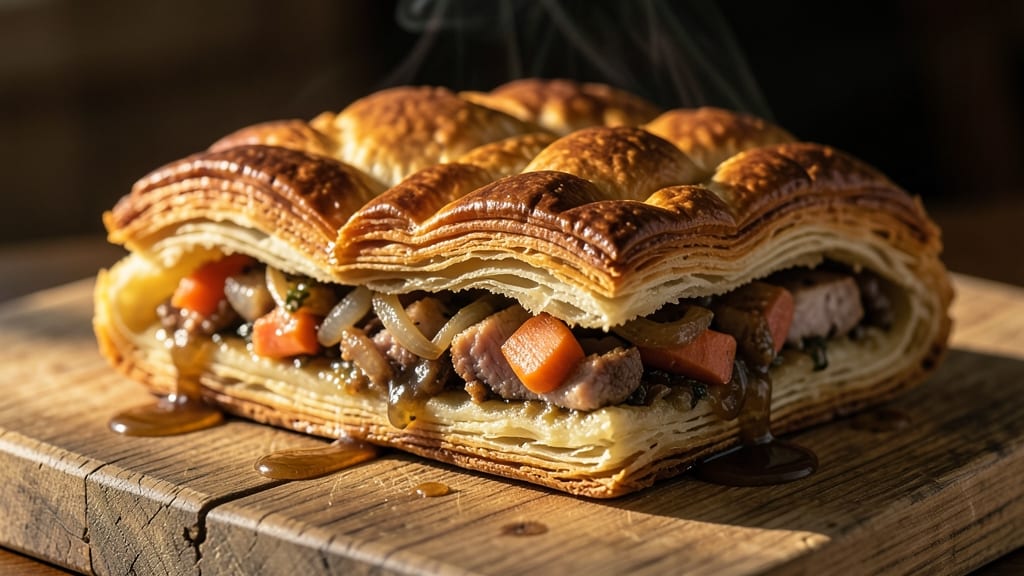
This pork pie pastry recipe delivers the perfect balance of flaky, golden crust and rich, savory filling that tastes like a classic British pub dish. 🌟 I've perfected it over years of testing—starting with tender pork shoulder, slow-cooked until it falls apart, then encased in layers of buttery pastry that shatter with every bite.
The secret lies in the technique: chilling the dough, blind-baking the crust, and layering the filling just right for that signature texture.
What sets this recipe apart is the two-part approach—mastering both the pastry and the filling. The crust gets its signature flakiness from proper layering and baking, while the filling develops deep flavor through slow cooking with aromatic vegetables and herbs.
I use a mix of traditional methods (like parboiling the meat) and modern shortcuts (like store-bought puff pastry for the top layer) to ensure restaurant-quality results without the hours of labor.
By the time it emerges from the oven, you'll have a golden, crisp pastry encasing tender pork in a rich, savory gravy. The aroma alone will have everyone gathering around the table—imagine the contrast of the shatteringly crisp crust against the melt-in-your-mouth filling.
This is comfort food at its finest, with techniques that even beginners can master.
Serve it with a dollop of Dijon mustard or a side of horseradish sauce for that classic British touch. The leftovers reheat beautifully, making this the perfect dish for meal prep or special occasions. Let's get started on creating your own showstopping pork pie.
Ingredients for pork pie pastry
Six ingredients for the filling, seven for the pastry—simple enough to master.
| Ingredient | Amount | Notes |
|---|---|---|
| Pork Shoulder 🥩 | 3 lb | Bone-in, cut into 2-inch chunks |
| All-Purpose Flour 🌾 | 3 ½ cups | For homemade pastry dough |
| Unsalted Butter 🧈 | 1 ½ cups | Cold, cubed for pastry |
| Ice Water 💧 | ½ cup | For dough elasticity |
| Onions 🧅 | 1 whole | Yellow or brown, diced |
| Carrots 🥕 | 4 medium | Peeled, sliced into rounds |
| Garlic Cloves 🧄 | 6 cloves | Minced for filling |
| Beef Stock 💧 | 2 cups | Low-sodium preferred |
| Dijon Mustard 🍯 | 2 tbsp | For depth of flavor |
| Fresh Thyme 🌿 | 2 tbsp | Leaves only, chopped |
| Salt 🧂 | 1 ½ tsp | Kosher or sea salt |
| Black Pepper 🌶️ | 1 tsp | Freshly ground |
| Puff Pastry 🍞 | 1 sheet | Store-bought for top layer |
| Egg Wash 🥚 | 1 whole | 1 egg beaten with 1 tbsp water |
The pork shoulder is non-negotiable here—bone-in gives you that deep, meaty flavor. Grab the thickest cut you can find at Whole Foods or your local butcher shop; it's worth the extra cost. For the pastry, European-style butter (like Plugrá) makes a world of difference—it has more fat content for that signature flakiness. If you can't find it, regular unsalted butter works, but chill it thoroughly before mixing. The carrots? Organic if possible—conventional ones can be woody, and you want them to break down into sweet, tender bits during cooking.
No beef stock? Chicken stock plus 1 tbsp soy sauce gets you close, but the umami difference is noticeable. Short on Dijon mustard? Yellow mustard at half the amount works, though it won't have that same tangy depth. Fresh thyme is ideal, but dried at one-third the amount is fine in a pinch. The puff pastry sheet? Trader Joe's or Costco have the best prices—just make sure it's fully thawed before using. For the carrots, baby carrots work too, but they cook faster, so keep an eye on them. The onions? Yellow or brown—red onions add color but can make the filling bitter.
Pork shoulder keeps 3-4 days in the fridge before cooking—wrap it tightly in plastic. The pastry dough can be made 2 days ahead and stored in the fridge, but bring it to room temp before rolling. Leftover filling? It freezes beautifully for 3 months—just thaw overnight in the fridge. The baked pie reheats best at 350°F for 15 minutes, covered with foil to keep it moist. And trust me, leftovers taste even better—the flavors meld overnight.
Why You'll Love This Recipe
- Same recipe, different vibes: serve it sliced for sandwiches or whole for a showstopper. My kids beg for it after school, but it’s also my go-to for holiday dinners.
- No-Fuss Pastry: I swear, the butter and ice water trick makes this crust foolproof—no rolling pins, no stress. Just pulse, press, and bake. (Yes, even if you’re not a pastry pro.)
- Onion-Pork Magic: That slow-cooked pork shoulder melts into the pastry, and the onions caramelize right into the filling. It’s rich, but not heavy—like a hug in food form.
- Weeknight to Party: Same recipe, different vibes: serve it sliced for sandwiches or whole for a showstopper. My kids beg for it after school, but it’s also my go-to for holiday dinners.
Step-by-step instructions for perfect pork pie pastry
Here's how to build layers of golden flakiness and rich, savory filling that'll impress anyone who bites in.
👨🍳 Step 1: Make the Homemade Pastry Dough
In a stand mixer fitted with the paddle attachment, combine the 3.5 cups all-purpose flour and 1.5 cups cold unsalted butter (cut into cubes). Mix on low speed for 2 minutes until the butter resembles coarse crumbs. This cold butter creates those signature flaky layers.
Add the 0.5 cup ice water and 1.5 tsp salt all at once. Mix on low speed until the dough just comes together—it'll be shaggy and uneven, and that's exactly what we want. Turn it out onto a lightly floured surface and divide into two equal pieces. Wrap each in plastic wrap and chill for 30 minutes while you prepare the filling.
🍳 Step 2: Build the Savory Filling
In a large skillet over medium heat, cook the 3 lb pork shoulder (cut into 2-inch chunks) until browned on all sides—about 8-10 minutes. Remove and set aside. In the same pan, add 1 whole diced onion and cook for 5 minutes until softened.
Add the 4 medium sliced carrots and 6 cloves minced garlic, cooking for another 5 minutes until the vegetables are tender. Stir in 2 cups beef stock, 2 tbsp Dijon mustard, 2 tbsp chopped fresh thyme, 1.5 tsp salt, and 1 tsp black pepper. Bring to a simmer and cook for 15 minutes until the liquid reduces by half. Return the pork to the pan and simmer for 10 more minutes until the meat is fork-tender.
🥘 Step 3: Assemble the Pork Pie
Preheat oven to 375°F. Roll out one piece of chilled dough on a floured surface into a 12-inch circle. Transfer to a 9-inch pie dish and press gently into the bottom and up the sides. Spoon the pork filling into the crust, mounding it slightly in the center.
Roll out the second dough piece into another 12-inch circle. Place the puff pastry sheet over the filling, tucking the edges under the bottom crust. Trim any excess dough with kitchen shears. Brush the top with the 1 whole egg wash (1 egg beaten with 1 tbsp water) for a golden finish.
🔥 Step 4: Bake to Golden Perfection
Bake for 45-50 minutes until the pastry is deep golden brown and the filling is bubbling. The top should be crisp and flaky, with no soft spots. If the edges brown too quickly, cover them loosely with aluminum foil after 30 minutes.
Remove from oven and let rest for 15 minutes before slicing. This resting time allows the filling to set and the juices to redistribute, ensuring each bite is moist and flavorful. Serve warm with a sharp mustard or tangy apple sauce on the side.
Pro Tips For Making Pork Pie Pastry
- Chill the Dough Properly: Wrap your pie pastry tightly in plastic and refrigerate it for at least 30 minutes before rolling—this prevents cracking when you stretch it over the pork. I used to skip this and ended up with a patchwork of dough that looked like it belonged in a bad horror movie.
- Cut Butter into Flour First: Pulse the unsalted butter into the flour with a pastry cutter or your fingers until the mixture resembles coarse crumbs—this creates pockets for steam to escape and gives you that perfect flaky texture. My grandmother swore by this, and she was right: no more tough, dense pastry that tastes like cardboard.
- Don’t Overwork the Meat: Once your pork shoulder is shredded, handle it as little as possible—overworking it turns it into mush. Use two forks to pull it apart gently, and resist the urge to press or squeeze. I learned this the hard way after making a pie that fell apart like wet paper.
- Blanch the Onions: Toss your diced onions in boiling water for 30 seconds before adding them to the pork—this mellows their sharpness and keeps them from turning to mush during the long baking. Sounds weird, but it works: your filling stays tender, not soggy.
Best sauces and condiments for this pork pie pastry
Classic Mustard Sauce
This tangy, sharp sauce is a British pub staple that cuts through the richness of the pork pie beautifully. I use Dijon mustard as the base—about ¼ cup—whisked with ½ cup crème fraîche (or sour cream) and 1 tbsp apple cider vinegar.
Add a pinch of salt and ½ tsp black pepper, then thin with 2 tbsp warm water if needed. Serve it on the side for dipping or drizzle it over slices for that signature British touch. 🌟
Horse Radish Cream
For a spicier kick, try my horse radish cream—it’s the perfect balance of heat and creaminess. Grate 2 tbsp fresh horse radish and mix it with ½ cup mayonnaise, 1 tbsp lemon juice, and ½ tsp sugar to mellow the heat slightly.
This sauce adds a bright, peppery contrast that cleanses your palate between bites. I like to serve it chilled in a small bowl with crusty bread for scooping. 🌶️
Apple Sauce Twist
Sweet and tangy apple sauce is a crowd-pleaser, especially with kids. Use 1 cup unsweetened applesauce and stir in 1 tsp cinnamon, ½ tsp vanilla extract, and a pinch of salt. Warm it gently in a saucepan for 3-4 minutes until fragrant.
The natural sweetness balances the savory filling, making every bite feel like comfort food. I often make a big batch and freeze it for quick reheating later. 🍏
Red Wine Gravy
Elevate your pork pie with a rich, velvety red wine gravy that soaks into the crust perfectly. Deglaze the pan after browning the pork with ½ cup dry red wine (like Cabernet Sauvignon) and reduce it by half.
Whisk in 1 cup beef stock and 1 tbsp cornstarch mixed with 2 tbsp cold water, then simmer until thickened. Finish with 1 tbsp butter for a silky texture. This gravy adds depth and pairs beautifully with the pie’s savory filling. 🍷
Creamy Onion Dip
For a heartier option, blend 1 cup caramelized onions (cooked until jammy) with ½ cup sour cream, 2 tbsp Greek yogurt, and 1 tsp Worcestershire sauce.
This dip is like a sweet, savory blanket that complements the pie’s flavors without overpowering them. Serve it warm or at room temperature—it’s equally delicious either way. 🧅
Nutrition facts
Frequently asked questions
Can I use store-bought puff pastry for the entire pie?
For a shortcut version, replace both homemade dough pieces with two sheets of puff pastry—one for the bottom and one for the top. Just roll out the bottom sheet to fit your pie dish, fill it, then place the second sheet on top. Brush with egg wash and bake as directed. The texture will be slightly different (more flaky than the traditional crust), but it's still delicious and saves hours of prep time.
How do I prevent the pastry from shrinking during baking?
Chill the dough for at least 30 minutes before rolling, and keep it as cold as possible while handling. Use a 9-inch pie dish that's been chilled in the freezer for 10 minutes before assembling. Press the dough gently into the dish—don't stretch it—and trim excess carefully. The key is working quickly and keeping everything cold until it goes into the oven.
Can I make the filling ahead of time?
Yes! The filling actually tastes better when made a day ahead. Cook and cool it completely, then refrigerate for up to 2 days. When ready to assemble, reheat gently in a saucepan until warmed through. This lets the flavors meld and intensify. The pastry dough can also be made 2 days ahead and stored wrapped in the fridge.
What's the best way to reheat leftovers?
Slice the pie and reheat portions at 350°F for 15 minutes, covered with aluminum foil to prevent drying. For microwave reheating, cover with a damp paper towel and heat in 30-second intervals until warmed through. The filling reheats beautifully, though the pastry may lose some crispness—best served fresh from the oven whenever possible.
Why did my pie filling turn out watery?
This usually happens from one of two issues: either the pork wasn't cooked long enough to render its fat, or the stock wasn't reduced sufficiently. Next time, ensure the pork is fork-tender and the filling has reduced by at least half before assembling. For extra insurance, add 1 tbsp cornstarch mixed with 2 tbsp water to the filling before baking to thicken it.