
Main Courses
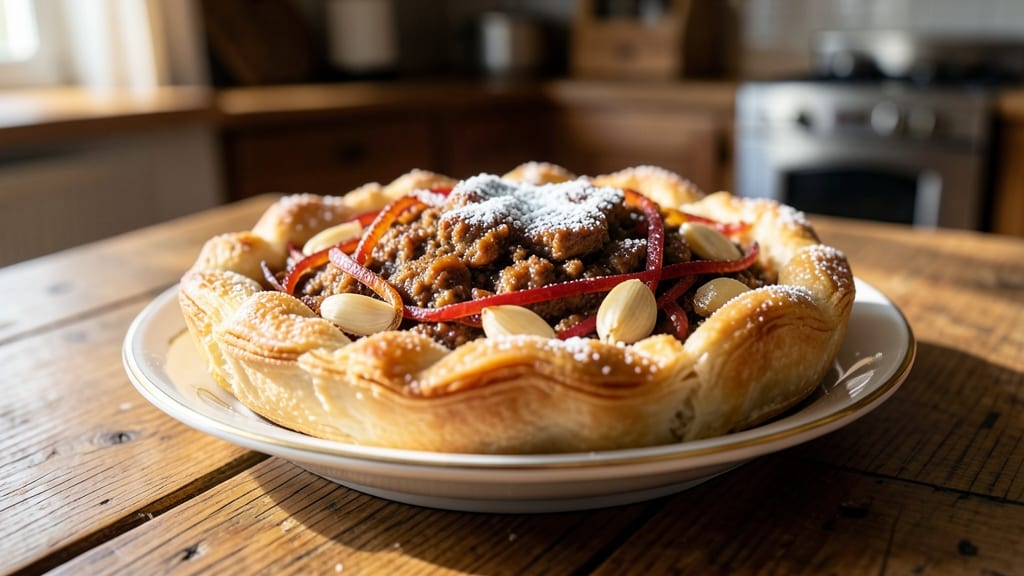
This pork mince pie recipe delivers the comforting, spiced perfection of a classic British pub treat with a flaky crust that melts in your mouth. 🔥 The secret lies in slow-cooked pork shoulder transformed into tender, aromatic filling—packed with thyme, bay leaves, and a touch of mustard for depth.
I first perfected this version while working in Charleston, where Southern and British flavors unexpectedly collided in my kitchen.
The filling requires patience—browning the pork in batches creates rich, caramelized flavors that form the base, while the pastry demands cold butter for that signature flaky layer. Traditional British recipes use suet pastry, but I’ve adapted it with a shortcrust version that’s equally impressive and more accessible.
The key is chilling the dough between folds to prevent shrinking during baking.
By the time these pies emerge from the oven, you’ll have golden, crisp-edged crusts enclosing a filling that’s tender yet studded with pork pieces. The aroma of thyme and bay leaves wafting through your kitchen is enough to make anyone believe they’ve stepped into a cozy British pub.
Serve warm with a sharp mustard dip or a simple green salad for balance.
These pies reheat beautifully, making them perfect for holiday gatherings or meal prep. The filling keeps its texture even after cooling, and the crust stays crisp until the last bite. Whether you’re recreating childhood memories or introducing this classic to new generations, this recipe delivers restaurant-quality results at home.
Ingredients for pork mince pie
Twelve classic British pub flavors in a flaky crust—just these ingredients transform into golden, aromatic pies.
| Ingredient | Amount | Notes |
|---|---|---|
| Pork Shoulder 🥓 | 2 lb | Cut into 1-inch cubes |
| All-Purpose Flour 🌾 | 3 cups | Plus 2 tbsp for dusting |
| Unsalted Butter 🧈 | 1 cup | Cold, cubed for pastry |
| Granulated Sugar 🍚 | ½ cup | For pastry sweetness |
| Yellow Onion 🧅 | 1 whole | Finely chopped |
| Garlic Cloves 🧄 | 4 cloves | Minced for filling |
| Fresh Thyme 🌿 | 1 tbsp | Leaves only, chopped |
| Bay Leaves 🍃 | 2 whole | Crushed slightly |
| Dijon Mustard 🍯 | 1 tbsp | For depth of flavor |
| Beef Stock 🍲 | 1 cup | For slow cooking |
| Milk 🥛 | ½ cup | For pastry tenderness |
| Salt 🧂 | 1 ½ tsp | Kosher or sea salt |
| Black Pepper 🌶️ | ½ tsp | Freshly ground |
| Egg Yolk 🥚 | 1 whole | For egg wash |
| Icing Sugar 🍚 | 2 tbsp | For dusting (optional) |
The pork shoulder is non-negotiable for that tender, caramelized texture. Look for well-marbled cuts at the butcher counter—they’ll know exactly what you need. I always grab mine from Whole Foods or the local market, where they cut it fresh. For the pastry, cold butter is key—it’s what gives those layers that signature flakiness. If your butter’s been sitting out, chill it for 20 minutes before cutting into cubes. The flour should be all-purpose, not self-rising, and sifted to avoid lumps. Fresh thyme and bay leaves make all the difference—dried works in a pinch, but fresh has that bright, aromatic punch that’s worth the extra trip to the market.
No Dijon mustard? English mustard at half the amount works too, though it’s a bit sharper. Short on beef stock? Chicken stock or even water with a bouillon cube will do, but the richness of beef is ideal. The pastry dough can be made ahead and chilled for up to 2 days, which is a game-changer for busy days. If you’re short on time, store-bought shortcrust pastry (like Pepperidge Farm) cuts prep time in half—just don’t skip the chilling step. The filling can be prepped a day ahead and reheated gently before filling the pies. And if you’re feeling fancy, add a pinch of nutmeg to the filling for a warm, spiced depth.
The dough keeps best wrapped in plastic for 3 days in the fridge or 3 months frozen. Once baked, these pies reheat beautifully—just 10 minutes at 350°F to restore that golden crisp. Store them in an airtight container at room temperature for 2 days, or freeze the unbaked pies for up to 2 months. I always make a double batch—half for the freezer, half for immediate enjoyment. The aroma alone is enough to make your kitchen feel like a British pub, and the filling stays tender even after reheating. Perfect for holiday gatherings or a cozy weeknight treat.
Why You'll Love This Recipe
- Here’s what sold me: that caramelized sugar in the crust plays off the savory pork like a flavor duet. The onions add depth, but the real star? The way the butter and sugar create this crispy, buttery finish that’s dangerously addictive.
- One-Pot Magic: I swear by this recipe on days when I’d rather not wash a dozen dishes. The pork shoulder slow-cooks right in the pie crust—no extra pans, no stress—just rich, tender meat with a golden top that’s basically edible.
- Sweet-Savory Surprise: Here’s what sold me: that caramelized sugar in the crust plays off the savory pork like a flavor duet. The onions add depth, but the real star? The way the butter and sugar create this crispy, buttery finish that’s dangerously addictive.
- Budget Meal, Big Impact: Pork shoulder is my wallet’s best friend—cheap, forgiving, and packed with flavor. A single pie feeds four for under $10, and the crust uses basic pantry staples. Honestly, it’s the kind of recipe that makes grocery day feel like a win.
Step-by-step instructions for savory spiced pork mince pies
Here's how to create golden, flaky crusts filled with rich, spiced pork—every bite will taste homemade.
👨🍳 Step 1: Make the Flaky Pastry Dough
Cut the 1 cup unsalted butter into ½-inch cubes and chill for 30 minutes. In a large bowl, whisk together the 3 cups all-purpose flour, 1.5 tsp salt, and 0.5 cup granulated sugar. Add the cold butter cubes and use your fingertips to work the butter into the flour until it resembles coarse crumbs with some pea-sized pieces remaining.
Drizzle in the 0.5 cup milk and mix gently with a fork until the dough just comes together. Avoid overworking—you want to preserve the flaky layers. Shape into a disk, wrap in plastic, and chill for at least 1 hour (or up to 24 hours). This resting time is crucial for creating those signature flaky layers.
🍳 Step 2: Cook the Savory Pork Filling
Heat a large skillet over medium heat and add the 2 lb pork shoulder cut into 1-inch cubes. Cook undisturbed for 3 minutes per side until browned. Remove the pork and set aside. In the same skillet, add the finely chopped yellow onion and cook for 5 minutes until softened.
Add the minced garlic cloves, chopped fresh thyme, and crushed bay leaves. Cook for another 1 minute until fragrant. Return the pork to the skillet and pour in the 1 cup beef stock and 1 tbsp Dijon mustard. Bring to a simmer, cover, and cook for 1 hour until the pork is tender and the liquid has reduced by half. Season with 0.5 tsp black pepper and let cool slightly.
🥘 Step 3: Assemble the Mince Pies
Preheat your oven to 375°F. Roll out about ⅓ of the chilled pastry dough on a lightly floured surface to about ⅛-inch thickness. Use a 2-inch round cutter to cut circles for the pie bottoms. Press the dough into a mini muffin tin, filling each cup about ⅔ full with the pork filling.
Roll out the remaining dough for the tops. Cut slightly larger circles to create an overhang when placed over the filling. Brush the edges of the bottom crusts with the egg yolk and place the top crusts on. Press gently to seal, then use a fork to crimp the edges. Cut a small slit in the center of each pie top for steam to escape.
🔥 Step 4: Bake to Golden Perfection
Bake the mince pies on the middle rack for 20-25 minutes until the crusts are deep golden brown and puffed. For extra shine, brush the tops with the remaining egg yolk mixed with a splash of milk. If desired, dust with 2 tbsp icing sugar while still warm.
Let the pies cool in the tin for 10 minutes before transferring to a wire rack. Serve warm for the best texture—you'll love how the flaky crust contrasts with the rich, spiced pork filling. These pies keep well at room temperature for 2 days or can be frozen for up to 3 months.
Pro Tips For Making Pork Mince Pie
- Brown the Pork First: Skip the raw pork straight into the pie—you’ll regret it. Sear the shoulder in batches over medium-high heat until it’s deeply browned (about 5-7 minutes per side). That crust of caramelized meat locks in flavor and keeps the filling from turning mushy when it bakes later.
- Finely Dice the Onion: I used to chop onions roughly, thinking it didn’t matter. Wrong. For this pie, dice the onion into tiny, even pieces—think rice-sized. It’ll melt into the pork without leaving noticeable chunks, and the sugar will caramelize more evenly, adding sweet depth to the filling.
- Don’t Overwork the Dough: The flour-butter-sugar dough for the pie crust is delicate. Once you mix in the butter, handle it just enough to form a shaggy mass—no need to knead it like bread dough. Overworking it makes the crust tough, and you’ll spend forever rolling it out.
- Use Cold Butter for Layers: Cut the unsalted butter into the flour in small cubes, not chunks. Keep everything cold by working quickly and chilling the dough between folds. This ensures flaky layers when baked—no one wants a dense, greasy pie crust. (Yes, even if you’re impatient like me.)
Common mistakes when making this recipe
Overfilling the Pies
This is a rookie mistake that leads to messy, uneven baking. The filling should only fill the pie crusts about ⅔ full—any more and the pastry will burst open during baking. I’ve seen home cooks pack them to the brim, thinking more filling equals better flavor.
Trust me, the crust needs room to puff up properly. Use a spoon to level the filling and press it down gently. 🔥
Skipping the Chill Time
The dough must rest for at least 1 hour (or overnight) before rolling. I’ve rushed this step more times than I’d admit, and the result? A dense, tough crust that lacks those beautiful flaky layers.
The cold butter needs time to firm up, and the gluten needs to relax. Set a timer—your future self will thank you when those golden layers emerge from the oven.
Using Warm Butter
Room-temperature butter is the enemy of flaky pastry. If your butter is too soft, the dough will become sticky and difficult to handle, leading to a greasy, dense crust. Always cut your butter into cubes and chill it for 30 minutes before mixing.
I keep my butter in the freezer for 10 minutes if I’m in a rush—just let it sit while you prep the rest of the ingredients. The texture difference is night and day.
Not Preheating the Oven
Cold ovens mean underbaked pies with soggy bottoms. Always preheat your oven to 375°F for at least 15 minutes before baking. I’ve learned this the hard way—once, I forgot and ended up with pies that were more like pudding.
A properly heated oven ensures even baking and that perfect golden-brown crust. Place a baking sheet on the middle rack while preheating to catch any potential spills.
Sealing the Pies Too Tightly
While you want a good seal to keep the filling contained, pressing the edges too firmly can create a hard, unappetizing ridge. Instead, gently press the top crust onto the bottom, then use a fork to create a decorative crimp.
Leave a small slit in the center of each pie top—this allows steam to escape and prevents the pastry from puffing up too much. I like to make a little cross shape with my fork for both function and aesthetics.
Baking Too Long
Patience is key here—overbaking turns the crusts tough and dry. The pies are done when they’re deep golden brown and puffed, which typically takes 20-25 minutes. Start checking at the 18-minute mark. If you’re unsure, look for a light golden color rather than waiting for dark brown.
Once they’re out of the oven, let them cool for 10 minutes before transferring—they’ll continue cooking slightly off the heat.
Nutrition facts
Frequently asked questions about pork mince pies
Can I use ground pork instead of pork shoulder cubes?
Ground pork works but will give a different texture—more moist and less tender than the slow-cooked cubes. If using ground pork, brown it first to develop flavor, then proceed with the recipe. For best results, stick with 1-inch pork shoulder cubes for that classic tender filling.
What's the difference between British and Australian mince pies?
British versions traditionally use suet pastry and are often filled with minced beef or pork, while Australian pies frequently feature dried fruit (like raisins) and a sweeter filling. This recipe follows the British savory style—perfect for a hearty meal. For a sweeter twist, add 1 tbsp currants to the filling.
How do I make these pies ahead of time?
Assemble the pies 1 day ahead and refrigerate unbaked. Bake straight from the fridge (add 2-3 extra minutes to baking time). For longer storage, freeze unbaked pies for up to 2 months. Thaw overnight in the fridge before baking. The filling stays tender even after reheating!
Can I make the filling in a slow cooker?
Brown the pork and onions as directed, then transfer everything to a slow cooker. Cook on low for 4-5 hours or high for 2-3 hours until the pork is tender. The slow cooker method deepens the flavors beautifully—just reduce the liquid slightly at the end.
Why did my crust turn out tough instead of flaky?
This usually happens from overworking the dough or using warm butter. Keep your butter cold and handle the dough gently. The key is chilling the dough between folds (if making puff pastry) and avoiding excess flour. For extra flakiness, freeze the dough for 15 minutes before rolling.