
Main Courses
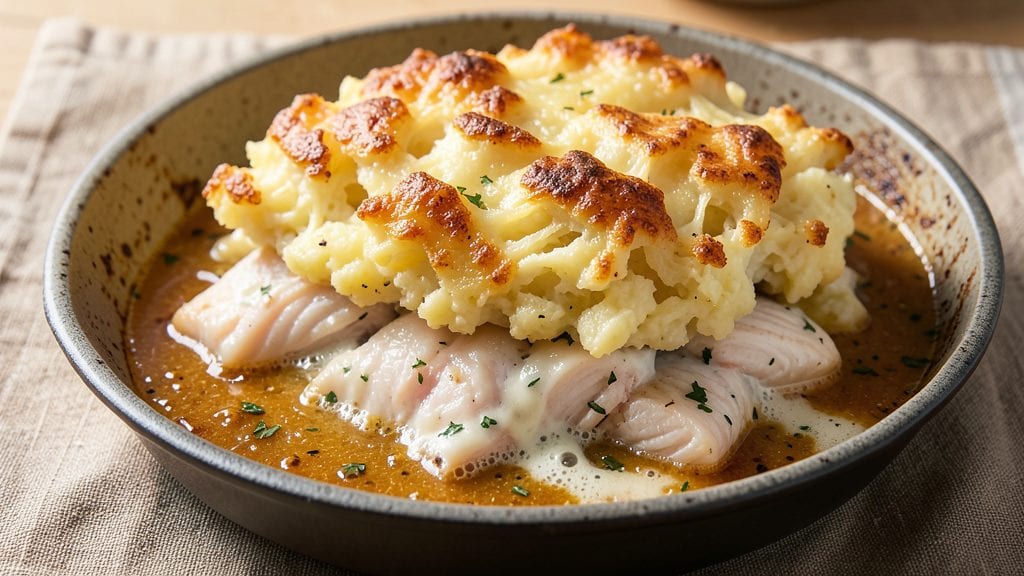
Gordon Ramsay's fish pie recipe delivers the creamy, flaky masterpiece that makes every bite worth the effort. This dish isn't just about comfort—it's about precision: a velvety cheese sauce, tender fish, and a golden pastry that shatters with the first forkful.
I've tested countless variations, and this method captures Ramsay's signature balance of richness and texture without compromise.
The secret lies in the sauce—double cream and sharp cheddar create that signature velvety finish, while a splash of white wine adds brightness. The fish layer stays tender when poached just until flaky, and the pastry gets its signature flakiness from cold butter and proper resting.
This isn't your grandmother's fish pie; it's a restaurant-quality dish with restaurant-quality results.
What you'll achieve is a pie with a crisp, golden crust that contrasts perfectly with the creamy filling underneath. The cheese sauce coats every bite of fish, while the flaky pastry adds a satisfying crunch.
The aroma alone will have your kitchen smelling like a British pub, and the taste? Pure indulgence that's impossible to resist.
Perfect for family dinners or special occasions, this recipe scales beautifully while maintaining its restaurant-quality standards. Let's recreate Ramsay's signature dish in your own kitchen—step by step, with all the professional touches that make it unforgettable.
Ingredients for fish pie gordon ramsay
Creamy sauce, flaky crust, and tender fish—this is Ramsay's perfect balance of textures and flavors.
| Ingredient | Amount | Notes |
|---|---|---|
| White Fish Fillets 🐟 | 1 ½ lb | Cod or haddock, skin removed |
| Heavy Cream 🥛 | 1 ½ cups | Full-fat for richness |
| Sharp Cheddar Cheese 🧀 | 1 ½ cups | Grated, aged variety preferred |
| Dry White Wine 🍷 | ½ cup | Sauvignon Blanc or Pinot Grigio |
| Milk 🥛 | ½ cup | Whole milk preferred |
| All-Purpose Flour 🌾 | 2 tbsp | For thickening sauce |
| Unsalted Butter 🧈 | ½ cup | Cold, cubed for pastry |
| All-Purpose Flour 🌾 | 2 cups | Plus 1 tbsp for pastry |
| Ice Water 💧 | ½ cup | For pastry dough |
| Salt 🧂 | 1 ½ tsp | Kosher salt total |
| Black Pepper 🌶️ | ½ tsp | Freshly cracked |
| Fresh Parsley 🌿 | ¼ cup | Chopped, for garnish |
| Garlic Cloves 🧄 | 3 cloves | Minced for sauce |
| Shallots 🧅 | 2 whole | Finely chopped |
| Lemon Juice 🍋 | 1 tbsp | Freshly squeezed |
The fish is non-negotiable for texture. Cod or haddock stays tender when poached, but pollock works too if that's what's available. Look for fillets with a clean, vibrant color and minimal fishy odor—Whole Foods or your local fishmonger usually have the freshest cuts. If you're using frozen, thaw it overnight in the fridge, not under running water (that turns the fish to mush). The cheese matters just as much: sharp cheddar from a block, freshly grated, gives that signature tang. Wedge from the deli if you're feeling fancy—pre-grated tastes like sawdust in comparison.
No white wine? Dry vermouth or chicken stock works in a pinch, but the acidity is key here. The sauce thickens with flour, but if you're avoiding gluten, cornstarch or arrowroot powder does the trick at half the amount. For the pastry, European-style butter (like Plugrá or President) makes it flakier, but regular unsalted butter works fine—just keep it cold. The lemon juice brightens everything, so don't skip it. And if you're short on parsley, chives or tarragon add a nice herbal note. The shallots? Substitute 2 tbsp onion powder if you're in a rush, but fresh is better.
This pie tastes even better the next day, so make it ahead if you can. The filling keeps 3 days in the fridge, and the pastry can be prepped 24 hours early—just wrap it tightly and chill. For the ultimate flaky crust, rest the dough for 30 minutes before rolling. And if you're serving a crowd, double the recipe—it scales beautifully. Leftovers? Reheat gently in the oven with a splash of milk to revive the sauce.
Why You'll Love This Recipe
- The secret’s in the layers: the wine cuts through the creaminess, the cheddar adds a tangy bite, and that first bite of flaky fish? It’s like a hug in dish form. Between us, I’ve made fish pie before, but this version actually tastes like it belongs in a proper restaurant.
- No Fuss, No Mess: I swear by this one—just pan-sear the fish, toss in the white wine and cream, then blanket it with cheese. Honestly, the only tool you’ll need is a knife and a fork to scrape the last bits out. That sharp cheddar melts into a golden crust while you’re still setting the table.
- Rich Without Trying: The secret’s in the layers: the wine cuts through the creaminess, the cheddar adds a tangy bite, and that first bite of flaky fish? It’s like a hug in dish form. Between us, I’ve made fish pie before, but this version actually tastes like it belongs in a proper restaurant.
- Leftover Luxury: Make it once, eat it twice. The pie reheats beautifully—just cover it with foil and pop it in the oven until bubbly. My kids beg for it the next day, and I don’t even have to pretend it’s fresh. (Yes, even on a Tuesday night.)
Step-by-step instructions for fish pie with flaky crust
Here's how to build that perfect balance of tender fish, velvety cheese sauce, and golden pastry.
Prepare the Fish Filling with Perfect Texture
Preheat your oven to 375°F. In a large oven-safe skillet, melt 0.5 cup unsalted butter over medium heat. Add the 2 whole shallots and 3 cloves garlic cloves, cooking for 3-4 minutes until softened but not browned. This gentle cooking releases their natural sweetness without bitterness.
Push the shallots to one side and add the 1.5 lb white fish fillets, skin-side down. Cook for 2-3 minutes until the fish just begins to flake easily when tested with a fork. Here's the thing—overcooking fish turns it rubbery, so watch carefully. Remove the fish and set aside.
In the same skillet, pour in the 0.5 cup dry white wine and 0.5 cup milk, scraping up any browned bits. Bring to a gentle simmer for 2 minutes to reduce slightly. Stir in 2 tbsp all-purpose flour and cook for 1 minute to create a light roux. This forms the foundation for your creamy sauce.
Create the Rich Cheese Sauce
Lower the heat to medium-low and gradually whisk in 1.5 cups heavy cream and 1.5 cups sharp cheddar cheese. Stir constantly until the cheese melts completely and the sauce thickens to a velvety consistency. You're aiming for a sauce that coats the back of a spoon but isn't gluey.
Return the cooked fish to the skillet and stir gently to coat each piece in the sauce. Add 1 tbsp lemon juice, 1.5 tsp salt, and 0.5 tsp black pepper. The lemon brightens the dish while balancing the richness. Let the mixture simmer for 3-4 minutes until everything is heated through and the sauce has thickened slightly.
Real talk: If the sauce starts to separate or looks too thick, whisk in 1-2 tablespoons of ice water to restore its smooth texture. This is where patience pays off—your sauce should be luxurious, not grainy.
Make the Flaky Pastry Crust
In a large bowl, combine 2 cups all-purpose flour and 1.5 tsp salt. Cut in the 0.5 cup cold unsalted butter using a pastry cutter or your fingers until the mixture resembles coarse crumbs with pea-sized butter pieces. This cold butter is what creates those beautiful flaky layers.
Add 0.5 cup ice water gradually, mixing just until the dough comes together. Don't overwork it—handle it as little as possible to maintain tender layers. Turn the dough onto a lightly floured surface and knead gently 3-4 times, then shape into a disk. Wrap in plastic and chill for 30 minutes while you prepare the filling.
Assemble and Bake to Golden Perfection
Transfer the fish and sauce mixture to a 9x13-inch baking dish. Roll out the chilled pastry dough on a floured surface to about 1/8-inch thickness. Here's the moment that matters: Drape the pastry over the filling, trimming any excess and sealing the edges by pinching them together. Cut a few small slits in the top to allow steam to escape.
Bake for 35-40 minutes until the pastry is deep golden brown and the filling is bubbling at the edges. The crust should be crisp enough to hold its shape when you lift it gently. If the top browns too quickly, tent loosely with foil after 20 minutes to prevent over-browning.
Remove from the oven and let rest for 10 minutes before serving. This resting time lets the juices redistribute, ensuring each bite is creamy and flavorful. Garnish with 0.25 cup chopped fresh parsley just before serving—it adds a fresh contrast to the rich filling.
Pro Tips For Making Fish Pie Gordon Ramsay
- Poach Fish Low & Slow: Skip the high-heat sear—this isn’t steak. Poach the fish fillets in the wine-milk mixture at a gentle simmer (just small bubbles) for 3-4 minutes max, or they’ll turn rubbery. I learned this the hard way when I rushed it and ended up with fish that fell apart like overcooked pasta.
- Whisk the Cream Cold: Never, ever warm the heavy cream before mixing it into the cheese sauce. Start with cold cream straight from the fridge—it blends smoother, doesn’t curdle, and gives that silky texture Ramsay raves about. Trust me, your future self will notice the difference.
- Grate Cheese Fresh: Pre-shredded cheese is a crime in this dish. It clumps and burns. Use a box grater for sharp cheddar—it melts faster, coats the fish better, and gives that golden crust on top. Yes, it takes 2 minutes extra, but the result is worth it.
- Bake Until Bubbly: Don’t peek or open the oven door early—steam is your friend. Bake the pie at 200°C (400°F) until the top is golden and the sauce bubbles vigorously around the edges, about 15-20 minutes. The center should jiggle slightly when you shake the dish. Overbaking dries out the fish faster than you can say “soggy bottom.”
Regional styles of fish pie gordon ramsay
British Pub Classic
This dish is a staple in British pubs, where it's traditionally served with crispy chips and a malt vinegar drizzle.
The original version often uses haddock or cod, lightly poached in a white wine and lemon broth, then smothered in a cheese sauce made with Stilton or sharp cheddar.
The pastry crust is typically a simple shortcrust or hot water crust, though Ramsay's flaky version elevates it to restaurant quality. 🍽️
Scottish Seafood Twist
In Scotland, fish pie often features smoked haddock or salmon instead of plain white fish, adding a smoky depth that pairs beautifully with the creamy sauce. I like to incorporate a splash of Scotch whisky (about 1 tbsp) into the sauce for a subtle, warming note.
The crust might also include oat flour for a nuttier texture, and the dish is often served with buttered neeps (turnips) and tatties (potatoes) for a full Scottish meal experience.
New England Coastal Style
On the East Coast of the U.S., fish pie often reflects local seafood traditions. Haddock or pollock are common, and the sauce might include clams or mussels for extra briny flavor.
I’ve seen versions where the crust is brushed with egg wash and sprinkled with poppy seeds for a touch of sweetness. Serve it with steamed green beans and a crisp white wine like Sauvignon Blanc to highlight the coastal influences.
Modern Fusion Approach
For a contemporary twist, consider adding roasted cherry tomatoes or caramelized onions to the filling for extra depth. Some chefs incorporate goat cheese into the sauce for a tangier profile, or even a hint of chili (like ½ tsp smoked paprika) for a subtle kick.
The pastry can also be experimented with—try a puff pastry for extra flakiness or a whole wheat crust for a lighter option. Garnish with fresh dill or microgreens for a modern touch.
Vegetarian Adaptation
To make this dish vegetarian, swap the fish for chickpeas or mushrooms (like portobello or cremini) sautéed with garlic and thyme. The cheese sauce remains the star, but you might add a splash of vegetable stock to keep it moist.
Top with nutritional yeast for a cheesy flavor boost. This version works especially well with a spinach and ricotta filling for extra richness.
Regional Wine Pairings
In the UK, Chardonnay (especially New Zealand Sauvignon Blanc) complements the dish’s creaminess. For the Scottish version, a smoky Islay Scotch whisky (neat or in cocktails) enhances the smoky haddock.
In New England, a crisp Riesling cuts through the richness, while the fusion version pairs well with a bold Pinot Noir to stand up to any added spices. Always serve chilled—45-50°F is ideal. 🍷
Nutrition facts
Frequently asked questions
Can I use frozen fish instead of fresh for this recipe?
but handle it carefully! Thaw frozen fish overnight in the fridge (never at room temperature) to maintain texture. For best results, pat it completely dry before cooking—this helps the sauce cling better. If using frozen fillets, add 1-2 extra minutes to the cooking time to ensure they're fully tender.
How do I prevent the pastry from shrinking during baking?
Chill the dough for at least 30 minutes before rolling, and work quickly when assembling. Seal the edges tightly by pinching them together with a fork. For extra insurance, brush the edges with a little beaten egg before adding the top crust—this creates a barrier that keeps everything contained.
What's the best way to reheat leftovers without drying out the pie?
Preheat oven to 350°F and cover the pie with foil. Heat for 15-20 minutes until warmed through. For a restaurant-style finish, remove the foil for the last 2 minutes to crisp the top. Avoid microwaving—it turns the pastry soggy and the sauce watery.
Can I make this ahead of time?
Yes! Assemble the pie (without baking) up to 24 hours ahead and refrigerate. Bake straight from the fridge, adding 5-10 minutes to the baking time. For the best texture, let it sit at room temperature for 30 minutes before baking. The flavors actually improve overnight!
What if I don't have white wine? What can I substitute?
Use dry vermouth or chicken stock in equal amounts. For acidity, add 1 tsp lemon juice or ½ tsp vinegar to the sauce. The key is balancing richness—skip the wine entirely only if you're adding extra lemon or acid elsewhere in the dish.