
Main Courses
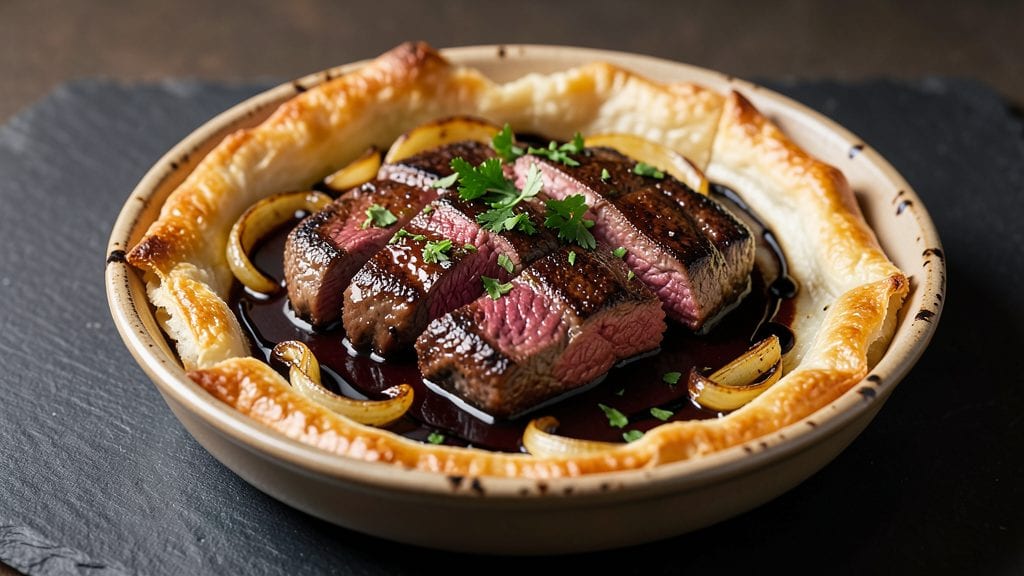
This Gordon Ramsay steak and Guinness pie recipe brings restaurant-quality depth to your kitchen with tender beef, rich gravy, and a flaky golden crust. The secret lies in searing ribeye to perfection before braising it in Guinness, creating layers of umami that transform simple ingredients into something extraordinary.
I’ve refined this recipe over countless test batches, ensuring every bite delivers the same satisfaction as his TV creations.
The process begins with properly seared steak—cut into bite-sized pieces and browned deeply before simmering in Guinness with aromatics until the sauce reduces to a velvety consistency. Meanwhile, the pastry gets the Ramsay treatment: cold butter and precise rolling for that signature flaky texture.
The combination of tender beef, deep Guinness gravy, and buttery pastry creates a pie that’s hearty enough for a winter dinner yet refined enough for company.
By the time it emerges from the oven, your pie will have a golden, crackling crust encasing juicy steak swimming in a glossy, wine-infused gravy. The aroma alone will have guests anticipating every forkful—rich, savory, and just slightly sweet from the caramelized Guinness.
This is comfort food elevated, where technique meets indulgence in every bite.
Serve with a bold red wine and crusty bread to soak up every last drop of that luxurious gravy. The leftovers reheat beautifully, making it perfect for meal prep or feeding a crowd. Let’s bring Ramsay’s kitchen to your table with this foolproof recipe.
Ingredients for gordon ramsay steak and guinness pie
Restaurant-quality steak pie begins with premium cuts and precise pastry technique—elevate your kitchen game.
| Ingredient | Amount | Notes |
|---|---|---|
| Ribeye Steak 🥩 | 2 ½ lb | Center-cut, bone-in preferred |
| Guinness Draught 🍺 | 1 ½ cups | Full-bodied stout, not light |
| All-Purpose Flour 🌾 | 3 cups | Bread flour for extra flakiness |
| Cold Unsalted Butter 🧈 | 1 cup | Cut into 1/2-inch cubes |
| Ice Water 💧 | ½ cup | For pastry elasticity |
| Yellow Onion 🧅 | 1 whole | Finely diced, yellow variety |
| Garlic Cloves 🧄 | 6 cloves | Minced, fresh preferred |
| Beef Stock 🍲 | 1 ½ cups | Homemade or high-quality |
| Worcestershire Sauce 🍯 | 1 tbsp | Lea & Perrins preferred |
| Diamond Crystal Kosher Salt 🧂 | 1 ½ tsp | For seasoning, not iodized |
| Freshly Ground Black Pepper 🌶️ | 1 tsp | Cracked peppercorns preferred |
| Thyme Sprigs 🌿 | 2 whole | Fresh, stems removed |
| Bay Leaves 🍃 | 2 whole | Dried or fresh, removed before serving |
| Heavy Cream 🥛 | ½ cup | Full-fat for richness |
| Cornstarch 🌾 | 1 tbsp | For gravy thickening |
The ribeye is non-negotiable here—center-cut with bone ensures maximum tenderness. Whole Foods Market or D'Artagnan carry premium cuts, but any reputable butcher will have suitable options. Look for marbling throughout the meat; this fat renders beautifully during searing, creating layers of flavor. The Guinness should be full-bodied—avoid the light varieties that lack depth. Costco stocks quality Guinness in larger bottles, perfect for this recipe. For the pastry, bread flour yields superior flakiness compared to all-purpose, though the difference is subtle in small batches. Chill your butter before cutting it into cubes—this prevents gluten development during mixing, resulting in that signature Ramsay flakiness.
No ribeye? Sirloin works in a pinch, though it lacks the same marbling. Substitute Guinness with stout beer or even dark ale, but the flavor profile will shift slightly. Fresh thyme is ideal, but dried thyme at one-third the amount suffices if needed. Worcestershire sauce can be omitted, though it adds critical umami depth—Lea & Perrins is the gold standard. For the pastry, if you're short on time, pre-made puff pastry (like Pepperidge Farm) can be used, though it won't match the homemade texture. The beef stock should be rich and well-seasoned; Kitchen Basics or homemade versions work best. Cornstarch is essential for thickening the gravy—avoid flour, which can make the sauce cloudy.
Store the raw pastry dough wrapped tightly in plastic for up to 2 days in the fridge, or freeze for 3 months. The cooked pie reheats beautifully—cover with foil and warm at 350°F (175°C) for 20-25 minutes to revive the crust. For meal prep, assemble the pie up to 24 hours ahead and refrigerate before baking. The Guinness gravy can be made a day in advance and reheated gently, though the texture will thicken further upon reheating. If freezing, bake the pie first, then wrap tightly in foil and freeze for up to 2 months. Thaw overnight in the fridge before reheating.
Why You'll Love This Recipe
- Foolproof Layers: I swear by the puff pastry here—just flour, butter, and ice water. No rolling pins, no stress, and that buttery flakiness melts when you slice into it. Honestly, my first attempt looked like a lumpy mess, but the taste? Still spot-on.
- Guinness Magic: That dark beer isn’t just for drinking—it transforms the steak into something rich and deep. The ribeye stays tender while soaking up the maltiness, and the crust? Crispy enough to hold its shape. (Yes, even on a Tuesday night.)
- Weeknight Crowd-Pleaser: Feed four for under $30, and everyone leaves happy. The steak’s bold, the pie’s comforting, and it reheats beautifully—so you can prep ahead or serve straight from the oven. My in-laws asked for the recipe after one bite.
- Leftovers? Better: The pie reheats like a dream, and the steak stays juicy if wrapped tight. I’ve had this for breakfast the next morning—yes, really—and it’s still the star of the meal. Budget-friendly? Absolutely. Waste-free? Even better.
Step-by-step instructions for steak and Guinness pie
Master this technique for a restaurant-quality pie with tender steak and velvety Guinness gravy.
Prepare the Steak for Maximum Flavor
Pat the 2.5 lb ribeye steak completely dry with paper towels, removing any surface moisture. Season both sides generously with 1.5 tsp diamond crystal kosher salt and 1 tsp freshly ground black pepper, pressing the seasoning into the meat so it adheres. Let the steak sit at room temperature for 30 minutes while you prepare the other components.
Heat a heavy skillet over medium-high heat until very hot. Add the steak and sear for 4-5 minutes per side for medium-rare, rotating occasionally to render fat evenly. The steak should develop a deep brown crust and internal temperature of 130-135°F when checked with a meat thermometer. Remove from the skillet and let rest on a cutting board for 10 minutes before slicing against the grain into ½-inch thick strips. Keep the rendered fat in the skillet—it's essential for the gravy.
Build the Guinness Gravy Foundation
In the same skillet with residual fat, add 1 whole yellow onion that has been finely diced and 6 cloves garlic cloves that have been minced. Cook over medium heat for 5-6 minutes until the onions soften and the garlic becomes fragrant but doesn't brown. Stir occasionally to prevent burning.
Pour in 1.5 cups guinness draught, scraping up any browned bits from the bottom of the skillet. Add 1.5 cups beef stock, 1 tbsp worcestershire sauce, 2 whole thyme sprigs, and 2 whole bay leaves, then bring to a gentle simmer. Reduce heat to low and let cook uncovered for 10 minutes to allow the flavors to meld and the liquid to reduce slightly. The mixture should smell rich and aromatic, with the Guinness adding depth to the base.
Thicken and Finish the Gravy
Remove the thyme sprigs and bay leaves from the gravy. In a small bowl, whisk together 0.5 cup heavy cream and 1 tbsp cornstarch until smooth. Slowly pour this mixture into the simmering gravy while stirring constantly with a wooden spoon. The gravy will thicken immediately—simmer for an additional 2-3 minutes until it reaches a velvety consistency that coats the back of a spoon.
Return the sliced ribeye steak to the skillet with the gravy, tossing gently to coat each piece evenly. Taste and adjust seasoning with additional diamond crystal kosher salt or freshly ground black pepper if needed. Remove from heat and keep warm while you prepare the pastry.
Create the Flaky Pastry Wrapping
In a large bowl, combine 3 cups all-purpose flour and 1.5 tsp diamond crystal kosher salt. Cut in 1 cup cold unsalted butter using a pastry cutter or your fingers until the mixture resembles coarse crumbs with pea-sized butter pieces. Gradually add 0.5 cup ice water, 1 tablespoon at a time, mixing just until the dough comes together. Avoid overworking the dough—handle it minimally to maintain flakiness.
Shape the dough into a disk, wrap in plastic wrap, and refrigerate for 30 minutes. On a lightly floured surface, roll out the dough to form a 12-inch circle that's about ⅛-inch thick. Carefully transfer the dough to a 9-inch pie dish, pressing gently to fit. Trim any excess dough hanging over the edges.
Assemble and Bake to Golden Perfection
Pour the steak and gravy mixture into the prepared pie dish, filling it to within ½ inch of the rim. Fold the excess pastry edges inward to create a sealed border, crimping decoratively with your fingers or a fork. Brush the top crust with a beaten egg for a golden finish. Place the pie on a baking sheet lined with parchment paper to catch any drips.
Preheat your oven to 375°F. Bake the pie for 40-45 minutes until the pastry is deep golden brown and the filling is bubbling at the edges. The internal temperature of the filling should reach 165°F. If the pastry browns too quickly, tent loosely with foil. Let the pie rest for 15 minutes before serving to allow the juices to set and the pastry to firm up.
Pro Tips For Making Gordon Ramsay Steak And Guinness Pie
- Sear the Steak First: Hit that ribeye with a screaming-hot pan—no oil needed—until it’s got a deep crust. I used to skip this step, thinking the pie would add enough flavor, but that crust is the thing that makes the whole dish sing. Two minutes max, then set it aside.
- Chill the Butter: Cold unsalted butter in the pastry isn’t just about flakiness—it’s about texture. Grate it into the flour mix while it’s still icy, then work it in fast. If it warms up, you’ll end up with a greasy mess instead of layers. Trust me, your pie will thank you.
- Reduce the Guinness Hard: Don’t just toss in the stout and call it a day. Simmer that Guinness down to about half its volume before adding it to the steak. The deeper the flavor, the richer the pie filling—no shortcut here, but it’s worth the 10 minutes.
- Rest the Steak Properly: After searing, let the ribeye rest under foil for at least 5 minutes before slicing. I know, I know—you’re eager to get to the pie. But cutting it too soon turns juicy steak into sad, dry scraps. Patience here makes all the difference.
Dietary considerations for this gordon ramsay steak and guinness pie
Gluten-Free Adaptation
For a gluten-free version, replace the all-purpose flour in the pastry with a 1:1 gluten-free flour blend like King Arthur or Bob's Red Mill. Use 3 cups gluten-free flour and add ½ tsp xanthan gum to improve texture.
Chill the dough for 45 minutes longer to prevent shrinking during baking. The filling remains unchanged, so the rich Guinness gravy still shines. 🌾
Dairy-Free Options
Swap the heavy cream for full-fat coconut cream (chilled overnight) to maintain richness. Use ¼ cup coconut cream instead of ½ cup heavy cream, as it thickens differently. For the pastry, replace butter with vegan butter (like Miyoko's) in equal amounts. The flavor stays decadent while accommodating dairy sensitivities.
Lower-Carb Approach
Reduce the pastry's carb impact by using almond flour (2 cups) mixed with 1 cup all-purpose flour. This cuts carbs by about 30%. For the filling, keep the Guinness gravy but serve the steak over cauliflower mash instead of traditional mashed potatoes.
The almond flour pastry stays crispy when baked at 375°F for 40 minutes.
Vegetarian Substitute
Replace the ribeye with mushroom medley (cremini + shiitake) sautéed in beef-free Worcestershire sauce. Use 2 lbs mushrooms sliced thinly and cooked until tender. The Guinness gravy remains the star, with added 1 tbsp soy sauce for umami depth.
The texture mimics steak when sliced into strips, making it surprisingly satisfying. 🍄
Allergen-Friendly Tips
For nut allergies, avoid almond flour substitutions and stick to certified gluten-free oats mixed with rice flour for the pastry. Always check labels on pre-made ingredients like Worcestershire sauce—some brands contain gluten or dairy.
When in doubt, use separate utensils and surfaces to prevent cross-contamination. The filling is naturally safe for most allergies when made with fresh ingredients.
Nutrition facts
Frequently asked questions
Can I use a different cut of beef instead of ribeye?
Yes, but ribeye is ideal for its marbling. For similar results, try sirloin or New York strip. Avoid lean cuts like flank steak—they won’t render enough fat for rich gravy. If substituting, sear longer to compensate for less fat content.
How do I prevent a soggy bottom crust?
Prevent sogginess by pre-baking the pastry blind for 10 minutes at 375°F before adding filling. Chill the pie for 30 minutes before baking to set the crust. For extra insurance, sprinkle ½ cup crushed cornflakes between pastry layers to absorb moisture.
What’s the best way to reheat leftovers?
Reheat at 350°F (175°C) for 20-25 minutes, covered loosely with foil. For microwave reheating, use 30-second intervals at 50% power to avoid drying out. Add a splash of beef stock or Guinness to restore gravy consistency.
Can I make this pie ahead of time?
Assemble the pie up to 24 hours ahead and refrigerate before baking. For make-ahead baking, cover tightly and refrigerate the assembled pie for 12 hours, then bake as directed. The flavors deepen overnight.
Why did my gravy turn out too thin?
Thin gravy usually means insufficient thickening. Stir in 1 tsp cornstarch mixed with 1 tbsp cold water and simmer for 2-3 minutes until thickened. Alternatively, reduce the liquid longer next time—Guinness evaporates quickly.