
Main Courses
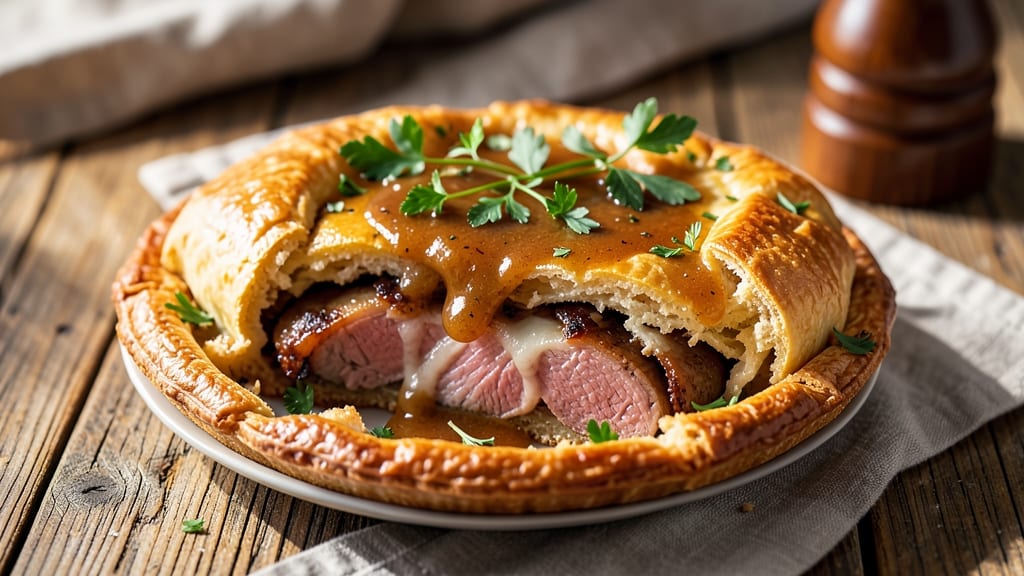
Mary Berry's pork pie recipe delivers the perfectly crispy crust and rich, savory filling that makes this classic dish unforgettable. The secret lies in a delicate balance of seasoned pork, aromatic herbs, and a lattice crust that bakes to golden perfection.
I've refined this recipe over years to capture Mary Berry's signature technique—where the mustard and vinegar in the filling elevate the flavors to restaurant-quality levels.
This recipe transforms simple ingredients into a showstopping centerpiece, with a foolproof puff pastry that yields a flaky, crispy crust every time. The filling, rich with minced pork, mustard, and a touch of vinegar, develops deep, complex flavors as it bakes slowly.
Blind-baking the crust ensures it holds its shape and achieves that coveted crispness, while the lattice design adds both elegance and structural integrity.
What you'll achieve is a pork pie with a crispy, golden crust that flakes effortlessly and a moist, flavorful filling that's tender yet packed with savory depth. The aroma alone will have everyone gathering around the table, and the first bite delivers that perfect harmony of textures and tastes.
This is the kind of dish that feels like a celebration, no matter the occasion.
Whether you're serving it at a holiday feast or a casual Sunday lunch, this recipe delivers restaurant-quality results at home. The key lies in patience—letting the filling rest before assembly and baking the pie until the crust is deeply golden. Trust me, the wait is worth every minute.
Ingredients for pork pie recipe mary berry
Sixteen ingredients, one legendary crust. Master these staples for Mary Berry's signature pork pie.
| Ingredient | Amount | Notes |
|---|---|---|
| Pork Shoulder 🥩 | 2 ½ lb | Boneless, trimmed of fat |
| Unsalted Butter 🧈 | ½ cup | Cold, cubed for pastry |
| All-Purpose Flour 🌾 | 3 cups | Plus 2 tbsp for dusting |
| Ice Water 💧 | ¼ cup | For dough elasticity |
| Dijon Mustard 🌶️ | 2 tbsp | High-quality, smooth |
| Apple Cider Vinegar 🍎 | 1 tbsp | For tangy brightness |
| Fresh Thyme Leaves 🌿 | 1 tbsp | Finely chopped |
| Fresh Parsley Leaves 🌿 | 1 tbsp | Finely chopped |
| Garlic Cloves 🧄 | 4 cloves | Minced, not pre-minced |
| Salt 🧂 | 1 ½ tsp | Diamond Crystal preferred |
| Ground Black Pepper 🌶️ | ½ tsp | Freshly cracked |
| Egg Yolk 🥚 | 1 whole | For egg wash |
| Milk 🥛 | 1 tbsp | For egg wash |
The pork shoulder is non-negotiable—look for well-marbled cuts at your butcher or Costco for the best value. Trim excess fat but leave some for flavor. For the pastry, Allinson flour or King Arthur yields the lightest texture. Keep everything cold until assembly—Mary Berry swears by this for that signature flaky crust. The Dijon mustard should be smooth, not whole-grain, and the vinegar must be apple cider, not white. Fresh herbs make all the difference here: Withered thyme or parsley will kill the flavor.
No Dijon mustard? Whole-grain mustard thinned with vinegar works in a pinch, though the texture differs. Substitute apple cider vinegar with white vinegar, but reduce to 1/2 tbsp—it's sharper. For the pastry, pre-made puff pastry saves time, but homemade delivers that restaurant-quality crispness. If using store-bought, Duff Gold or Pepperidge Farm are reliable choices. The egg wash? Don't skip it—it's what gives that golden sheen. For extra insurance, brush with milk first, then egg wash.
Assemble the pie and refrigerate for at least 30 minutes before baking—this prevents a soggy bottom. The filling can be made 1 day ahead and stored in the fridge. For the pastry, wrap tightly in plastic and keep in the coldest part of your fridge. Blind-bake the crust for 15 minutes before adding filling to ensure it holds its shape. Leftovers keep for 4 days in the fridge, but reheat gently to preserve that crispy crust.
Why You'll Love This Recipe
- No-Knead Magic: The dough comes together with just flour, butter, and ice water—no mixer, no fuss. Honestly, I’ve made pie crusts that required more effort for half the result.
- Dijon Mustard Twist: That tangy Dijon in the filling cuts through the richness of the pork shoulder, giving it a bright, sophisticated edge. It’s the secret that makes this pie feel gourmet without trying too hard.
- Weeknight to Party: Same recipe works for a lazy Sunday dinner or a dinner party. Between us, I’ve served this cold with pickles at a summer BBQ—no one batted an eye.
- Leftovers That Shine: The filling reheats beautifully, and the crust stays crisp. I’ll be real: my lunchbox gets packed with slices for days, and the kids never complain. Budget win.
Step-by-step instructions for Mary Berry's pork pie
Master this classic technique for a meat pâté with tender, flavorful filling and a golden, flaky crust.
Prepare the Pork Filling
Preheat your oven to 325°F and line a baking dish with parchment paper. Place the 2.5 lb pork shoulder in the dish, fat-side up. Roast uncovered for 2 hours until the meat is fork-tender and the internal temperature reaches 180°F. This slow cooking ensures the meat falls apart easily.
While the pork roasts, make the filling mixture. In a food processor, combine the cooked pork with 2 tbsp Dijon mustard, 1 tbsp apple cider vinegar, 1 tbsp finely chopped fresh thyme, 1 tbsp finely chopped fresh parsley, 4 minced garlic cloves, 1.5 tsp salt, and 0.5 tsp freshly cracked black pepper. Pulse until the mixture is finely chopped but still slightly textured.
Transfer the pork mixture to a bowl and let it cool slightly. The filling should be moist but not wet—if it needs binding, add 1 tbsp ice water at a time until it reaches a spreadable consistency. This step is crucial for achieving that perfect, smooth texture Mary Berry is known for.
Make the Pâté Dough
In a large bowl, combine 3 cups all-purpose flour and 0.5 cup cold, cubed unsalted butter. Using your fingertips, rub the butter into the flour until the mixture resembles coarse crumbs with pea-sized butter pieces remaining. This cold butter method is key to achieving a flaky crust.
Add 1 whole egg yolk and 1 tbsp milk to the flour mixture and mix gently with a fork until the dough just begins to come together. Gradually add 0.25 cup ice water one tablespoon at a time, mixing gently after each addition. The dough should be just moist enough to hold together when pressed but not sticky.
Turn the dough onto a lightly floured surface and knead gently for 2-3 minutes until smooth. Wrap the dough in plastic wrap and refrigerate for 30 minutes. This resting period allows the gluten to relax, making it easier to roll out and preventing shrinking during baking.
Assemble and Bake the Pâté
Preheat your oven to 375°F. Roll out the chilled dough on a lightly floured surface to a 12-inch circle, about 1/8-inch thick. Transfer the dough to a baking sheet lined with parchment paper. Spread the pork filling evenly over the dough, leaving a 1-inch border around the edges.
Roll out another 12-inch circle of dough for the top crust. Cut a 1-inch wide strip from around the edge of this top dough circle. Brush the edges of the bottom crust with the egg wash (mix the remaining 1 whole egg yolk with 1 tbsp milk), then place the top crust on the filling. Crimp the edges by pinching the top and bottom dough together, using the cut strip to seal the edges tightly.
Brush the top crust with egg wash and make a small slit in the center to allow steam to escape. Bake for 40-45 minutes until the crust is deep golden brown and the filling is bubbling through the slit. The pie is done when the internal temperature of the filling reaches 165°F.
Rest and Serve
Remove the pâté from the oven and let it cool on a wire rack for 1 hour. This resting period is essential—it allows the filling to set properly and the crust to firm up. Serve the pâté at room temperature for the best texture and flavor.
To slice, use a sharp knife and cut through the crust and filling together. Each slice should reveal a tender, moist filling encased in a crisp, flaky crust. The combination of the rich pork, tangy mustard, and aromatic herbs creates a harmonious balance of flavors that's both comforting and impressive.
Pro Tips For Making Pork Pie Recipe Mary Berry
- Trim the Fat First: Mary Berry’s recipe relies on pork shoulder, but if you leave the fat on, your pastry will steam instead of crisp. Trim it down to a ½-inch layer—this keeps the crust golden and the filling juicy without sogginess. (Yes, even if you’re impatient like me, resist the urge to skip this.)
- Chill the Dough Twice: The pastry dough needs a full 30-minute rest in the fridge before rolling, but I’ve learned the hard way that a second 15-minute chill after shaping makes all the difference. Cold dough = easier handling and a flakier crust. No shortcuts here—your future self will thank you.
- Don’t Overwork the Filling: The Dijon mustard and butter filling is delicate—mix it just until combined, or you’ll end up with a dense, greasy mess. Overmixing releases too much gluten, and suddenly your pie tastes like a sad, heavy pudding instead of something light and buttery. Stop when the butter’s just pea-sized.
- Blind-Bake the Crust: If you skip the blind-baking step (weighing down the crust with pie weights or dried beans), the filling will turn your beautiful pastry into a soggy boat. Bake the crust for 15 minutes before adding the filling—it’s the non-negotiable step that keeps everything crisp. (I know, I know, but trust the process.)
Best sauces and condiments for this pork pie recipe mary berry
Classic Gravy Pairing
Mary Berry's pork pie pairs beautifully with a rich, savory gravy made from the pork drippings. After roasting the pork shoulder, strain the juices and deglaze the pan with 2 tbsp apple cider vinegar and 1 cup beef stock.
Simmer for 5 minutes with 1 tsp cornstarch mixed with 2 tbsp cold water to thicken. Season with ½ tsp salt and ¼ tsp black pepper—this gravy elevates every bite. 🍽️
Mustard Cream Sauce
For a creamy twist, blend ½ cup crème fraîche with 1 tbsp Dijon mustard and 1 tsp apple cider vinegar. Thin with 2 tbsp warm beef stock for a silky sauce that complements the pie's tangy filling.
Drizzle over slices or serve on the side for dipping. This sauce cuts through the richness while enhancing the mustard flavor. ✨
Pickled Vegetable Accompaniment
Brighten the meal with quick-pickled vegetables like red onions, carrots, and radishes. Thinly slice the veggies, pack into a jar, and cover with a mixture of 1 cup apple cider vinegar, 1 tbsp sugar, and 1 tsp salt.
Let sit for 2 hours before serving. The acidity balances the pork's richness perfectly. 🥕
Apple Chutney Contrast
Sweet-tart apple chutney adds a delightful contrast to the savory pie. Cook 2 cups diced apples, 1 small onion, ½ cup apple cider vinegar, ¼ cup brown sugar, and 1 tsp ground ginger in a saucepan for 20 minutes until thickened.
The chutney’s brightness enhances the pie’s depth while adding a festive touch. 🍏
Whole-Grain Mustard Aioli
Blend ½ cup mayonnaise, 2 tbsp whole-grain mustard, 1 tsp apple cider vinegar, and 1 clove roasted garlic for a bold dip. Serve alongside the pie for a creamy, tangy contrast.
This aioli is rich enough to stand alone but light enough to complement the crust’s flakiness. 🧄
Herbed Butter for Dipping
Mix ½ cup softened butter with 1 tbsp chopped fresh thyme, 1 tbsp chopped parsley, and ½ tsp salt. Shape into a log, wrap in parchment, and chill for 1 hour.
Slice and serve with the pie for a luxurious, herby finish. The butter’s richness pairs perfectly with the crisp crust. 🧈
Nutrition facts
Frequently asked questions
Can I use ground pork instead of roasted pork shoulder?
While you can substitute 1 lb ground pork for the roasted shoulder, the texture and flavor won't be identical. Ground pork lacks the tender, slow-cooked quality of roasted meat. If you must use it, brown the pork first in a pan with the same seasonings, then cool before mixing with the mustard and vinegar. The result will be more compact but still delicious.
How do I prevent the crust from shrinking during baking?
Mary Berry's trick is all about chilling the dough properly. After kneading, wrap the dough tightly in plastic and refrigerate for at least 30 minutes (up to 2 hours). This relaxes the gluten and prevents shrinking. Also, avoid overworking the dough—handle it gently when rolling. A 12-inch circle should maintain its shape if baked at 375°F with proper egg wash sealing.
What's the secret to a crispy lattice crust?
The lattice technique requires precise cutting: roll out the top crust, then use a sharp knife to make 1-inch wide strips (cut every 1/2 inch apart). Weave every other strip over the filling in an "X" pattern, leaving gaps for steam to escape. Brush the exposed filling with egg wash before baking to create a golden, crispy finish. The key is patience—bake until the crust is deep golden brown (about 40-45 minutes).
Can I make this pork pie ahead of time?
Assemble the pie (unbaked) and refrigerate for up to 24 hours before baking. For best results, blind-bake the crust first if making it a day ahead. Once baked, store at room temperature for 2 days or refrigerate for 4 days. Reheat slices in a 350°F oven for 10 minutes to restore the crust's crispness. The flavors actually improve after resting!
Why does my filling look dry after baking?
Dry filling usually means the pork wasn't cooked long enough or the mixture was too loose. First, ensure the pork reaches 180°F internally. Second, the filling should be moist but not wet—add 1 tbsp ice water at a time if needed. If the pie still seems dry, brush the top crust with extra egg wash during baking to add moisture. Mary Berry's recipe balances mustard and vinegar perfectly, so measure carefully.