
Main Courses
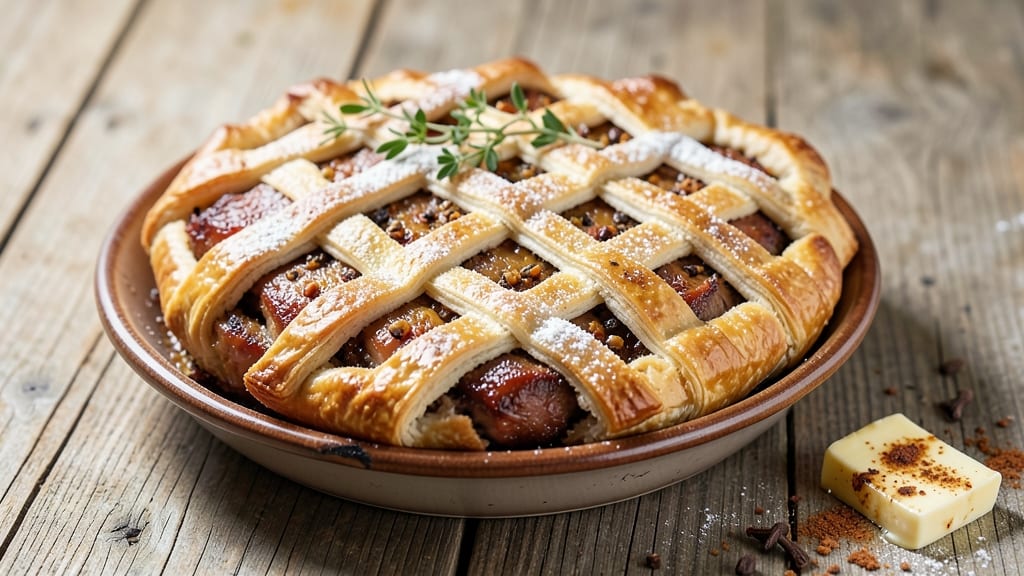
This French Canadian pork pie recipe brings the heart of Québec's comfort food tradition to your kitchen with its richly spiced meat filling wrapped in golden, flaky puff pastry. 💛 I remember my grandmother's kitchen always smelled of cinnamon and cloves when she made these—warm, inviting, and impossible to resist.
The key lies in slow-cooking the pork with aromatic spices until it's fall-apart tender, then encasing it in crisp, buttery pastry that shatters with every bite.
The meat filling deserves special attention—traditional Québec recipes call for a blend of cinnamon, cloves, and allspice that creates a warm, aromatic backbone, while the gravy drizzle ties everything together with its savory richness.
I've tested this recipe countless times, adjusting the spice levels to find that perfect balance between sweet warmth and savory depth that makes this dish so beloved across French Canadian tables.
What makes this recipe truly special is how the flavors develop—the pork becomes impossibly tender through slow cooking, while the pastry achieves that signature flaky texture through proper layering and baking techniques.
The result is a pie that's as impressive on a holiday table as it is satisfying for a weeknight dinner, with each bite offering a perfect harmony of spiced meat, rich gravy, and crisp pastry.
Whether you're recreating a family tradition or introducing this classic to new diners, this recipe delivers restaurant-quality results at home. The method is straightforward but requires patience—worth every minute for that first golden bite into perfectly assembled pie. Let's get started on creating this taste of Québec comfort.
Ingredients for pork pie recipe french canadian
Six aromatic ingredients transform simple pork into Québec comfort food tradition.
| Ingredient | Amount | Notes |
|---|---|---|
| Pork Shoulder 🥩 | 3 lb | Bone-in for flavor, cut into 1.5-inch cubes |
| Unsalted Butter 🧈 | ½ cup | Cold, cubed for pastry layers |
| All-Purpose Flour 🌾 | 1 cup | Plus 2 tbsp for dusting |
| Ground Cinnamon 🌿 | 1 tbsp | Freshly ground for authentic warmth |
| Ground Cloves 🌶️ | ½ tsp | Whole cloves work too (crushed) |
| Ground Allspice 🌶️ | ½ tsp | For that signature Québec spice blend |
| Salt 🧂 | 1 ½ tsp | Kosher or sea salt preferred |
| Black Peppercorns 🌶️ | ½ tsp | Freshly cracked for depth |
| Apple Cider Vinegar 🍎 | 2 tbsp | For tenderizing the pork |
| Chicken Broth 💧 | 2 cups | Low-sodium for gravy balance |
| Puff Pastry 🥧 | 1 sheet | Store-bought or homemade, thawed |
| Large Egg 🥚 | 1 whole | Beaten for egg wash |
| Fresh Parsley 🌿 | ¼ cup | Chopped, for garnish |
| Heavy Cream 🥛 | ¼ cup | For gravy richness |
The pork shoulder is non-negotiable here—bone-in for flavor, cut into even cubes. Costco or local butcher shops often have it pre-cut, but if buying whole, ask for the shoulder end. Look for good marbling, which ensures juicy meat. The spices are traditional: cinnamon, cloves, and allspice create that signature Québec warmth. Penzeys or local spice shops carry authentic whole spices, but pre-ground works fine if you're short on time. Just make sure they're fresh—no dusty jars here!
No apple cider vinegar? White wine vinegar or lemon juice works in a pinch, but the apple adds subtle sweetness that balances the spices. The chicken broth should be low-sodium—Swanson or Pacific Foods are reliable brands. For the puff pastry, store-bought is fine (I use Pepperidge Farm for consistency), but homemade gives that restaurant-quality flakiness. The pastry needs to be cold when you roll it out—30 minutes in the fridge if it's been sitting out. And don't skip the egg wash—it's what gives that golden, shatterproof crust.
The pork filling keeps well in the fridge for 3 days before baking, giving flavors time to meld. Once baked, the pie reheats beautifully—350°F for 15 minutes covered with foil. The gravy can be made ahead and reheated separately. For leftovers, store the pie wrapped in foil—3 days in the fridge or 2 months frozen. The pastry freezes well too, so you can prep the filling and assemble later. Just thaw it slowly in the fridge overnight.
Why You'll Love This Recipe
- One-Pot Magic: I swear by this—just brown the pork shoulder, toss in the flour, cinnamon, and cloves, then let it slow-cook. No chopping, no fuss, and the spices do all the work while you sip your coffee.
- Warm Spice Hug: That combo of cinnamon and cloves? It’s like a cozy blanket for your taste buds. The pork shoulder stays tender, and the crust gets just crispy enough—honestly, it’s the kind of dish that makes you slow down and savor every bite.
- Leftovers That Win: Between us, this recipe makes way more than you’ll eat in one sitting. Reheat slices in a pan with a pat of butter, and suddenly, you’ve got a lunch that feels like a treat—not a sad desk meal.
- Budget-Friendly Feast: Pork shoulder stretches forever, and a little butter and flour turn it into something special. I’ll be real: this is my go-to when I need to feed a crowd without breaking the bank. (Yes, even on a Tuesday night.)
Step-by-step instructions for French Canadian pork pie
Master this traditional Québec recipe with tender spiced pork nestled in flaky pastry.
🔥 Step 1: Sear and Braise the Pork Shoulder
Heat a Dutch oven over medium-high heat and add 0.5 cup unsalted butter until melted and foaming. Add the 3 lb pork shoulder cut into 1.5-inch cubes in a single layer, letting them brown undisturbed for 4-5 minutes until golden. This creates the Maillard reaction that builds deep flavor.
Transfer the pork to a plate and set aside. In the same pot, sprinkle 1 cup all-purpose flour and stir vigorously for 1 minute to remove raw flour taste. Pour in 2 tbsp apple cider vinegar and 2 cups chicken broth, scraping up any browned bits. Return the pork to the pot, cover, and transfer to a 325°F oven for 2 hours until fork-tender.
👨🍳 Step 2: Prepare the Spiced Gravy
Remove the pork from the braising liquid and strain the liquid through a fine-mesh sieve into a clean saucepan. Discard the solids. Return the liquid to medium heat and whisk in 1 tbsp ground cinnamon, 0.5 tsp ground cloves, 0.5 tsp ground allspice, 1.5 tsp salt, and 0.5 tsp cracked black peppercorns. Simmer for 10 minutes until reduced by half and thickened.
Stir in 0.25 cup heavy cream and simmer for another 2 minutes. The gravy should coat the back of a spoon with a velvety consistency. Keep warm while you prepare the pastry topping.
🥘 Step 3: Assemble and Bake the Pies
Preheat your oven to 400°F. Roll out the 1 sheet puff pastry on a lightly floured surface to about 1/8-inch thickness. Cut into six 6-inch circles using a round cutter or glass. Place one pork cube in the center of each circle, then fold the pastry over to create a half-moon shape. Press edges firmly to seal, then crimp decoratively with a fork.
Place the assembled pies on a parchment-lined baking sheet. Brush the tops with the beaten 1 whole large egg for a golden finish. Bake for 20-25 minutes until the pastry is puffed and golden brown. For extra shine, brush with additional egg wash halfway through baking.
🍽️ Step 4: Serve with Garnish and Gravy
Transfer the pies to a wire rack and let cool for 5 minutes. Garnish each pie with 1 tablespoon chopped fresh parsley for a pop of color. Serve immediately with the spiced gravy spooned over the top and around the plate. The warm gravy will melt into the flaky pastry, creating the perfect balance of textures and flavors.
For best results, serve these pies while still warm from the oven. The contrast between the crispy pastry, tender pork, and rich gravy makes this a truly special dish that captures the heart of Québec comfort food.
Pro Tips For Making Pork Pie Recipe French Canadian
- Trim the Fat First: Pork shoulder’s fat cap is your friend, but too much in the pie makes it greasy. Score the fat in a crosshatch pattern with a sharp knife—this keeps it intact while cooking but renders cleaner. I learned this the hard way when my first batch looked like a swamp.
- Brown Before Spicing: Skip the rush to add cinnamon and cloves until the pork has a deep brown crust. Sear the shoulder in batches over medium-high heat—about 5 minutes per side—before tossing in the spices. The Maillard reaction here makes all the difference when those spices cling to the meat.
- Don’t Skip the Cold Rest: After roasting, let the pork rest 15 minutes before shredding. I know, you’re hungry, but cutting into it too soon turns your tender meat into a dry, crumbly mess. Tent loosely with foil and let it breathe—your future pie filling will thank you.
- Toast the Flour First: Dry-toast the all-purpose flour in a cold pan over medium heat for 2 minutes before adding butter. This removes raw flour taste and gives the roux a nutty depth that cuts through the pork’s richness. Sounds weird, but it works—trust me, I’ve tried both ways.
Regional styles of this pork pie recipe french canadian
Québec-Style Spiced Pork
The heart of this dish lies in its aromatic meat filling, where Québec's signature spice blend transforms simple pork into something extraordinary. I always use bone-in pork shoulder—the marrow adds depth as it braises, while the bone keeps the meat moist.
The spices are non-negotiable: 1 tbsp ground cinnamon, ½ tsp ground cloves, and ½ tsp allspice create that warm, slightly sweet profile that defines French Canadian comfort food. 🌶️ For extra authenticity, I toast the spices in the butter before searing the pork—this releases their essential oils and intensifies their flavor.
Don't skip the apple cider vinegar—it tenderizes the meat while adding subtle sweetness that balances the spices. I like to use Swanson low-sodium chicken broth for the braising liquid, but homemade works beautifully too.
The key is slow cooking: 2 hours at 325°F until the pork falls apart with just a touch. This low-and-slow approach builds layers of flavor that you simply can't achieve with faster methods.
Acadian vs. Montréal Variations
While the Québec version dominates, regional variations exist that are worth exploring. In Acadian communities, you'll often find a slightly sweeter profile with added ½ cup diced apples braised with the pork. The apples caramelize beautifully during the braising process, adding natural sweetness that complements the spices.
I've tested this variation and found it works especially well with Honeycrisp apples—their tartness cuts through the richness of the pork.
In Montréal, the pie often incorporates a splash of maple syrup (about 1 tbsp) into the gravy for a deeper, caramelized finish. This creates a beautiful contrast with the savory meat and flaky pastry.
For a modern twist, I've seen chefs add a pinch of smoked paprika to the spice blend, which adds an interesting depth without overpowering the traditional flavors.
Pastry Techniques
The flaky, golden crust is what makes this pie truly special. While store-bought Pepperidge Farm puff pastry works beautifully, I've found that homemade all-butter puff pastry delivers that restaurant-quality texture.
The secret lies in keeping everything cold: chill the dough for 30 minutes before rolling, and use cold butter for the layers. I like to roll the pastry to ⅛-inch thickness for even baking and maximum flakiness.
For assembly, I always cut the pastry into 6-inch circles using a round cutter or glass. Place one pork cube in the center, then fold the pastry over to create a half-moon shape. Press the edges firmly to seal, then crimp decoratively with a fork.
This creates a professional-looking finish while keeping the filling secure. The egg wash is crucial—brush it on generously before baking for that signature golden color and crisp texture.
Gravy Perfection
The gravy is where the dish comes together—it should be rich, velvety, and perfectly spiced. After braising the pork, I strain the cooking liquid and reduce it by half to concentrate the flavors.
The traditional spice blend (cinnamon, cloves, allspice) gives it that warm, aromatic quality, while the heavy cream at the end adds luxurious body. For extra depth, I sometimes add 1 tsp Dijon mustard to the gravy, which cuts through the richness beautifully. 🥄
To serve, spoon the warm gravy over the pie and around the plate. The contrast between the crisp pastry, tender pork, and rich gravy is what makes this dish so unforgettable.
For a special touch, I like to garnish with fresh parsley and a sprinkle of flaky sea salt—it adds a bright, herby note that elevates the presentation.
Nutrition facts
Frequently asked questions
Can I use ground pork instead of pork shoulder for this recipe?
Ground pork won't give the same tender, flavorful result. The bone-in pork shoulder develops deep flavor through slow braising, and its connective tissues break down beautifully. For a quicker version, try pork tenderloin cut into chunks—it cooks faster but won't have the same rich texture. If you must use ground pork, consider making a spiced pork patty version instead.
How do I adjust this recipe for a larger gathering?
Double the recipe easily! Use 6 lb pork shoulder and 2 sheets puff pastry for 12 servings. The braising time remains the same (2 hours), but you may need a larger Dutch oven. For assembly, work in batches—keep unbaked pies covered at room temperature while baking the first batch. The gravy can be made in larger quantities and reheated as needed.
What's the best way to reheat leftovers?
Wrap individual pies in foil and reheat at 350°F for 15 minutes to maintain moisture. For the gravy, warm gently in a saucepan over low heat—never boil, as it can separate. If the pastry gets soggy, reheat uncovered for the last 2-3 minutes to crisp it up. Leftovers keep well for 3 days in the fridge or 2 months frozen.
Can I make this pie ahead of time?
Assemble the pies (unbaked) up to 24 hours ahead and refrigerate uncovered. Bake when ready—no need to thaw. For the filling, braise the pork and strain the liquid, then refrigerate both separately. Assemble and bake fresh day-of for best results. The gravy can be made 2 days ahead and reheated gently.
What if my puff pastry puffs unevenly?
Keep everything cold—chill the pastry 30 minutes before rolling, use cold butter, and don't overwork the dough. Preheat your oven to 400°F and place pies on the middle rack. For extra lift, bake on a preheated baking stone or line the pan with parchment. If using store-bought pastry, check the expiration date—older dough loses its puffing power.