
Desserts
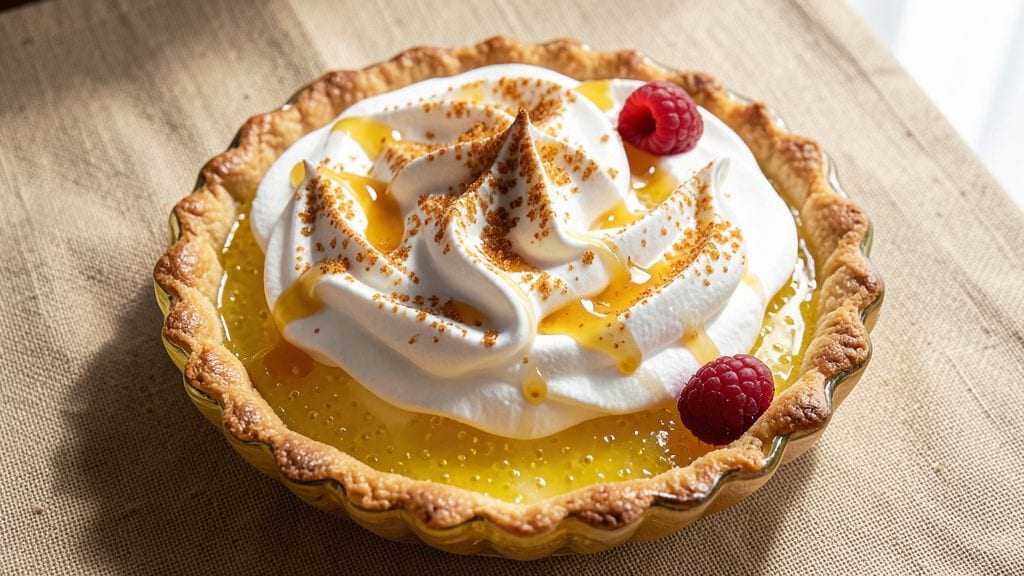
The original Jello lemon meringue pie recipe delivers that nostalgic dessert experience with its signature wobbly layers and perfectly toasted meringue. This classic dessert balances tangy lemon curd with sweet gelatin and a crisp meringue topping that turns golden when baked.
I've perfected the technique to ensure every slice delivers that signature texture contrast—creamy filling, jiggly gelatin, and toasted meringue in one bite.
What sets this recipe apart is the careful balance of ingredients—using both lemon juice and zest for maximum brightness, and baking the meringue just until it's golden but still soft inside.
The gelatin layer creates that signature wobble that makes this pie instantly recognizable, while the crust provides a sturdy base that holds everything together. This is the pie that brings back childhood memories with every slice.
The result is a dessert that's equal parts comforting and impressive—tangy lemon flavor cutting through the sweetness, a gelatin layer that jiggles just enough to be fun, and a meringue topping that's perfectly toasted on top but still tender underneath.
The contrast in textures makes every bite exciting, and the bright lemon flavor keeps it from being too heavy.
Whether you're making this for a family gathering or just craving a classic dessert, this recipe delivers the real deal. The key is patience—letting the gelatin set properly and baking the meringue at the right temperature ensures that signature toasted finish. Let's get started on this timeless treat!
Ingredients for original jello lemon meringue pie
Classic pie ingredients with a nostalgic twist—just eight staples for that signature wobble and toasted meringue.
| Ingredient | Amount | Notes |
|---|---|---|
| Unsalted Butter 🧈 | 1 cup | Cold, for crust |
| All-Purpose Flour 🌾 | 1 ½ cups | Plus 2 tbsp for pressing |
| Granulated Sugar 🍚 | ½ cup | For crust |
| Ice Water 💧 | ¼ cup | For crust |
| Unflavored Gelatin 🍮 | 1 package | 2 3/4 oz (1 box) |
| Granulated Sugar 🍚 | 1 ½ cups | For gelatin layer |
| Lemon Juice 🍋 | ½ cup | Freshly squeezed |
| Lemon Zest 🍋 | 1 tbsp | From 1 large lemon |
| Large Egg Whites 🥚 | 5 whole | Room temperature |
| Granulated Sugar 🍚 | 1 cup | For meringue |
| Vanilla Extract 🍯 | 1 tsp | Pure vanilla |
| Salt 🧂 | ¼ tsp | Fine sea salt |
The crust is everything here. Use cold butter and ice water for a flaky texture that won't melt during baking. King Arthur or Gold Medal flour work best for a tender crumb. For the gelatin layer, unflavored Knox gelatin is the gold standard—it dissolves perfectly without graininess. The lemon juice should be freshly squeezed for maximum brightness; bottled juice lacks that vibrant zing. If you can't find fresh lemons, ReaLemon or Simply Lemon juice from the store works in a pinch, but it won't have the same depth of flavor. The zest is non-negotiable—it's what gives the pie that professional-level tang.
No gelatin on hand? Substitute with agar-agar at half the weight, but expect a firmer texture. For the meringue, egg whites should be at room temperature—cold whites won't whip as high. If you're in a high-altitude area, add an extra 1/4 cup sugar to stabilize the meringue. The vanilla extract should be pure, not imitation—Nielsen-Massey or McCormick are reliable brands. For the lemon juice, if you accidentally use bottled, add an extra 1/2 teaspoon of lemon zest to compensate. The sugar in the gelatin layer can be swapped for turbinado or raw sugar for a slightly coarser texture, but granulated is the standard for that smooth wobble.
This pie keeps beautifully—3 days refrigerated with the meringue covered loosely to prevent sogginess. For longer storage, freeze the assembled pie (without baking the meringue) for up to 3 months. To serve, bake the meringue fresh at 350°F for 10-12 minutes. The gelatin layer will firm up as it chills, so let it sit at room temperature for 10 minutes before slicing—this ensures that perfect wobble. Leftovers can be reheated in the microwave for 20 seconds to restore the meringue's crispness.
Why You'll Love This Recipe
- No-Fuss Assembly: I swear by this recipe because it’s the kind of dessert that doesn’t demand perfection—just a few minutes of your time. The gelatin layer sets itself while you whip up the meringue, and honestly? Even if the crust isn’t fancy, that tangy lemon filling and buttery crust combo makes it taste like a bakery’s secret.
- Zingy Twist: That ice water trick with the gelatin? It’s what makes the filling silky smooth, but the real magic is the lemon. Bright, sharp, and balanced by the creamy meringue—it’s the kind of flavor that makes you reach for seconds and thirds. (Yes, even if you’re not usually a pie person.)
- Potluck Star: This pie travels like a champ. The gelatin base keeps it sturdy enough for picnics or office parties, and the meringue stays intact if you pack it right. Between us, I’ve served it at holiday dinners, summer BBQs, and even as a last-minute dessert for friends—and it’s always the first to disappear.
- Budget Magic: You’re using pantry staples here: butter, flour, sugar, and a box of gelatin. That’s it. No pricey custard or specialty ingredients, and the leftovers? They’re just as good the next day—if they even last that long. Honestly, it’s the kind of recipe that makes me feel like a genius for spending so little.
Step-by-step instructions for classic lemon meringue pie
This timeless recipe delivers the perfect balance of tangy lemon filling and toasted meringue topping.
Prepare the Classic Pie Crust
Cut the 1 cup unsalted butter into small cubes and place in a large bowl. Add the 1.5 cups all-purpose flour and 0.5 cup granulated sugar, then work the mixture with your fingers or a pastry cutter until the texture resembles coarse crumbs with pea-sized butter pieces. This ensures a flaky crust rather than a dense one.
Gradually add the 0.25 cup ice water, one tablespoon at a time, mixing gently until the dough just comes together. Be careful not to overmix—the dough should hold when pressed but still be slightly crumbly. Divide the dough in half, flatten each portion into a disk, wrap in plastic, and refrigerate for at least 1 hour. Chilling firms up the fat, preventing shrinking during baking.
Assemble the Lemon Gelatin Layer
Preheat your oven to 375°F. Roll out one of the chilled dough disks on a lightly floured surface to fit a 9-inch pie dish, leaving a ½-inch overhang. Transfer to the pie dish and trim the edges, leaving the overhang intact. Crimp the edges decoratively using your fingers or a fork.
In a medium saucepan, combine the 1 package unflavored gelatin, 1.5 cups granulated sugar, 0.5 cup lemon juice, 1 tbsp lemon zest, and 1 tsp vanilla extract. Stir constantly over low heat until the gelatin and sugar dissolve completely, then remove from heat. Pour the warm mixture into the prepared pie shell and bake for 15 minutes. The center should still be slightly wobbly—this is intentional for that classic gelatin texture.
Prepare the Lemon Meringue Topping
In a clean, grease-free bowl, beat the 5 whole large egg whites with the 0.25 tsp salt until soft peaks form. Gradually add the 1 cup granulated sugar, beating on high speed until the meringue is glossy and holds stiff peaks. This step is critical—underbeaten meringue won't hold its shape, while overbeaten meringue can become grainy.
Spread the meringue evenly over the warm lemon gelatin layer, sealing it completely to the crust edges. Use the back of a spoon to create decorative peaks or swirls if desired. The meringue should be smooth and unbroken, creating a perfect barrier between the filling and air.
Bake to Golden Perfection
Place the pie on the middle rack of your oven and bake at 350°F for 15-20 minutes, until the meringue turns a deep golden brown. Watch closely in the last few minutes—overbrowning can happen quickly. The pie is done when the meringue is crisp and the filling is set but still slightly jiggly.
Remove from the oven and let cool completely on a wire rack. The contrast between the cool, creamy filling and the toasted meringue is what makes this pie legendary. Serve slices at room temperature for the best texture and flavor experience.
Pro Tips For Making Original Jello Lemon Meringue Pie
- Bloom the Gelatin Properly: Sprinkle that unflavored gelatin over cold water first—all of it—and let it sit for 5 full minutes before heating. I used to rush this, and the filling always ended up grainy. Trust me, the wait makes the difference between a wobbly mess and a silky-smooth layer.
- Chill the Crust Hard: Pop your pie crust in the freezer for 15 minutes before adding the filling. I learned this the hard way when the butter in the crust started melting into the lemon layer. A cold crust keeps everything structured, and your slice won’t turn into a soggy disaster.
- Whip Meringue to Stiff Peaks: Don’t stop beating those egg whites until they hold a peak when you lift the beaters—and the peak stays upright for a solid 10 seconds. Soft peaks? You’re asking for a flat, sad topping. A hand mixer works, but your arm will thank you for using a stand mixer here.
- Strain the Lemon Filling: After mixing the gelatin and sugar into the lemon juice, strain it through a fine-mesh sieve. I skipped this once, and tiny gelatin bits made the texture uneven. It’s a little extra work, but the result is worth it—smooth as silk, every time.
Storing and reheating this recipe
Refrigerator Storage
This pie keeps beautifully in the refrigerator for up to 3 days, but the meringue needs special care. Cover it loosely with plastic wrap or a pie dome to prevent condensation from making the meringue soggy.
I always place a small weight on the plastic to keep it from touching the meringue's surface. Let it sit at room temperature for 10 minutes before slicing to restore that signature wobble in the gelatin layer. 💫
Freezing for Later
For longer storage, freeze the fully assembled pie (with unbaked meringue) for up to 3 months. Wrap it tightly in plastic wrap, then seal in a heavy-duty freezer bag, squeezing out all air.
When ready to serve, thaw overnight in the fridge, then bake the meringue fresh at 350°F for 10-12 minutes. This preserves the meringue's crisp texture perfectly.
Reviving Leftovers
If the meringue loses its crispness, don't worry—microwave reheating works surprisingly well. Place a slice on a microwave-safe plate and heat for 15-20 seconds on medium power.
The gelatin layer will soften slightly but maintain its wobble, while the meringue regains some crispness. For best results, serve immediately after reheating. 🔥
Meringue Make-Ahead Tip
You can prepare the meringue topping up to 2 days ahead and store it in the fridge in an airtight container. Bring it to room temperature before spreading it over the pie.
This gives you more flexibility when planning your baking schedule. Just be sure to spread it over the warm gelatin layer for that perfect seal.
Crust Refresh
The crust can be made up to 2 days in advance and stored in the fridge. Bake it blind (with pie weights) for 15 minutes at 375°F to prevent shrinking. Cool completely before filling.
This is especially helpful if you're making the pie ahead of a gathering—just assemble and bake when ready. The pre-baked crust holds up better to the gelatin layer's weight. ✨
Serving Temperature
Always serve this pie at room temperature for the best texture contrast. If it's been refrigerated, let it sit for 15-20 minutes before slicing. The gelatin layer will firm up slightly but maintain its signature wobble, while the meringue will be at its crispest.
I like to dust slices with powdered sugar just before serving for that extra touch of elegance. 💛
Nutrition facts
Frequently asked questions
Why does the gelatin layer need to stay slightly wobbly?
That signature wobble is what makes this pie iconic! The gelatin should be set but still jiggly in the center when baked. This texture creates the perfect contrast with the crisp meringue topping and creamy lemon filling. If it's completely firm, the pie loses its signature fun element.
Can I make this pie ahead of time?
Assemble the pie (without baking the meringue) up to 2 days ahead and refrigerate. Bake the meringue fresh at 350°F for 10-12 minutes before serving. This preserves the crisp texture. For longer storage, freeze the unbaked pie for up to 3 months and thaw overnight before baking the meringue.
How do I fix a cracked meringue?
Use a spoon to gently smooth the cracks and reshape the meringue. For extra stability, bake at 350°F for 2-3 minutes longer than usual. If cracks appear after baking, dust with powdered sugar to hide them and serve immediately. The filling will still taste amazing!
What's the best way to store leftovers?
Cover the pie loosely with plastic wrap (don't let it touch the meringue) and refrigerate for up to 3 days. For leftovers, microwave individual slices for 15-20 seconds to restore the meringue's crispness. The gelatin layer will soften slightly but maintain its wobble.
Can I use powdered gelatin instead of unflavored?
No, powdered gelatin requires different preparation methods and won't dissolve as smoothly. Stick with unflavored Knox gelatin for that classic, silky texture. If you must substitute, agar-agar works but creates a firmer texture—reduce to half the weight and adjust the lemon juice slightly for balance.