
Desserts
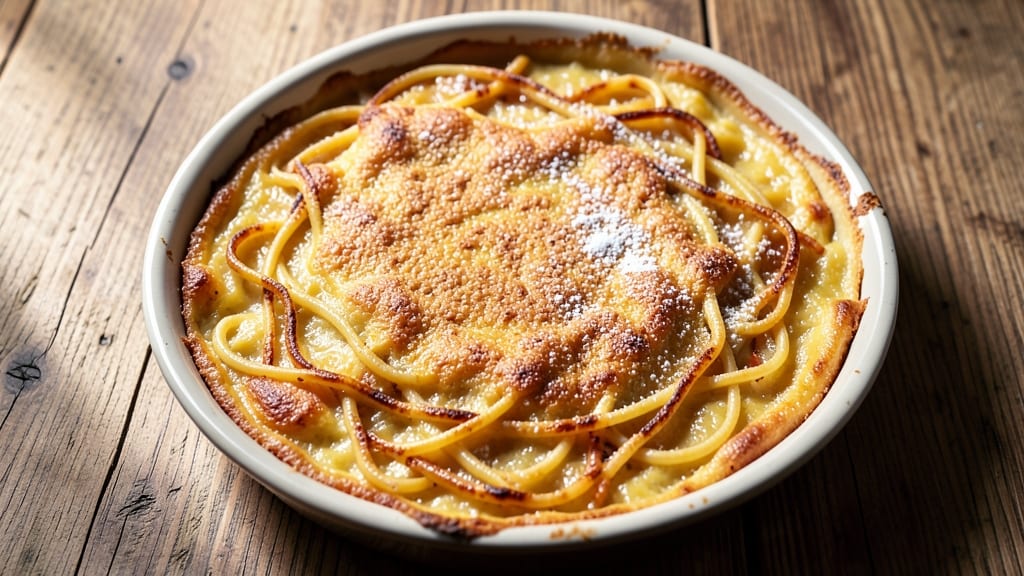
Old Chicago spaghetti pie delivers the ultimate dessert experience—crispy lattice crust meets creamy vanilla pudding, all layered over perfectly cooked spaghetti and melted cheese. This nostalgic classic transforms a simple casserole into a showstopping dessert that tastes like comfort food reimagined. The secret lies in the balance of textures: tender noodles, rich cheese, and that golden lattice that shatters with every bite.
What makes this recipe special is the foolproof technique that ensures the spaghetti stays al dente while the custard layer remains silky smooth. You'll start with a flavorful cheese-spaghetti base, then pour in a velvety vanilla pudding mixture that sets as it bakes.
The lattice crust isn't just decorative—it adds a satisfying crunch that contrasts beautifully with the creamy filling. Baking at the right temperature guarantees a golden, crispy top without burning the delicate custard underneath.
By the time it emerges from the oven, you'll have a dessert that looks impressive yet comes together with straightforward steps. The aroma of vanilla and warm cheese will fill your kitchen, while the visual appeal of the lattice crust makes it perfect for holidays or special occasions.
Each slice reveals layers of texture and flavor—creamy pudding, tender spaghetti, and melted cheese—all held together by that perfect crispy top.
Serve warm with a scoop of vanilla ice cream or a dollop of whipped cream for an extra touch of indulgence. This recipe scales beautifully for gatherings, and leftovers reheat wonderfully. The best part? It's a dessert that feels like a hug—familiar yet elevated, with every element working in harmony.
Ingredients for old chicago spaghetti pie
Crispy lattice meets creamy vanilla custard—here’s how to build this nostalgic dessert masterpiece.
| Ingredient | Amount | Notes |
|---|---|---|
| Spaghetti Noodles 🍝 | 12 oz | Uncooked, broken into 2-inch pieces |
| Unsalted Butter 🧈 | ¾ cup | Cold, cut into small cubes |
| All-Purpose Flour 🌾 | 2 ½ cups | Sifted for smooth lattice crust |
| Granulated Sugar 🍚 | ¾ cup | For custard sweetness |
| Large Eggs 🥚 | 4 whole | Room temperature, separated |
| Vanilla Extract 🌿 | 2 tsp | Pure, high-quality extract |
| Whole Milk 🥛 | 2 cups | Full-fat for richness |
| Shredded Sharp Cheddar Cheese 🧀 | 2 cups | Medium or sharp variety |
| Salt 🧂 | ½ tsp | Diamond Crystal preferred |
| Ground Black Pepper 🌶️ | ¼ tsp | Freshly ground preferred |
| Instant Pudding Mix 🍮 | 1 box | Vanilla or vanilla custard flavor |
| Vanilla Ice Cream 🍦 | 2 cups | For serving, optional |
The lattice crust is where magic happens. King Arthur flour or Bob's Red Mill gives the best texture—light and crispy without getting soggy. For the butter, Plugrá or Land O'Lakes work perfectly, but nothing beats the flavor of European-style butter if you can find it. The secret to the lattice? Cutting the dough into strips of equal width—about 1/4-inch—and keeping them cold until you bake. Pre-shredded cheese loses moisture fast, so grate your own from a block of sharp cheddar. If you're short on time, Trader Joe's pre-shredded cheddar works in a pinch (just squeeze out excess moisture).
No vanilla pudding mix? Homemade custard is worth the effort—just whisk 1 cup milk, 1/4 cup sugar, 2 tbsp cornstarch, 1/4 tsp salt, and 1 tsp vanilla until thickened. For the spaghetti, De Cecco or Barilla brands hold up best when baked. The egg whites in the custard need to be whipped to stiff peaks—use a stand mixer for best results. If you're making this ahead, bake the crust separately and assemble the pie just before baking to prevent sogginess. The lattice pattern? Classic weave or diamonds both work—just keep the strips straight for that restaurant-quality look.
This pie is a crowd-pleaser, so make it ahead when you can. The crust keeps well for 2 days at room temperature if stored in an airtight container, and the assembled pie reheats beautifully—just cover with foil and warm at 350°F for 15 minutes. For serving, a scoop of Breyers vanilla ice cream or Ben & Jerry's Phish Food takes it to the next level. Leftovers? Store in the fridge for 4 days or freeze for 3 months. The custard layer actually improves overnight, so plan to serve it the next day if possible.
Why You'll Love This Recipe
- I’ll be real: this recipe uses stuff I already have. Flour, butter, sugar, eggs—no specialty ingredients, no last-minute grocery runs. If you can boil water and crack eggs, you’re golden. Budget-friendly? Absolutely. Stress-free? Even more so.
- One-Pan Magic: I swear by this recipe because it’s all in one dish—no messy pots, no extra bowls. Just cook the noodles, mix everything together in the same pan, and bake. That’s it. Even my college apartment kitchen could handle it.
- Sweet-Savory Balance: Honestly, the sugar in the crust isn’t weird—it’s brilliant. The buttery noodles soak up that caramelized sweetness while the eggs bind it all into something rich and satisfying. It’s like dessert had a makeover as a savory pie.
- Leftovers That Win: Between us, this pie tastes even better the next day. The crust gets slightly crispier, the noodles softer, and it reheats in minutes. I’ve sent it to potlucks, game days, and lazy Sundays—no one ever questions why I bring it twice.
Step-by-step instructions for Old Chicago spaghetti pie
Here's how to create the perfect balance of crispy lattice crust and creamy vanilla custard—just like Chicago's legendary dessert.
Prepare the Spaghetti Crust
Preheat your oven to 375°F and break the 12 oz spaghetti noodles into 2-inch pieces by hand. Toss them in a large bowl with 2 tablespoons of the 0.75 cup unsalted butter (reserve the rest for later) until they're evenly coated. Spread the spaghetti in a single layer on a parchment-lined baking sheet.
Bake for 8-10 minutes until the spaghetti is light golden brown and crispy. Watch closely—it should toast quickly without burning. Let it cool completely before handling. This step creates the perfect crunchy base that holds up to the creamy filling. If you rush it, the crust will be soggy when assembled.
Make the Vanilla Custard Filling
In a medium saucepan, melt the remaining 0.5 cup unsalted butter over medium heat. Whisk in the 2.5 cups all-purpose flour and cook for 2 minutes until the mixture forms a smooth, thick paste and smells nutty. This is your roux foundation.
Gradually whisk in the 2 cups whole milk while stirring constantly to prevent lumps. Bring the mixture to a gentle simmer and cook for 5 minutes until thickened. Remove from heat and stir in the 0.75 cup granulated sugar, 2 tsp vanilla extract, 2 cups shredded sharp cheddar cheese, 0.5 tsp salt, and 0.25 tsp ground black pepper. The cheese should melt completely, creating a rich, velvety custard.
Assemble the Pudding Mix Layer
In a separate bowl, prepare the instant pudding mix according to package instructions using the 4 whole large eggs (separated—save the whites for later). The mixture should be thick and smooth, with no visible lumps. Spread half of this pudding mixture evenly over the cooled spaghetti crust in your pie dish.
Here's the thing—this layer needs to be perfectly even. Any thick spots will show through the lattice, so take your time spreading it with an offset spatula. The pudding should cover the crust completely but not overflow the edges. This layer creates the signature creamy texture that makes Old Chicago Spaghetti Pie so special.
Create the Lattice Crust
Beat the egg whites until they form stiff peaks. Gently fold them into the remaining pudding mixture to lighten it slightly. Spread this over the first pudding layer, covering it completely. This creates the final creamy layer before the lattice.
Now for the lattice: Cut the remaining 2-inch spaghetti pieces into thirds to create thin strips. Arrange them in a classic lattice pattern over the pie, leaving ½-inch gaps between strips. Brush the exposed custard with any remaining melted butter for extra richness. The lattice should look like a delicate web—this is what gives the pie its iconic appearance and crispy texture.
Bake to Golden Perfection
Bake the assembled pie at 350°F for 45-50 minutes until the lattice is deep golden brown and the custard is set. The edges should be crispy while the center remains creamy. If the top browns too quickly, tent it loosely with foil.
Let the pie cool completely before slicing—this allows the custard to fully set and prevents a runny center. Serve with 2 cups vanilla ice cream on the side for the ultimate Old Chicago experience. The contrast of crispy spaghetti crust, creamy custard, and cold ice cream is what makes this dessert legendary.
Pro Tips For Making Old Chicago Spaghetti Pie
- Cook Spaghetti Al Dente: DESCRIPTION: This isn’t regular pasta—overcooking turns it mushy, and you’ll end up with a soggy pie. Boil the noodles in salted water until they’re just firm to the bite (about 2 minutes less than package instructions), then drain and rinse with cold water to stop cooking. The texture stays firm, and the pie holds together better.
- Melt Butter Slowly: DESCRIPTION: I used to dump all the butter in at once and end up with greasy spots. Instead, melt the butter over low heat, stirring constantly until it’s just liquid but not browned—about 3-4 minutes. This keeps the filling smooth and prevents a buttery flavor imbalance later.
- Whisk Eggs Vigorously: DESCRIPTION: Skimpy whisking leads to a dense, rubbery crust. Beat the eggs until they’re thick, pale, and ribbon-like (about 2 minutes with a fork). Add a pinch of salt—this isn’t just for flavor, it helps the eggs bind better with the flour and sugar.
- Bake in Two Stages: DESCRIPTION: Start at 375°F for 20 minutes to set the filling, then crank to 425°F for the last 10-15. The high heat at the end guarantees a golden crust without burning the top. Cover loosely with foil if it browns too fast—your future self will thank you.
Pro cooking tips for this recipe
Spaghetti Crust Secrets
Break spaghetti into 2-inch pieces by hand for even toasting—never use a food processor, which creates uneven bits. Toss with 2 tbsp cold butter before baking to prevent sticking. Spread in a single layer on parchment and bake at 375°F for 8-10 minutes until golden.
Let cool completely before assembling—this prevents soggy layers. Pro tip: Use De Cecco or Barilla spaghetti for best texture. 🍝
Custard Consistency
The custard must be perfectly thick to support the lattice. Cook your roux for exactly 2 minutes until nutty-smelling, then whisk in milk gradually to avoid lumps. Simmer for 5 minutes until thick enough to coat the back of a spoon.
For extra richness, whisk in 2 cups sharp cheddar while still warm—this ensures smooth melting. If your custard is too thin, add 1 tbsp cornstarch mixed with cold milk. 🧈
Lattice Mastery
Cut spaghetti strips into thirds for precise lattice work. Arrange them in a classic weave pattern with ½-inch gaps—this creates the iconic look while allowing even baking. Keep strips cold until baking to maintain crispness.
Brush exposed custard with melted butter before baking for extra richness. For first-timers, practice on parchment paper first to perfect the pattern. 🌟
Baking Precision
Bake at 350°F for 45-50 minutes—any hotter and the lattice burns before the custard sets. Tent with foil if browning too quickly. The internal temperature should reach 165°F at the center.
Let cool completely before slicing—this prevents a runny center. For extra insurance, chill the pie for 1 hour before serving. ⏰
Cheese Selection
Sharp cheddar is non-negotiable—it melts smoothly and adds depth. Use 2 cups freshly grated (pre-shredded loses moisture). For a smoky twist, add ½ cup smoked gouda to the custard.
Avoid mild cheddars—they won't provide enough flavor contrast. If your custard looks grainy, strain it through a fine-mesh sieve before pouring. 🧀
Serving Like a Pro
Slice with a serrated knife for clean cuts through the lattice. Serve warm with 2 scoops vanilla ice cream—the cold contrast makes every bite perfect.
For a restaurant touch, dust with powdered sugar or drizzle with caramel sauce. Leftovers reheat beautifully at 350°F for 15 minutes covered with foil. 💫
Nutrition facts
Frequently asked questions
Can I make this spaghetti pie ahead of time?
This dessert actually tastes better the next day! Bake the lattice crust separately and store it at room temperature for up to 2 days in an airtight container. For the full pie, assemble it just before baking to prevent sogginess, but you can bake it 1 day ahead and refrigerate. The custard layer actually improves overnight, so plan to serve it the next day if possible.
What's the best way to reheat leftovers?
Reheat slices covered with foil at 350°F for 15 minutes to maintain that perfect crispy-lattice texture. For microwave reheating, cover with a damp paper towel and heat for 20-30 seconds—just enough to warm through without making the custard runny. The spaghetti crust stays crispy when reheated properly.
Can I substitute the instant pudding mix? For a homemade version, whisk 1 cup milk, ¼ cup sugar, 2 tbsp cornstarch, ¼ tsp salt, and 1 tsp vanilla until thickened. This custard will be even creamier and give you more control over sweetness. Just
Why did my lattice turn out soggy?
Soggy lattice usually means one of two things: either the custard wasn't fully set before baking or the spaghetti strips weren't crispy enough. Always let the spaghetti crust cool completely before assembling, and ensure your custard reaches 165°F at the center. Keep your spaghetti strips cold until baking to maintain crispness.
How do I make this gluten-free?
Replace the all-purpose flour with a 1:1 gluten-free baking flour blend and use gluten-free spaghetti noodles. For the lattice, cut gluten-free spaghetti into strips and bake as directed. Note that the texture will be slightly different—gluten-free crusts tend to be more delicate. Test with a small batch first to adjust your preferred texture.