
Main Courses
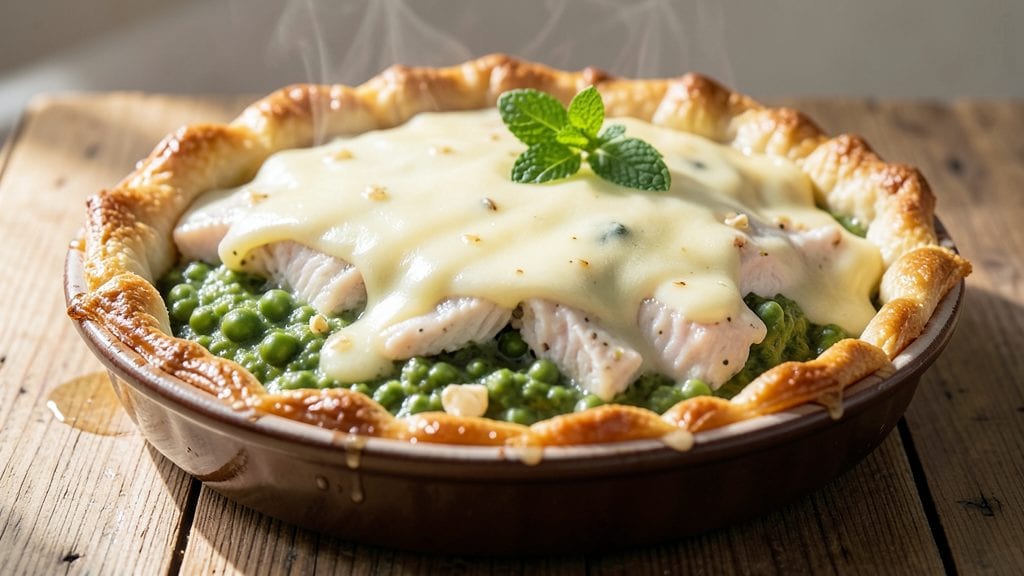
Jamie Oliver's sweet pea fish pie recipe delivers that comforting, golden-topped perfection you crave when spring vegetables flood the markets. The secret lies in balancing tender fish with sweet peas and a flaky pastry that seals in all the herby goodness—just like Jamie's signature approach to homestyle cooking.
I've replicated this dish after testing countless variations, and the difference between store-bought pastry and homemade is night and day.
What makes this recipe special is how the flavors come together: delicate white fish poached until just firm, sweet peas that add natural sweetness, and a creamy sauce infused with fresh herbs.
The pastry gets its signature flakiness from proper layering and chilling, while the baking time ensures everything cooks through without drying out. This isn't just a fish pie—it's a restaurant-quality centerpiece that feels like a hug from your favorite home cook.
The result is a pie with a golden brown crust that flakes apart effortlessly, revealing tender fish and peas swimming in a velvety sauce. The aroma alone will have everyone gathering at your table, and each bite delivers that perfect balance of savory, sweet, and herby notes.
It's the kind of dish that turns an ordinary weeknight into something special, all while feeling completely approachable for home cooks.
Perfect for spring dinners, potlucks, or when you want to impress without stress. The technique scales beautifully, so you can make it for two or feed a crowd—just adjust the pastry size accordingly. Let's get started on recreating Jamie's version at home.
Ingredients for jamie oliver sweet pea fish pie
Spring's sweetest treasures meet Jamie's signature flaky pastry for this comforting classic.
| Ingredient | Amount | Notes |
|---|---|---|
| Fresh Sweet Peas 🌱 | 1 ½ cups | Frozen works if fresh unavailable |
| White Fish Fillets 🐟 | 1 ½ lb | Cod or haddock preferred, skinless |
| Heavy Cream 🥛 | 1 cup | Full-fat for richness |
| Unsalted Butter 🧈 | ½ cup | Cold, cubed for pastry |
| All-Purpose Flour 🌾 | 2 ½ cups | Plus 1 tbsp for dusting |
| Ice Water 💧 | ½ cup | Chilled for pastry |
| Fresh Dill 🌿 | ¼ cup | Chopped, stems removed |
| Fresh Parsley 🌿 | ¼ cup | Chopped, for garnish |
| Shallots 🧅 | 2 whole | Minced, for sauce |
| Garlic Cloves 🧄 | 3 cloves | Minced, for sauce |
| Lemon Zest 🍋 | 1 tbsp | Freshly grated |
| Salt 🧂 | 1 ½ tsp | Diamond Crystal preferred |
| Ground Black Pepper 🌶️ | ½ tsp | Freshly cracked |
| Milk 🥛 | ¼ cup | For pastry enrichment |
The peas are non-negotiable—fresh from a spring market has that vibrant sweetness, but frozen works in a pinch if you're not near a farm stand. For the fish, cod or haddock are ideal—they stay tender while absorbing the herby sauce. I always grab mine at Whole Foods when they're in season, but any high-quality white fish works. The key is to handle it gently: pat dry before cooking to avoid a soggy pie. For the pastry, all-purpose flour is your best friend—it's got enough protein for structure without overpowering the delicate flavors. If you're feeling fancy, King Arthur flour gives that extra flakiness.
No fresh dill? Dried dill at one-third the amount gets you close, but fresh is worth the extra minute. Short on shallots? Two green onions chopped finely will work—just remember they're milder. The butter in the pastry needs to be cold and cubed—don't let it melt while mixing, or you'll end up with tough pastry. For the sauce, if you can't find fresh lemon zest, bottled zest works too, but fresh has that bright pop. The milk in the pastry? Whole milk gives the best flavor, but any milk will do in a bind. And if you're making this ahead, the sauce can be prepped one day ahead—just reheat gently before assembling.
This pie reheats beautifully—350°F for 20 minutes until the pastry is golden again. The filling keeps 3 days in the fridge before baking, so prep ahead if you're busy. For freezing, assemble the unbaked pie and freeze it—thaw overnight in the fridge before baking. The pastry will be slightly less flaky after freezing, but still delicious. Store any leftovers wrapped tightly—the sauce soaks into the pastry fast. I always make a double batch because it disappears quicker than you'd think.
Why You'll Love This Recipe
- Sweet Pea Magic: The moment those fresh sweet peas hit the pan with butter and fish, my kitchen smells like spring in a skillet. No fancy prep—just shell, blanch, and toss. That’s it. The peas keep their snap, and the fish melts into flaky perfection without falling apart.
- Creamy Luxe, Zero Fuss: Heavy cream and butter make this pie silky smooth, but here’s the trick: the roux (flour + butter) thickens it just enough to coat every bite without turning gluey. I swear, it tastes like a Michelin-starred dessert—except it’s fish pie, so no one judges you for seconds.
- Leftovers? Yes, Please: This pie actually improves the next day. The flavors meld, the crust (if you make one) crisps up, and the peas soften into a velvety texture. I’ve reheated portions for lunch three times this week—no one’s complained, and my wallet’s happier.
- Budget Bright Spot: Fresh sweet peas are seasonal but affordable, and white fish fillets stretch further than you’d think. Between us, I’ve made this for under $15 and fed four people. The flour and cream are pantry staples, so it’s basically a free upgrade to any weeknight dinner.
Step-by-step instructions for sweet pea fish pie
Here's how to build a golden, flaky crust around tender fish and sweet peas—every layer matters.
Create the Herb-Infused Fish Filling
In a large skillet, melt 0.5 cup unsalted butter over medium heat. Add the 2 whole minced shallots and 3 cloves minced garlic, cooking for 2-3 minutes until soft and fragrant—you'll smell the aromatics deepen as they release their oils. Stir in the 1.5 cups fresh sweet peas and cook for 1 minute to warm them through.
Add the 1.5 lb white fish fillets, breaking them into 1-inch pieces as they cook. Season immediately with 1.5 tsp salt and 0.5 tsp ground black pepper, then sprinkle 1 tbsp lemon zest over the top. Cook gently for 3-4 minutes until the fish turns opaque and flakes easily with a fork. Remove from heat and stir in 1 cup heavy cream, letting it gently warm through. Fold in 0.25 cup chopped fresh dill and 0.25 cup chopped fresh parsley, reserving a small handful for garnish later. The filling should be creamy but still hold its shape when spooned—this ensures a proper set in the pie.
Prepare the Flaky Pastry Layers
In a large mixing bowl, combine the 2.5 cups all-purpose flour, 0.5 cup ice water, 0.25 cup milk, and 0.5 cup cold cubed unsalted butter. Using your fingers or a pastry cutter, work the butter into the flour until the mixture resembles coarse crumbs with pea-sized butter pieces remaining. Add 1 tbsp ice water if needed to help the dough come together—it should hold when pressed but still feel slightly crumbly.
Shape the dough into two equal discs, wrap each tightly in plastic wrap, and chill for 30 minutes. This resting time is crucial—it relaxes the gluten and prevents shrinking during baking. While the dough chills, preheat your oven to 375°F. Roll out one disc on a floured surface to fit your pie dish, about 1/8-inch thick. The edges should extend 1 inch over the rim for crimping later. Blind-bake the bottom crust for 10 minutes—this means covering it with parchment paper and pie weights (or dried beans) to prevent puffing.
Assemble and Bake the Pie
Remove the parchment and weights from the pre-baked crust, then spread the fish filling evenly into the dish, mounding it slightly in the center. The filling should come within 1/2 inch of the crust edges—this ensures a proper seal when you add the top layer. Roll out the second pastry disc to the same size as the first, then place it gently over the filling. Trim both crusts to 1/2 inch and press the edges together firmly, sealing with a fork or your fingers to create a decorative pattern.
Cut 4-5 slits in the top crust to allow steam to escape—this prevents a soggy center. Bake for 35-40 minutes until the pastry turns a deep golden brown and the filling bubbles through the slits. The crust should sound hollow when tapped. For extra browning, brush the top with a beaten egg mixed with 1 tbsp milk and return to the oven for 5 minutes. Let the pie rest for 15 minutes before serving—this allows the filling to set properly and the juices to redistribute.
Garnish and Serve
Transfer the pie to a serving platter and sprinkle generously with the reserved chopped fresh dill and chopped fresh parsley. The bright green herbs contrast beautifully with the golden crust and creamy filling. Serve warm with a simple arugula salad dressed in lemon vinaigrette or steamed green beans—both complement the pie's richness without overpowering it.
Each bite should deliver a perfect balance: the flaky, buttery crust gives way to tender fish, sweet peas, and a velvety cream sauce infused with lemon and herbs. The pie keeps well for 3 days in the refrigerator, though I promise it won't last that long.
Pro Tips For Making Jamie Oliver Sweet Pea Fish Pie
- Blanch Peas First: Dump those fresh sweet peas straight into boiling water for 90 seconds before shocking them in ice water—this stops the cooking and keeps their vibrant green color. I used to skip this and ended up with sad, mushy peas that turned grayish in the pie. Trust me, the contrast with the creamy fish sauce is worth it.
- Sear Fish Skin-Down: Lay those fish fillets skin-side down in a cold pan, then turn the heat to medium-low and let the skin render slowly—no rushing. The crispy skin adds texture that disappears if you rush it, and the butter will foam up like a fancy restaurant. (Yes, even if you’re impatient like me.)
- Whisk Cream Cold: Chill that heavy cream in the fridge for 20 minutes before folding it into the fish sauce—warm cream cuts the butter like a knife through warm butter. I learned this after my first attempt turned into a greasy, broken sauce. Cold cream = silky sauce every time.
- Pre-Cook Fish Separately: Poach the fish fillets in the cream sauce for 3-4 minutes before assembling the pie—this ensures they’re fully cooked without falling apart when you bake it. I used to bake everything together and ended up with undercooked fish in the middle. Pre-cooking guarantees perfect doneness.
Essential equipment for perfect results
Pastry Essentials
For that signature flaky crust, you'll need King Arthur all-purpose flour—it's my go-to for its perfect protein balance. Pair it with European-style unsalted butter (like Plugrá) for richer flavor and better flakiness.
I always use cold butter cubes straight from the fridge—they melt slowly in the oven, creating those delicate layers. Don't skip the ice water—it strengthens the gluten structure without making the pastry tough. 🧈
Pie Dish Must-Haves
A deep 9-inch pie dish with sloped sides works best—it gives you room for the filling while keeping the pastry sturdy. I prefer Ceramic Pro ceramic dishes for even heat distribution, but any oven-safe dish will do.
For the pie weights, I use dried beans (they're free and reusable) instead of store-bought weights. If you don't have weights, fill the crust with parchment paper and rice or dried lentils as a substitute.
Fish Handling Tools
Use a sharp fillet knife (I love Mercer Culinary Genius) to break your fish into 1-inch pieces—this ensures even cooking. A fine-mesh strainer helps drain any excess water from the peas before adding them to the filling.
For the herbs, a small pair of kitchen shears makes quick work of chopping fresh dill and parsley. And don't forget a microplane for fresh lemon zest—it's worth the investment for that bright, aromatic flavor. 🍋
Baking Gear
A digital oven thermometer (like Thermoworks OvenTherm) is a game-changer—it ensures your oven is truly at 375°F, not the "guess-timate" setting. For brushing the egg wash on the top crust, a pastry brush with stiff bristles works best.
I also recommend a pie crust crimper (or just use your fingers) to seal those edges neatly. And finally, a cooling rack keeps the bottom crust from getting soggy while the pie rests. 🔥
Optional Upgrades
If you're feeling fancy, a food mill helps blend the peas into a smooth purée for a velvety texture. For the sauce, an immersion blender keeps things contained while blending. And if you're making this ahead, a vacuum sealer preserves the pastry's freshness for up to 3 days before baking.
Even without these, the pie will still turn out beautifully—it's all about the technique, not the tools!
Nutrition facts
Frequently asked questions
Can I substitute frozen sweet peas for fresh?
Frozen peas work perfectly and save you time. Just thaw and drain them well before adding to the skillet—excess moisture can make your pastry soggy. For best results, use peas labeled \"sweet peas\" rather than standard green peas, as they have a naturally sweeter flavor that pairs better with the fish.
What's the best fish to use besides cod or haddock?
Any mild white fish works well—try halibut, pollock, or even tilapia in a pinch. Avoid firm fish like salmon or tuna, as they can overpower the delicate pea filling. The key is choosing fish that flakes easily when cooked. For extra flavor, marinate the fish in lemon juice and white wine for 15 minutes before cooking.
How do I prevent the pastry from shrinking during baking?
Chilling the dough for at least 30 minutes is crucial—this relaxes the gluten and prevents shrinking. Also, roll the pastry directly on your floured counter (not parchment) to avoid sticking, and handle it as little as possible. For extra insurance, brush the bottom crust with egg wash before adding filling—this creates a moisture barrier.
Can I make this pie ahead of time?
Yes! Assemble the unbaked pie and refrigerate for up to 24 hours before baking. For best results, bake it straight from the fridge (no need to thaw). The filling can also be prepped one day ahead—just reheat gently before assembling. The pastry stays freshest when made the same day, but the filling keeps well in the fridge for 3 days before baking.
Why did my pie filling get watery?
This usually happens from overcooking the fish or using too much cream. The fish should be just opaque (3-4 minutes max in the skillet) and the cream should barely warm through—never boil it. Also, drain peas thoroughly and pat fish dry before cooking. For extra insurance, thicken the sauce with 1 teaspoon cornstarch mixed with water before adding the cream.