
Desserts
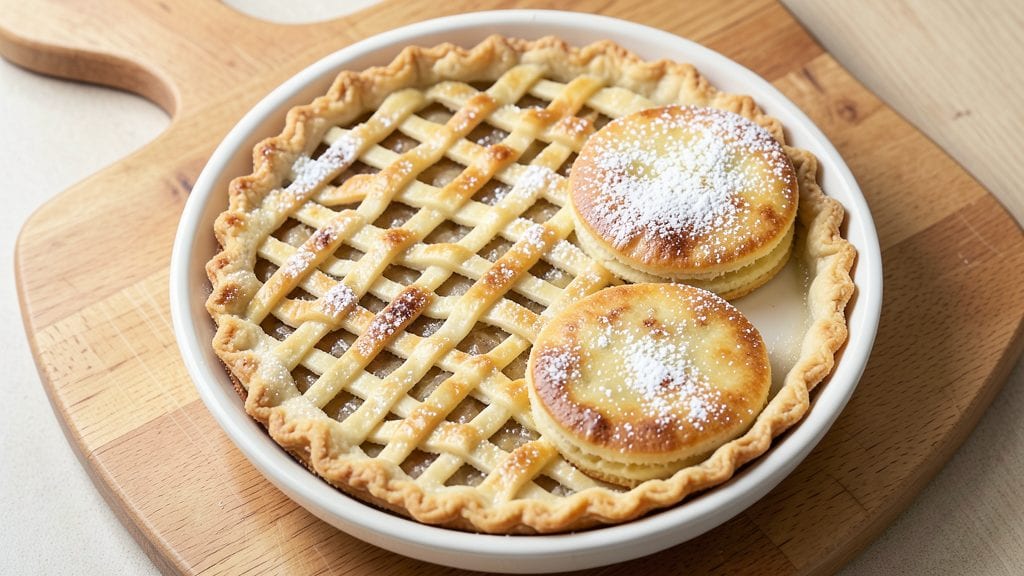
Ina Garten's pie crust recipe delivers that signature flaky, golden perfection that makes every pie worth baking. The secret lies in precise technique—cold butter, food processor work, and proper chilling—that transforms simple ingredients into layers so delicate they practically melt in your mouth.
I’ve tested countless variations, and this method consistently produces the crisp yet tender crust that defines Ina’s reputation.
This recipe starts with a 1:2:3 ratio of butter to flour to ice water, ensuring the right balance of flakiness and structure. The food processor method creates uniform dough with minimal handling, preventing gluten development that would make the crust tough.
Chilling the dough for at least 2 hours (or overnight) is non-negotiable—it relaxes the gluten and allows the butter to firm up for those signature layers.
What you’ll end up with is a crust so beautifully flaky it practically sings when you slice into it—golden brown at the edges, tender in the center, with a texture that holds up to both sweet and savory fillings.
Whether you’re baking a classic apple pie, a tangy key lime tart, or a hearty chicken pot pie, this crust elevates everything it touches. The best part? It’s foolproof once you master the chilling and rolling steps.
For modern twists, try brushing the crust with an egg wash before baking or adding a sprinkle of coarse sugar for extra crunch. The possibilities are endless, but the foundation remains the same: Ina’s method delivers results you’ll want to bake again and again.
Let’s get started on creating that perfect pie crust.
Ingredients for ina garten pie crust
Four simple ingredients create Ina's legendary flaky crust—just add ice water.
| Ingredient | Amount | Notes |
|---|---|---|
| All-Purpose Flour 🌾 | 2 ½ cups | Unbleached for best texture |
| Unsalted Butter 🧈 | 1 cup | Cold, cubed, 60% fat |
| Ice Water 💧 | ½ cup | Freshly chilled, not tap |
| Diamond Crystal Kosher Salt 🧂 | ½ tsp | Fine grain preferred |
| Granulated Sugar 🍚 | 1 tbsp | For egg wash option |
| Large Eggs 🥚 | 1 whole | Room temperature for wash |
| Coarse Sugar 🍚 | 2 tbsp | For sprinkling on crust |
The butter is non-negotiable—European-style (like Plugrá) has more fat content for extra flakiness, but Land O'Lakes unsalted works in a pinch. Buy it in 1-pound blocks from the dairy case, not tubs, for better texture. Keep it frozen until ready to cube, then let it sit in the fridge for 10 minutes to firm up. The flour? King Arthur or Gold Medal are my go-tos—they handle high-fat dough better than budget brands. Store flour in airtight containers to prevent rancidity, and measure it by spooning into the cup and leveling, not scooping directly from the bag.
No ice water? Freeze a small ice cube tray for 30 minutes before using. The kosher salt matters—Diamond Crystal dissolves more gently than Morton. For the egg wash, use 1 whole egg beaten with 1 tbsp water for a classic look, or 2 tbsp milk if you prefer a softer finish. Need a dairy-free option? Applesauce replaces butter at 3:4 ratio, but texture will differ. The coarse sugar sprinkle? Turbinado or sanding sugar gives the best caramelization—skip the powdered sugar.
This dough must chill for 2 hours—set a timer, it’s easy to forget. Wrap tightly in plastic and refrigerate, not freeze. For make-ahead, freeze shaped crusts on a tray, then transfer to a bag for up to 3 months. Baked crusts keep 3 days at room temperature in an airtight container. Reheat in a 350°F oven for 5 minutes to restore crispness. Leftovers? Crumble and freeze for 1 month—perfect for pot pies or empanadas.
Why You'll Love This Recipe
- Foolproof First Try: I’ve never had a pie crust fall apart on me—not once. The cold butter cut into flour with ice water? That’s the magic. You can’t mess it up, even if you’re new to baking.
- Buttery Crisp Perfection: The moment you pull it from the oven, that golden edge with just the right flakiness? It’s like biting into a cloud with a little crunch. The sugar in the butter? Game-changer.
- Weeknight Workhorse: Use it for pot pies, quiches, or even a quick galette. I make a double batch on Sundays—one for dinner, one for leftovers that taste just as good reheated. (Yes, even my picky husband approves.)
- Budget-Friendly Luxury: Four ingredients, zero shortcuts. Cold butter and kosher salt make it taste like a bakery, not a box mix. And since it keeps well, you’re not scrambling for last-minute store-bought crusts.
Step-by-step instructions for Ina Garten's pie crust recipe
Here's the method that delivers a flaky, golden crust every time—no shortcuts, just perfect technique.
Prepare the Dough with Cold Butter and Flour
In a large bowl, combine the 2.5 cups all-purpose flour and 0.5 teaspoon diamond crystal kosher salt. I use my fingers to break up any flour clumps before mixing—this ensures an even distribution of salt throughout the dough. Cut in the 1 cup cold, cubed unsalted butter using a pastry cutter or two forks. Work quickly to keep everything cold, but don't rush—you want the butter to form pea-sized pieces evenly distributed in the flour.
The key here is maintaining cold temperatures. If the butter starts to melt, the crust will lose its flakiness. I like to pulse the butter in my food processor first to create uniform cubes, which makes cutting them into the flour easier. Once the mixture resembles coarse crumbs with butter pieces no larger than a pea, you're ready for the next step.
Add Ice Water Gradually for Perfect Texture
Add the 0.5 cup ice water to the flour-butter mixture, 1 tablespoon at a time, using a fork or your fingers. Mix gently until the dough just comes together—it should hold when pressed but still feel slightly crumbly. Overworking the dough at this stage develops gluten, which makes the crust tough instead of flaky. I press the dough together with my hands, adding just enough water to form a cohesive mass that doesn't stick to your fingers.
Once the dough forms a rough ball, turn it out onto a lightly floured surface and gently shape it into a disk. Wrap it tightly in plastic wrap and refrigerate for at least 30 minutes. This chilling step is crucial—it relaxes the gluten and makes rolling out the dough much easier. If you're short on time, you can chill it for up to 2 hours without any issues.
Roll and Blind-Bake for Maximum Flakiness
On a lightly floured surface, roll the chilled dough into a 12-inch circle, about ⅛-inch thick. I use a rolling pin and keep rotating the dough to maintain even thickness. If it starts to stick, dust with more flour, but don't overdo it—too much flour makes the crust dense. Transfer the rolled dough to a 9-inch pie dish and gently press it into the bottom and up the sides, trimming any excess dough.
For a classic Ina Garten touch, brush the bottom crust with a beaten egg wash made from the 1 whole large egg and 1 tablespoon granulated sugar. This creates that signature golden, caramelized finish. If you're making a double-crust pie, roll out the top crust and set it aside, covered with plastic wrap, while you blind-bake the bottom crust.
Blind-Bake for Structure and Flavor
Preheat your oven to 375°F. Line the bottom crust with parchment paper or aluminum foil, then fill it with pie weights or dried beans. Bake for 15 minutes, then remove the weights and bake for another 5-7 minutes until the edges are lightly golden. The crust should be set but not browned—this ensures it holds its shape when you add the filling later.
For a double-crust pie, roll out the top crust and place it over the filling. Trim and crimp the edges with a fork, then cut a few slits in the top to allow steam to escape. Brush the top crust with the remaining egg wash and sprinkle with 2 tablespoons coarse sugar for extra shine. Bake according to your pie filling's requirements, but always start with this pre-baked foundation—it prevents a soggy bottom.
Pro Tips For Making Ina Garten Pie Crust
- Cut Butter Cold: Pull your unsalted butter straight from the fridge—no thawing, no softening. I learned this the hard way after making dough that turned out greasy and tough. Cold butter creates flaky layers, and this recipe needs that texture.
- Pulse, Don’t Overwork: Use a food processor, but stop as soon as the dough clumps together. I’ve seen people mix until it’s smooth, and that’s a fast track to a dense crust. The moment it holds when pressed, you’re done—no more.
- Salt the Water: Dissolve that Diamond Crystal kosher salt in the ice water first. Skipping this means uneven salt distribution, and you’ll end up tasting it in some spots but not others. Trust me, it makes a real difference.
- Chill Twice If Needed: The dough should rest for 30 minutes, but if your kitchen’s warm, give it an extra 15 in the fridge. I’ve had crusts that puffed up too much during baking because they weren’t cold enough—now I double-check before rolling.
Storing and reheating this ina garten pie crust
Refrigerator Storage
After rolling out your crust, wrap it tightly in plastic wrap and refrigerate for up to 3 days. The dough stays fresh and maintains its cold temperature, which is crucial for flakiness.
I like to place it on a baking sheet before wrapping to prevent sticking. For unbaked crusts, store them flat rather than stacked to avoid crushing. 🧊
Freezer Prep
For long-term storage, shape your crust into a disk, wrap it in plastic wrap, then place it inside a freezer bag with all the air squeezed out. Label with the date and freeze for up to 3 months.
When ready to use, thaw in the fridge overnight. Never thaw at room temperature—this causes uneven texture. I also freeze pre-baked crusts for pot pies or quiches by wrapping them in foil after baking.
Reheating Baked Crusts
To restore crispness, place baked crusts on a baking sheet and heat in a 350°F oven for 5-7 minutes. For extra shine, brush with a beaten egg wash before reheating. If using for a pot pie, blind-bake the crust again with weights to prevent sogginess.
I avoid microwaving—it makes crusts rubbery. For best results, reheat only what you need to use immediately.
Reviving Leftover Crumbs
Crumbled leftover crust can be frozen for 1 month and used in empanadas, pot pie toppings, or crustless recipes. Store in an airtight container with parchment paper between layers. To use, simply sprinkle over fillings or mix into dough for added texture.
I keep a stash of these crumbs on hand for quick weeknight meals—no waste, all flavor. 💡
Egg Wash Refresh
If your egg wash dries out in the fridge, whisk with 1 teaspoon water to restore consistency. Store unused egg wash in a small airtight container for up to 3 days.
For a dairy-free option, use 1 tablespoon milk per egg. I always make extra wash—it’s perfect for brushing pie edges or sealing seams before baking.
Preventing Freezer Burn
To extend storage life, wrap crusts in double layers of plastic or use vacuum-sealing bags. Freezer burn causes dryness, so minimize air exposure. When ready to use, thaw in the fridge for 6-8 hours or overnight.
I’ve found that pre-sliced crusts freeze best when placed on a tray before bagging—this prevents sticking.
Nutrition facts
Frequently asked questions
Why does Ina Garten's crust need to chill for 2 hours?
The chilling time relaxes the gluten and firms up the butter, creating those signature flaky layers. If you skip it, the crust will shrink during baking and lose its delicate texture. Think of it as giving the dough a rest to do its magic!
Can I make this crust without a food processor?
Use two forks or your fingers to cut cold butter into flour until pea-sized pieces remain. The key is keeping everything cold and working quickly. Just be patient—it takes a little more elbow grease than a food processor.
What's the best way to prevent a soggy bottom?
Always blind-bake the bottom crust for 15-20 minutes before adding filling. The heat sets the crust while the weights draw out moisture. For extra insurance, sprinkle a thin layer of crushed cookies or breadcrumbs on the baked bottom.
How do I fix dough that's too crumbly?
Add 1 teaspoon ice water at a time until the dough just holds together when pressed. Overworking it will make it tough, so handle gently. If it's still too dry, wrap and chill for 15 minutes—sometimes the cold helps it come together better.
Can I use this crust for savory dishes like quiche?
Perfectly! This crust works beautifully for both sweet and savory applications. For quiche, blind-bake the crust as directed, then add your custard filling. The buttery flavor pairs wonderfully with eggs and cheese.