
Desserts
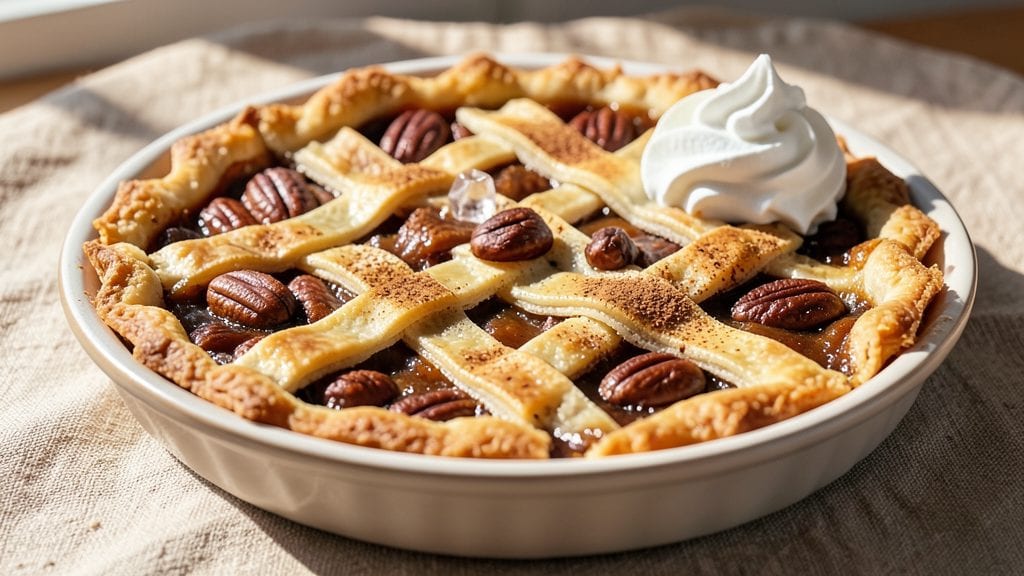
This chestnut pie recipe delivers the kind of rustic, nutty sweetness that transforms ordinary dessert nights into special occasions. The lattice crust adds visual appeal while keeping the filling moist and flavorful—perfect for holiday tables or cozy family gatherings.
I've perfected both traditional methods and modern shortcuts to ensure you can achieve professional results without stress.
The secret lies in balancing sweetness with earthy chestnut flavor, using a combination of fresh or canned chestnuts and spices like cinnamon and nutmeg. A homemade crust is ideal, but store-bought options work beautifully too. The filling requires precise baking to avoid sogginess while developing that signature caramelized depth.
What you'll end up with is a golden-brown pie with a crisp lattice crust and a velvety chestnut filling that's rich yet not overly sweet. The aroma alone will have everyone gathering around the table, and each bite delivers that perfect harmony of nutty, spiced sweetness.
This recipe builds confidence in your baking skills while delivering restaurant-quality results.
Whether you're preparing for Thanksgiving, Christmas, or just a weekend treat, this chestnut pie stands out as a showstopper. The techniques here work equally well for traditional ovens or slow cookers, making it versatile for any kitchen. Let's get started on creating this timeless dessert.
Ingredients for chestnut pie
These ingredients create a showstopping chestnut pie with nutty sweetness and perfect lattice crust.
| Ingredient | Amount | Notes |
|---|---|---|
| Chestnuts 🌰 | 2 cups | Fresh or canned, peeled and chopped |
| All-Purpose Flour 🌾 | 3 cups | For lattice crust, sifted |
| Unsalted Butter 🧈 | 1 cup | Cold, cubed for crust |
| Granulated Sugar 🍚 | 1 ½ cups | Light brown sugar for depth |
| Large Eggs 🥚 | 2 whole | Room temperature for crust |
| Ground Cinnamon 🌿 | 2 tsp | Freshly ground preferred |
| Ground Nutmeg 🌶️ | ½ tsp | Freshly grated for warmth |
| Salt 🧂 | ½ tsp | Fine sea salt |
| Heavy Cream 🥛 | 1 cup | Full-fat for richness |
| Vanilla Extract 🌸 | 1 tsp | Pure vanilla for aroma |
| Lemon Zest 🍋 | 1 tsp | Brightens filling |
| Light Corn Syrup 🍯 | ¼ cup | Prevents crystallization |
| Pecans 🌰 | ½ cup | Chopped for lattice garnish |
The chestnuts are the heart of this pie—fresh is ideal but canned works beautifully too. Grab vacuum-packed canned chestnuts from Whole Foods or Trader Joe's for convenience. If using fresh, roast them first to remove skins. The pecans? Raw, unsalted from the bulk bin add texture and richness. For the spices, Penzeys or McCormick ground cinnamon and nutmeg ensure consistent flavor. Don't skip the lemon zest—it balances the sweetness perfectly.
No fresh chestnuts? Canned works just as well, just drain and chop them. Short on pecans? Walnuts or almonds add a different but lovely texture. The corn syrup might seem odd, but it keeps the filling silky smooth. Substitute honey at half the amount if you prefer. For the crust, store-bought pie crust saves time—just brush with egg wash before adding the lattice. If you're ambitious, make your own with the butter, flour, and eggs listed. The key is keeping everything cold until baking.
Store the pie filling (unbaked) for 2 days in the fridge. The crust can be prepped ahead and kept wrapped in the freezer for up to 3 months. Once baked, the pie reheats beautifully—just warm at 350°F for 15 minutes. Slice and serve with whipped cream or vanilla ice cream. The lattice keeps the filling moist for 4-5 days at room temperature, making it perfect for holiday gatherings.
Why You'll Love This Recipe
- No Fuss Filling: I peel those chestnuts once—boil them, crack them open, done. The rest is just folding in butter and sugar until it’s silky smooth, like a hug in pie form.
- Sweet Butter Magic: That rich butter folded into the chestnut filling? It makes every bite taste like autumn wrapped in a golden crust. Honestly, the sugar caramelizes just enough to give it this warm, almost honeyed depth.
- Holiday or Snack: Slice it thin for fancy gatherings, or grab a fork for lazy Sunday afternoons. I’ve served it at Thanksgiving, but my kids beg for it on random Tuesday nights—proof it works anywhere.
- Leftovers? Please.: This pie actually improves the next day. The crust stays crisp, the filling gets even more tender, and I’ve reheated slices in the oven for breakfast—yes, really—with just a sprinkle of cinnamon.
Step-by-step instructions for chestnut pie with rustic lattice crust
Here's how to assemble this showstopping dessert with a delicate balance of textures and flavors.
Prepare the Chestnut Filling
In a medium saucepan, combine the 2 cups chestnuts with the 1.5 cups granulated sugar, 1 cup heavy cream, 0.25 cup light corn syrup, 1 tsp vanilla extract, and 1 tsp lemon zest. Bring to a gentle simmer over medium heat, stirring occasionally to prevent sticking. You'll notice the chestnuts begin to soften after about 10 minutes—this is when they'll start releasing their natural starches and creating that velvety texture we want.
Once the mixture reaches a gentle boil, reduce heat to low and let it simmer uncovered for 20-25 minutes, stirring every 5 minutes to prevent scorching. The filling should thicken noticeably, coating the back of a spoon when you stir. Here's the thing—if it looks too thick before the 20 minutes are up, add 1-2 tablespoons water to maintain the right consistency. The filling needs to be smooth but still pourable when you pour it into the crust.
Remove from heat and let it cool completely to room temperature. I always strain it through a fine-mesh sieve to remove any skin fragments—this ensures a silky texture in your final pie. While it cools, you can prepare the crust components simultaneously to save time.
Make the Lattice Crust
In a large bowl, whisk together the 3 cups all-purpose flour, 2 tsp ground cinnamon, 0.5 tsp ground nutmeg, and 0.5 tsp salt. Cut in the 1 cup cold unsalted butter using a pastry cutter or your fingers until the mixture resembles coarse crumbs with pea-sized butter pieces remaining. This texture is crucial—it creates flaky layers when baked.
Add the 2 whole large eggs, one at a time, mixing just until combined. The dough should come together but not be sticky. Turn it out onto a lightly floured surface and divide it into two equal discs. Roll one disc into a 12-inch circle for the base, and the other into a 10-inch circle for the lattice top. Here's a pro tip: keep the unused dough disc wrapped in plastic while you work with the first piece to prevent drying.
For the lattice, roll the 0.5 cup chopped pecans into the top dough disc using a rolling pin. This creates beautiful flecks of nut throughout the crust. Then, carefully transfer the base crust to a 9-inch pie dish and press it gently into the bottom and up the sides. Pour in the cooled chestnut filling, leaving about ½-inch headspace at the top.
Assemble and Bake the Pie
Roll out the lattice-top dough and create a classic lattice pattern by cutting it into 1-inch strips with a sharp knife or pizza cutter. Weave half the strips horizontally across the filling, then fold back every other strip. Place the remaining strips vertically, folding back alternating strips to create the signature diamond pattern. Trim any excess dough from the edges.
Brush the lattice with a lightly beaten egg white for shine, then bake in a preheated 375°F oven for 45-50 minutes, until the crust is deep golden brown and the filling is bubbling gently at the edges. Here's where patience pays off—don't open the oven door during the first 30 minutes of baking, or you'll risk collapsing the lattice structure.
When the pie is done, transfer it to a wire rack and let it cool completely before slicing. The filling will set as it cools, creating that perfect balance between custard-like smoothness and firm structure. Serve warm with a dollop of whipped cream or a scoop of vanilla ice cream to complement the nutty sweetness.
Pro Tips For Making Chestnut Pie
- Boil Chestnuts Twice: You’ll hear people say to peel them fresh, but trust me—boil them once, peel, then boil again for 5 minutes. That second dip guarantees they’re tender enough to mash smoothly, not grainy. (And yes, it’s worth the extra pot.)
- Chill the Dough: Roll out that pie crust cold, then chill it 30 minutes before filling. Warm dough shrinks when it hits the chestnut filling, and you’ll end up with a soggy bottom. I learned this the hard way after a Thanksgiving disaster.
- Don’t Overmix the Filling: Stir the chestnut purée, sugar, and eggs just until combined—no need to beat it like cake batter. Overmixing adds air, which makes the pie dense instead of light. Think "fold gently," not "whip aggressively."
- Use Cold Butter: Cut that unsalted butter into the flour mixture in small cubes, then rub it in with your fingers until it looks like coarse sand. Cold butter creates flaky layers; room-temperature butter just melts into a sad, flat crust. (And skip the food processor—this isn’t shortbread.)
Essential equipment for chestnut pie
Pie Dish Essentials
The right pie dish makes all the difference for this chestnut pie. I recommend a 9-inch glass or ceramic pie dish—glass distributes heat evenly, while ceramic adds that classic rustic look.
Avoid dark-colored dishes as they absorb heat and can over-bake the crust. For professional results, I use Pyrex glass pie dishes—they're durable and handle temperature changes beautifully. 🌟
Rolling Pin & Dough Tools
A jaded marble rolling pin is my top recommendation for rolling out the lattice crust—its weight ensures even thickness while preventing sticking. For precise lattice cuts, use a sharp pizza cutter or long serrated knife.
If you're making the crust from scratch, a pastry cutter (or two forks) works perfectly for cutting butter into flour. Keep everything cold to prevent the dough from sticking.
Measuring & Mixing
Precision matters in pie baking, so invest in a stainless steel measuring cups set and a digital kitchen scale for accuracy. For the chestnut filling, a medium saucepan with high sides prevents spills while simmering.
I also recommend a fine-mesh sieve to strain the filling—this removes any skin fragments for that ultra-smooth texture. A wooden spoon helps prevent scorching while stirring the filling.
Baking & Cooling
An oven thermometer is non-negotiable—most home ovens run 25-30°F hotter than set, and this pie needs precise temperature control. For cooling, a wire cooling rack prevents soggy bottoms by allowing air circulation.
If you're short on time, a pie cooling rack (with a removable bottom) lets you invert the pie for even cooling while keeping the filling intact.
Optional Luxury Tools
For lattice perfection, a pie crust cutter (like the Wilton 3-inch cutter) creates clean, professional cuts. A pastry brush with a long handle helps apply egg wash evenly to the lattice without touching it.
If you love texture, a microplane for fresh nutmeg zest adds depth to the filling. These aren't essential, but they elevate the final result beautifully. 💡
Nutrition facts
Frequently asked questions
Can I use canned chestnuts instead of fresh?
Canned chestnuts work perfectly and save time. Just drain and chop them before using in the filling. For best results, choose vacuum-packed varieties from brands like Whole Foods or Trader Joe's—they're pre-cooked and ready to go. The texture will be slightly softer than fresh, but the flavor remains rich and nutty.
How do I prevent the lattice crust from collapsing?
Keep your oven door closed for the first 30 minutes of baking—this prevents temperature fluctuations that cause lattice sagging. Also, make sure your filling is fully cooled before pouring (room temperature) and leave ½-inch headspace at the top. If the crust starts puffing too much, tent it lightly with foil after 25 minutes.
Can I make this pie ahead of time?
Yes! The unbaked filling can be refrigerated for 2 days, and the crust can be prepped and frozen for 3 months. Assemble the pie up to 24 hours ahead and refrigerate—just add 10-15 minutes to baking time. For holiday prep, bake it 1 day before serving to let flavors meld.
What's the best way to reheat chestnut pie?
Warm slices at 350°F for 10-12 minutes covered with foil to maintain moisture. For individual servings, microwave for 20-30 seconds (covered) to soften the filling without drying the crust. Avoid reheating in the oven longer than 15 minutes—the crust may overbake.
Can I substitute pecans in the lattice?
Certainly! Walnuts or almonds work beautifully as lattice garnishes. For a different flavor, try hazelnuts (lightly toasted first). Just chop them to the same size as pecans—about ¼-inch pieces. The texture contrast remains, though the taste will vary slightly.