
Main Courses
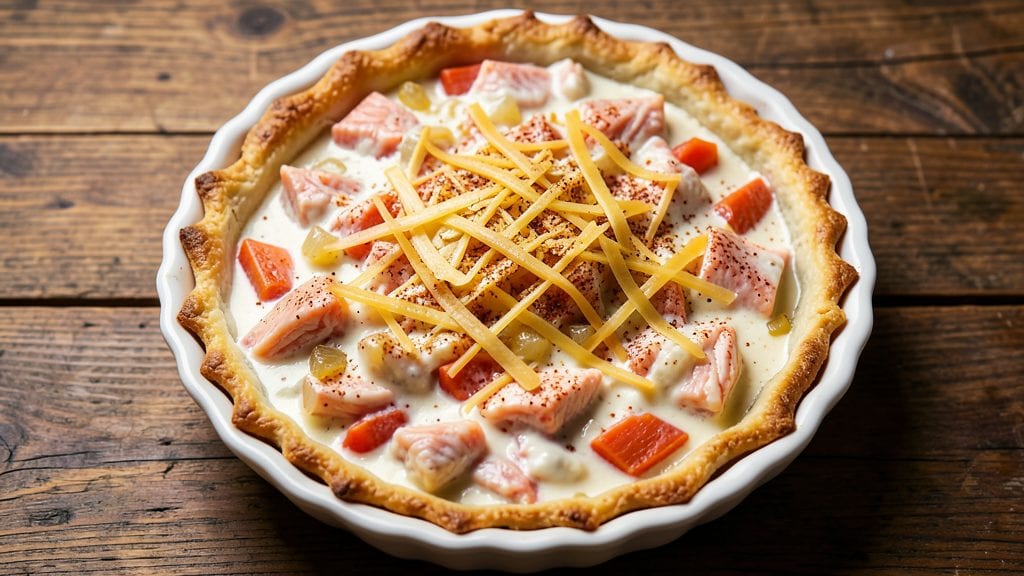
This canned salmon fish pie recipe transforms humble canned salmon into a restaurant-worthy dish with a creamy cheddar filling and flaky pastry topping—perfect for a comforting weeknight dinner or special occasion.
I first made this version after discovering how canned salmon could rival fresh fillets when properly seasoned, and it quickly became a family favorite. The secret lies in balancing the richness of the cream with sharp cheddar and a touch of mustard, while the pastry adds that satisfying crunch.
The filling combines tender salmon with a velvety cream sauce, crisp vegetables, and a blend of herbs that elevate simple ingredients into something extraordinary.
Unlike traditional fish pies that require fresh fish, this version uses canned salmon for convenience without sacrificing flavor—ideal for busy weeknights or when fresh seafood isn't available. The mashed potato crust adds heartiness, though a simple puff pastry works just as well for a quicker assembly.
What you'll end up with is a golden, bubbling pie with a flaky crust that encases a rich, cheesy filling where every bite delivers tender salmon, creamy sauce, and crisp vegetables.
The aroma alone will have everyone gathering at the table, and the texture—crisp on top, tender inside—makes it worth every minute of prep. This is comfort food at its finest, with just the right balance of indulgence and simplicity.
For those with dietary restrictions, swapping the pastry for a gluten-free version or using vegan cheese alternatives keeps the dish inclusive without sacrificing flavor. Let's get started on creating this timeless classic that feels like a hug in pie form.
Ingredients for canned salmon fish pie
Fifteen simple ingredients transform canned salmon into a restaurant-worthy fish pie with velvety cheddar filling.
| Ingredient | Amount | Notes |
|---|---|---|
| Canned Salmon 🐟 | 2 cans | High-quality, drained well |
| Sharp Cheddar Cheese 🧀 | 1 ½ cups | Freshly grated, sharp flavor |
| Heavy Cream 🥛 | 1 cup | Full-fat for richness |
| Yellow Onion 🧅 | 1 medium | Finely diced, about 1 cup |
| Carrots 🥕 | 2 medium | Peeled, finely diced, about 1 cup |
| Butter 🧈 | ½ cup | Unsalted, cold for pastry |
| All-Purpose Flour 🌾 | 2 cups | Sifted for light texture |
| Puff Pastry 🍞 | 1 sheet | Thawed if frozen |
| Dijon Mustard 🍯 | 1 tbsp | For tangy depth |
| Fresh Dill 🌿 | ¼ cup | Chopped, for freshness |
| Fresh Parsley 🌿 | ¼ cup | Chopped, for garnish |
| Salt 🧂 | 1 tsp | Diamond Crystal preferred |
| Black Pepper 🌶️ | ½ tsp | Freshly ground |
| Milk 🥛 | ¼ cup | For pastry tenderness |
| Egg 🥚 | 1 whole | For egg wash |
The quality of your canned salmon matters most—Wild Planet or Vital Choice brands deliver superior texture and flavor. Look for cans with a vibrant color and minimal liquid; drain thoroughly and flake with a fork for even distribution. Sharp cheddar is non-negotiable here; Cabot or Tillamook brands offer the perfect balance of tang and creaminess. Fresh herbs elevate the dish significantly, so buy from local markets where they're bright green and fragrant. The puff pastry should be thawed completely before handling to prevent tearing during assembly.
No sharp cheddar? Gruyère or aged Gouda work beautifully as substitutes, though flavor will differ slightly. Short on fresh dill? Dried dill at one-third the amount suffices, but fresh is ideal. The Dijon mustard adds depth; substitute with lemon juice if unavailable, though the tang won't be identical. For a gluten-free version, replace the puff pastry with a gluten-free pie crust or layer the filling over mashed potatoes> for a rustic alternative. The carrots can be swapped for frozen peas or green beans if preferred, though texture will vary slightly.
This pie reheats beautifully—best served at room temperature after baking for optimal texture contrast. Store leftovers in an airtight container for 3-4 days in the refrigerator, though it's best enjoyed within 2 days for peak freshness. For freezing, assemble the pie completely, then freeze before baking. Bake from frozen, adding 10-15 minutes to the cooking time. The pastry benefits from a 24-hour rest in the refrigerator before baking for enhanced flakiness, though this is optional for weeknight convenience.
Why You'll Love This Recipe
- Pantry Magic: I swear by this recipe when I forget to grocery shop. The canned salmon and heavy cream do all the heavy lifting—no fresh fish to fillet, no last-minute trips to the store. Just open, mix, and bake.
- Cheese-Cream Dream Team: That sharp cheddar melting into the creamy salmon filling? It’s like a hug in a pie. The onions caramelize just enough to add sweetness, while the carrots keep it bright—no blandness here.
- Leftovers That Beg: This pie tastes even better the next day, honestly. I’ll make one on Sunday and have lunch for half the week. The crust stays crispy, the filling stays rich, and nobody ever turns it down.
- Budget-Friendly Luxury: Salmon pie feels fancy, but the canned version cuts costs without sacrificing flavor. A single can of salmon and a block of cheddar stretch to feed four, plus you’re using pantry staples. Frugal but never boring.
Step-by-step instructions for canned salmon fish pie
Here's the method to achieve a golden, flaky crust with a rich, creamy filling every time.
Prepare the Creamy Salmon Filling
In a large mixing bowl, combine the 2 cans drained canned salmon, 1 cup heavy cream, 1 tbsp Dijon mustard, 1.5 cups freshly grated sharp cheddar cheese, 1 medium finely diced yellow onion, and 2 medium finely diced carrots. Use a rubber spatula to gently fold everything together until fully incorporated. The mixture should be smooth with no visible salmon chunks remaining—this ensures an even texture throughout the pie.
Season the filling generously with 1 tsp salt and 0.5 tsp freshly ground black pepper. Stir in 0.25 cup chopped fresh dill and 0.25 cup chopped fresh parsley, reserving a small amount for garnishing later. The herbs should be evenly distributed but still visible, adding both flavor and visual appeal. Transfer the mixture to a greased 9x9-inch baking dish and spread it into an even layer. This preparation creates the foundation for your creamy filling.
Create the Perfect Puff Pastry Topping
On a lightly floured surface, roll out the 1 sheet thawed puff pastry to a 12x12-inch rectangle, about 1/8-inch thick. Use a sharp knife to trim any uneven edges, ensuring clean, straight sides. The pastry should be smooth and even—this prevents uneven baking and ensures a consistent flaky texture.
Brush the entire surface of the pastry with a mixture of 1 whole egg and 0.25 cup milk, whisked together until smooth. This egg wash creates a golden, glossy finish while sealing in moisture. Carefully lift the pastry and drape it over the salmon filling, pressing gently along the edges to create a seal. Trim any excess pastry and use a fork to crimp the edges decoratively. This technique locks in steam during baking, guaranteeing that flaky layers you're aiming for.
Bake to Golden Perfection
Preheat your oven to 375°F. Place the baking dish on the middle rack and bake for 35-40 minutes, until the pastry turns a deep golden brown and the filling bubbles gently at the edges. The center should be just set but still slightly jiggly—this indicates the filling is fully cooked but still creamy. If the pastry browns too quickly, tent it loosely with aluminum foil to prevent over-browning while the filling finishes cooking.
Remove the pie from the oven and let it rest for 10 minutes before serving. This resting period allows the filling to set slightly and makes slicing easier. Garnish with the reserved chopped fresh parsley and dill before serving. Each slice should reveal a flaky, golden crust encasing a rich, creamy salmon and cheddar filling with vibrant herbs peeking through.
Pro Tips For Making Canned Salmon Fish Pie
- DRY THE SALMON: Drain the canned salmon and pat it thoroughly with paper towels—get rid of that sticky brine. I learned this the hard way when my first pie tasted watered down and bland. The extra moisture makes the filling soggy instead of creamy.
- SAUTÉ THE ONIONS LOW: Cook the onions on medium-low heat until they’re soft but not browned—about 8-10 minutes. I used to rush this, and the sharpness overpowered the whole dish. A gentle caramelization adds sweetness without bitterness.
- MIX CHEESE LAST: Fold the shredded cheddar into the cream mixture just before baking—not earlier. Melting it in too soon makes it clump and turn grainy. Stir it in right after the salmon goes in for perfect stretch and texture.
- SKIP THE BOILING WATER: Don’t pre-boil the carrots—just dice them small (¼-inch pieces) and sauté them with the onions. Boiling drains their flavor and turns the filling mushy. They’ll soften in the pie’s heat without losing texture.
Pro cooking tips for great canned salmon fish pie
Salmon Flaking Technique
Never just dump canned salmon directly into your pie—proper flaking makes all the difference. Use a fork or rubber spatula to gently break apart the salmon into small, even pieces (about ¼-inch chunks). This ensures even distribution and prevents large, chewy bits.
I like to press the salmon against the side of my mixing bowl to create a smooth, creamy texture that blends seamlessly with the cream and cheese. 🐟
Cream Sauce Mastery
The secret to a velvety filling lies in the cream—don't just pour it in cold. Warm the 1 cup heavy cream gently in a small saucepan over low heat until it just begins to steam (about 2 minutes)), then whisk it into the salmon mixture. This prevents curdling when combined with the cheese later. For extra richness, I sometimes add 1 tbsp butter to the warm cream before mixing it in.
Pastry Prep Pro Tips
Roll your puff pastry between two sheets of parchment paper to prevent sticking and maintain even thickness. Keep it chilled in the fridge for 10-15 minutes before rolling—this prevents it from becoming too soft and difficult to handle.
For extra flakiness, brush the bottom of the pastry with a thin layer of melted butter before sealing it over the filling. This creates those signature crisp layers. ❄️
Oven Temperature Control
Your oven's 375°F setting might not be accurate—always verify with an oven thermometer. I've seen home ovens run 25°F hotter or cooler> than their dial settings! Place the thermometer near your pie while it bakes.
If the pastry browns too quickly, tent it with foil and focus on baking the filling fully before achieving that golden crust.
Resting for Perfect Texture
That 10-minute rest after baking is non-negotiable for two reasons: First, it lets the filling set slightly so it doesn't run when sliced. Second, it allows the juices to redistribute, making every bite more flavorful.
I often place my pie on a wire rack during this time to prevent sogginess from residual heat. 💡
Make-Ahead Hack
Assemble your pie completely (even the pastry topping) and refrigerate it overnight before baking. The cold filling prevents the pastry from absorbing too much moisture, resulting in an extra-flaky crust. Just add 5-10 minutes to your baking time since it'll be cold when going into the oven.
This is my go-to strategy for weekend baking when I have time to prep ahead.
Nutrition facts
Frequently asked questions
Can I make this salmon pie without puff pastry?
For a rustic version, try a mashed potato crust—simply spread 2 cups mashed potatoes over the filling before baking. Another option is gluten-free pie crust> or even a simple layer of crumbled cornflakes> mixed with melted butter for a crispy topping. The key is ensuring your alternative can handle the moisture from the creamy filling.
How do I prevent the pastry from getting soggy?
Prevent sogginess by brushing the pastry with a thin layer of melted butter> before sealing it over the filling. This creates a moisture barrier. Also, bake the pie on the middle rack> of your oven for even heat distribution. If the pastry still looks undercooked after 35 minutes>, tent it with foil and let the filling finish cooking first.
Can I use frozen salmon instead of canned?
Yes, but you'll need to cook it first. Thaw the salmon and poach it in simmering water with lemon slices> for 8-10 minutes> until fully cooked. Then flake it as directed in the recipe. Frozen salmon works well but loses some of the convenience factor that makes canned salmon perfect for this dish.
What's the best way to reheat leftovers?
Reheat slices in a 350°F oven> for 10-15 minutes> until warmed through. For a quicker option, cover with a damp paper towel and microwave on medium power> for 45-60 seconds>. Avoid reheating in the microwave uncovered—it can make the pastry rubbery. The pie reheats best when served at room temperature after baking.
Can I make this dish ahead of time?
Yes! Assemble the pie completely (including pastry) and refrigerate it for up to 24 hours> before baking. This actually improves the crust's flakiness. If freezing, assemble the pie, then freeze before baking. Bake from frozen, adding 10-15 extra minutes> to the cooking time. The filling stays creamy and delicious when reheated properly.