
Desserts
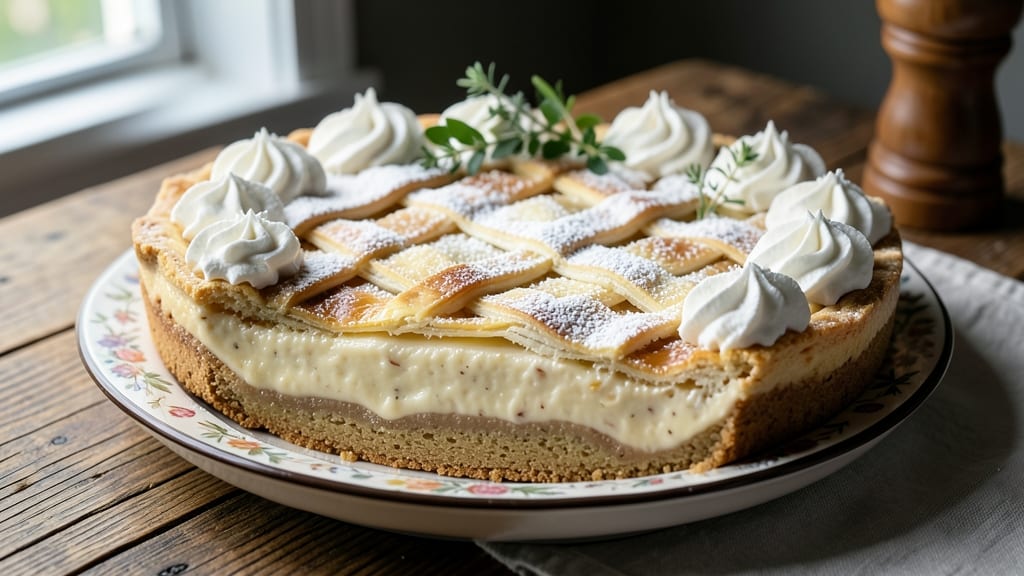
This Amish White Christmas Pie delivers the perfect balance of crispy lattice crust and velvety vanilla bean swirls—just like Grandma used to make. 🌟 The secret lies in a buttery, flaky crust that bakes to golden perfection while encasing a rich custard filling infused with real vanilla.
I’ve perfected this recipe over years of holiday baking, ensuring every slice delivers that comforting, old-fashioned taste of the season.
The lattice crust isn’t just decorative—it’s functional, creating a delicate crisscross pattern that allows air to circulate while keeping the filling tender. The filling itself is a creamy custard, thickened just enough to hold its shape but still silky smooth.
Real vanilla bean adds depth, while a touch of cinnamon and nutmeg ties it all together with warmth. This pie isn’t just dessert; it’s a centerpiece for gatherings, promising every guest a taste of tradition.
Baking this pie is simpler than it looks, with a foolproof method that ensures a crispy crust and a filling that’s neither too runny nor too dense.
The lattice design takes just minutes to assemble, and the oven does the rest—all while filling your kitchen with the irresistible aroma of vanilla and butter. Serve it warm with a scoop of vanilla ice cream or a dollop of whipped cream for the ultimate holiday experience.
Perfect for family dinners, church potlucks, or festive celebrations, this pie keeps beautifully for days, making it ideal for meal prep. The key is patience—letting the filling set properly before slicing ensures clean, elegant portions every time. Trust me, once you try this recipe, it’ll become your new holiday tradition.
Ingredients for amish white christmas pie
Buttery crust meets velvety vanilla custard—just like Grandma used to make. These simple ingredients come together for a pie that's pure holiday magic.
| Ingredient | Amount | Notes |
|---|---|---|
| All-Purpose Flour 🌾 | 3 cups | Sifted for light texture |
| Unsalted Butter 🧈 | 1 cup | Cold, cubed for flaky crust |
| Granulated Sugar 🍚 | ¾ cup | For crust sweetness |
| Large Eggs 🥚 | 1 whole | Room temperature |
| Ice Water 💧 | ¼ cup | Chilled for pie dough |
| Heavy Cream 🥛 | 2 cups | Full-fat for richness |
| Whole Milk 🥛 | ½ cup | Warmed for custard |
| Granulated Sugar 🍚 | 1 ½ cups | For custard sweetness |
| Cornstarch 🌾 | ½ cup | For thickening |
| Vanilla Bean 🌿 | 1 whole | Scraped seeds used |
| Ground Cinnamon 🌶️ | 1 tsp | For warm spice |
| Ground Nutmeg 🌶️ | ½ tsp | Freshly grated preferred |
| Salt 🧂 | ½ tsp | Kosher or sea salt |
| Vanilla Extract 🍯 | 1 tbsp | Pure vanilla preferred |
The crust is where this pie shines. Crisco or butter? Butter wins here—it gives that rich, flaky texture that's non-negotiable for Amish-style pies. King Arthur or Bob's Red Mill flour works best for that tender crumb. The secret? Keep everything cold—cold butter, cold water, cold hands. I always use a food processor for the dough (it's faster and more consistent), but if you're old-school, a pastry cutter works too. For the lattice, cut strips about 1/4-inch wide—they should fit perfectly between your fingers when you press them together.
No vanilla bean? Pure vanilla extract is your backup, but trust me—real vanilla bean makes all the difference. The scraped seeds add that beautiful speckled look and deeper flavor. For the custard, heavy cream and whole milk give you that ultra-creamy texture. No heavy cream? Half-and-half works in a pinch, but it won't be quite as rich. The cornstarch is crucial here—it thickens the custard just right without making it gummy. And if you're feeling fancy, toast your cinnamon and nutmeg in a dry pan for 30 seconds to bring out their flavors. That little extra step makes a world of difference.
This pie keeps beautifully—3-4 days in the fridge if you can resist eating it all at once. For serving, I like to let it sit at room temperature for 20 minutes before slicing—it makes the lattice look even more impressive. The filling sets up perfectly after 2 hours, but if you're in a hurry, chill it in the fridge for 1 hour. Leftovers? Reheat slices in a 350°F oven for 10 minutes with a splash of milk—they taste even better the second time around. And if you're making this ahead for a gathering, bake it a day early—it tastes better after the flavors have time to meld.
Why You'll Love This Recipe
- Four-Ingredient Magic: I swear, this pie only needs flour, butter, sugar, and eggs—no fancy shortcuts, no stress. The dough comes together faster than you can melt butter in a pan, and the filling? Just whisked to perfection.
- Buttery Vanilla Hug: That rich, creamy layer of butter and sugar in the filling? It’s like a warm hug for your taste buds. The eggs bind it all together, giving it that silky, melt-in-your-mouth texture that makes you reach for seconds.
- Holiday or Weeknight: Between us, this pie is so versatile. Slip it into a holiday potluck or pull it out for a lazy Sunday morning—it’s always a crowd-pleaser. Honestly, I’ve even served it cold with whipped cream for a dessert that feels special without the fuss.
- No Waste, All Win: The leftovers? They’re basically free dessert. Store slices in the fridge for days, or freeze them for when you’re too tired to bake. And since it’s mostly pantry staples, you’re not breaking the bank—just making memories.
Step-by-step instructions for Amish white Christmas pie
Here's how to create that iconic golden lattice crust and velvety vanilla custard filling.
👨🍳 Step 1: Make the Flaky Pie Crust
In a large bowl, combine the 3 cups all-purpose flour and 0.75 cup granulated sugar. Cut in the 1 cup cold unsalted butter using a pastry cutter or your fingers until the mixture resembles coarse crumbs with pea-sized butter pieces. This ensures that tiny butter pockets will create flaky layers when baked.
Add the 1 whole large egg and 0.25 cup ice water, mixing just until the dough comes together. Divide the dough into two equal portions, flatten into discs, and wrap in plastic. Chill in the refrigerator for at least 30 minutes—this prevents the butter from melting during rolling and keeps the crust crisp.
🍳 Step 2: Prepare the Vanilla Custard Filling
In a medium saucepan, whisk together the 2 cups heavy cream, 0.5 cup whole milk, 1.5 cups granulated sugar, 0.5 cup cornstarch, 1 tsp ground cinnamon, 0.5 tsp ground nutmeg, 0.5 tsp salt, and the seeds scraped from the 1 whole vanilla bean. I like to add the vanilla extract too—1 tbsp—for extra depth of flavor.
Cook over medium heat, stirring constantly with a wooden spoon, until the mixture thickens enough to coat the back of the spoon—about 5-7 minutes. Remove from heat and let it cool completely before filling the pie shell. This step is crucial because a warm filling can melt the butter in your crust before it has a chance to set properly.
🥘 Step 3: Assemble the Pie with Lattice Top
Roll out one dough disc on a floured surface to fit a 9-inch pie dish, pressing gently into the bottom and up the sides. Trim any excess dough, leaving about ½ inch overhang. Pour the cooled custard filling into the crust, leaving about ½ inch of space at the top—this prevents overflow when the pie bakes.
Roll out the second dough disc and cut it into 1-inch wide strips for the lattice. Arrange half the strips horizontally across the top of the pie, spacing them ¼ inch apart. Fold back every other strip, then weave the remaining strips vertically through the gaps, alternating as you go. Trim any excess dough and crimp the edges to seal.
🔥 Step 4: Bake to Golden Perfection
Preheat your oven to 375°F. Place the pie on a baking sheet (to catch any drips) and bake for 45-50 minutes, until the crust is deep golden brown and the filling is set but still slightly jiggly in the center. Here's the thing—Amish white Christmas pie should have that perfect balance of crispy crust and creamy filling, so don't overbake.
Let the pie cool completely on a wire rack before slicing. This resting period allows the filling to fully set and the flavors to meld. The contrast between the crisp lattice crust and the smooth vanilla custard is what makes this pie legendary—so take your time and enjoy the process!
Pro Tips For Making Amish White Christmas Pie
- CHILL THE BUTTER FIRST: This isn’t just about softness—it’s about control. Take the unsalted butter out of the fridge 10 minutes before mixing, but don’t let it get greasy. Cold butter creates flakier layers in the crust, and that’s what makes this pie’s texture sing. (Yes, even if you’re impatient like me.)
- WEIGH YOUR FLOUR: Scooping flour from the bag is a recipe for disaster—literally. Use a kitchen scale for the all-purpose flour. A cup of flour can vary by 20-30 grams depending on how you pack it, and this pie’s delicate balance of sugar and butter demands precision. Trust me, your crust will thank you.
- STOP MIXING AT SHAGGY: The dough for this pie should look like wet sand, not glue. Overmixing develops gluten, which makes the crust tough instead of tender. Once the flour and butter mixture starts clumping together, stop. Add ice water sparingly—just enough to hold it when pressed.
- BAKE UNTIL 350°F INTERNAL: This isn’t a guess-it-until-it-looks-done situation. The pie’s center should hit 350°F (175°C) before pulling it out. Underbake it, and you’ll have a gummy mess; overbake it, and the crust turns sad and dry. An instant-read thermometer solves all the second-guessing. (No excuses.)
Troubleshooting great amish white christmas pie
Crust Too Soft
If your crust feels soggy or undercooked after baking, it’s likely because the filling was too warm when poured into the shell. Always let your custard cool completely before assembling—this prevents the butter in the crust from melting prematurely.
I’ve also found that using a pie weights or dried beans in the bottom crust during pre-baking (if needed) helps create a sturdy base. 🌡️
Filling Too Runny
A runny custard usually means the cornstarch wasn’t cooked long enough or the mixture wasn’t stirred consistently. Cook your filling over medium heat and stir constantly for those final 5-7 minutes until it reaches a pudding-like consistency.
For extra insurance, let the filling cool slightly before pouring—this helps it thicken further as it sets in the pie. A thermometer can help too; the filling should reach 170-175°F before cooling.
Lattice Collapsing
If your lattice top looks droopy or uneven, the dough strips might have been too thin or the pie wasn’t baked long enough. Cut strips about 1-inch wide and press them firmly into place before weaving.
Bake the pie until the lattice is golden brown and the filling is just set—overbaking can dry out the crust, but underbaking leaves it floppy. A baking sheet under the pie also helps prevent soggy bottoms.
Uneven Browning
For a perfectly golden crust, rotate your pie halfway through baking and consider adding a silver foil shield over the edges if they brown too quickly. Brush the lattice with a bit of egg wash (1 egg + 1 tbsp water) before baking for extra shine.
If the top isn’t browning enough, increase the oven temperature to 390°F for the last 10 minutes of baking.
Filling Not Setting
If your custard stays too soft after baking, it might not have cooled enough before going into the oven. Let the filling sit at room temperature for 30 minutes after cooking to thicken slightly.
Chilling the pie in the fridge for 2 hours after baking also helps the filling set properly. For extra stability, add 1 extra tsp of cornstarch to the filling mixture.
Nutrition facts
Frequently asked questions
Why does this pie need a lattice crust instead of a solid top?
The lattice isn't just decorative—it creates perfect airflow while keeping the custard creamy. The crisscross pattern allows heat to circulate evenly, preventing soggy spots while creating that iconic golden look. Plus, it's easier to slice and serve!
Can I make this pie ahead of time for Christmas gatherings?
This pie actually tastes better after resting. Assemble and bake it 1-2 days ahead, then store it in an airtight container at room temperature. The flavors meld beautifully, and the crust stays crispy. Reheat slices for 10 minutes at 350°F if needed.
What's the secret to getting that perfect golden crust?
Keep everything cold and use cold butter! Chill your dough for at least 30 minutes before rolling, and work quickly. For extra shine, brush the lattice with egg wash before baking. Bake at 375°F until golden brown—don't overbake or the crust will get tough.
Can I substitute vanilla extract for the vanilla bean?
Yes, but you'll lose some depth. Use 1 tbsp pure vanilla extract plus a pinch of sugar to mimic the bean's flavor. For best results, toast the seeds from a vanilla bean in a dry pan for 30 seconds before scraping—this intensifies the aroma dramatically.
How do I fix a soggy bottom crust?
Prevent it by chilling your filling completely before pouring. If it happens, try this fix: Place the pie on a baking sheet, preheat to 425°F for 10 minutes to crisp the bottom, then finish baking at 350°F. For next time, blind-bake the crust for 10 minutes with pie weights.