
Desserts
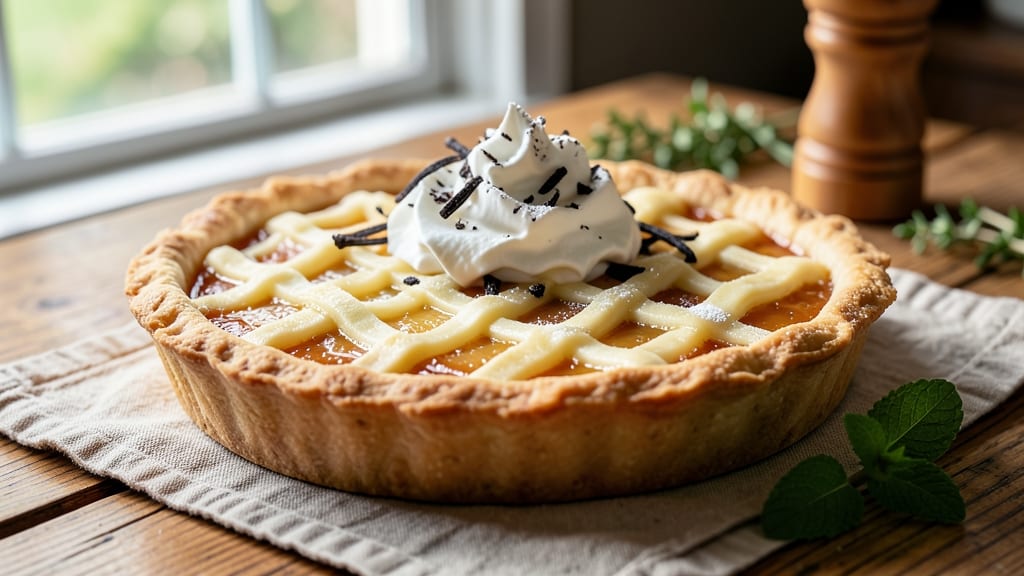
This add custard pie recipe delivers the perfect balance of a crispy golden crust and silky-smooth vanilla custard filling that melts in your mouth. 🌟 The secret lies in a well-chilled pie crust and a tempered custard mixture that bakes up creamy without cracks—no guesswork, just foolproof technique.
I’ve perfected this recipe over years of baking, ensuring every slice is restaurant-quality at home.
The foundation starts with a classic pie crust, rolled out and baked just until it’s set but still tender. The custard filling, made with eggs, cream, sugar, and vanilla, requires careful tempering to avoid curdling, then bakes to a velvety finish.
The key? A water bath for even cooking and a crispy edge that contrasts beautifully with the creamy center.
What makes this recipe stand out is its versatility—while the classic vanilla version is a crowd-pleaser, you can easily swap in pumpkin, chocolate, or even caramel for a twist. The result? A pie that’s rich, smooth, and satisfying, with a texture that’s impossible to resist.
Whether you’re baking for a holiday gathering or a cozy dessert night, this is the one to make.
Ready in about an hour (including chilling time), this custard pie is perfect for any occasion. The crispy crust holds its shape while the custard stays luscious, making every bite a little slice of heaven. Let’s get started!
Ingredients for add custard pie
Eight essential ingredients transform into a restaurant-quality custard pie with crispy crust and velvety filling.
| Ingredient | Amount | Notes |
|---|---|---|
| Pie Crust (Store-Bought or Homemade) 🥧 | 1 whole | Pre-baked, 9-inch diameter |
| Large Eggs 🥚 | 4 whole | Room temperature preferred |
| Granulated Sugar 🍚 | 1 cup | White or light brown |
| All-Purpose Flour 🌾 | ½ cup | For thickening custard |
| Heavy Whipping Cream 🥛 | 1 ½ cups | Full-fat for creaminess |
| Pure Vanilla Extract 🌿 | 2 tsp | High-quality, pure vanilla |
| Salt 🧂 | ¼ tsp | Kosher or sea salt |
| Unsalted Butter 🧈 | ½ cup | Cold, cubed for water bath |
| Milk 🥛 | ½ cup | Warm for tempering |
| Cornstarch 🌽 | 2 tbsp | For silky texture |
| Granulated Sugar (for sprinkling) 🍚 | 2 tbsp | For golden crust |
The pie crust sets the stage—pre-baked for a crispy edge. For homemade crust, King Arthur Flour or Pillsbury pie crusts are reliable. If using store-bought, roll it out to 12 inches for a generous overhang. The custard’s secret lies in tempering: warm the milk slightly before mixing with eggs to avoid curdling. Room-temperature eggs blend smoother, so take them out 30 minutes before baking. For the best vanilla, McCormick Pure Vanilla or Nielsen-Massey extracts deliver authentic flavor without artificial aftertaste.
No heavy cream? Full-fat coconut milk works in a pinch, though texture will differ slightly. Substitute cornstarch with arrowroot powder at the same ratio for a gluten-free option. The custard mixture should coat the back of a spoon but still be pourable—too thick, and it won’t set properly. For extra richness, add 1 tbsp corn syrup to the filling. If your crust browns too quickly, tent it with foil during baking. The water bath (boiling water in a baking pan under the pie dish) ensures even cooking without cracks, a technique borrowed from professional bakeries.
Assemble the pie just before baking—custard can weep if left too long. Chill the filled pie for at least 2 hours before baking to prevent leaks. Store leftovers in an airtight container for up to 4 days in the fridge. For make-ahead convenience, bake the crust, freeze the custard mixture separately, and assemble when ready—just add 10 minutes to baking time. The pie reheats beautifully: wrap slices in foil and warm in a 350°F oven for 10 minutes to maintain that crispy edge.
Why You'll Love This Recipe
- No-Fuss Filling: I swear by this recipe because it’s the rare custard pie where the filling actually comes together without curdling. Just whisk eggs, sugar, and flour—no fancy techniques, no stress. The heavy cream gives it that velvety texture without requiring a water bath or babysitting the stove.
- Creamy Crisp Perfection: That golden crust with the silky custard? It’s the combo I can’t resist. The sugar caramelizes just enough at the edges while keeping the center rich and smooth—like a hug in dessert form. Honestly, the first time I made it, I ate half before slicing.
- Potluck Hero: This pie travels beautifully. The custard stays thick and creamy even after hours, so it’s my go-to for family gatherings or church dinners. Plus, the ingredients are cheap—flour, sugar, eggs—and it feels fancy without breaking the bank. (Yes, even on a Tuesday night.)
- Leftovers? More Like Leftovers Loved: The best part? It reheats like a dream. Slice a piece the next day, microwave for 20 seconds, and it’s just as good—if not better—than fresh. Between us, I’ve been known to bake two and hide the second one for “emergency” dessert cravings.
Step-by-step instructions for velvety vanilla custard pie
Master this classic technique for a silky smooth filling with a perfectly golden crust.
👨🍳 Step 1: Prepare the Custard Base
In a medium saucepan, combine the 1 cup granulated sugar, 0.5 cup all-purpose flour, 2 tbsp cornstarch, and 0.25 tsp salt. Whisk vigorously until smooth—this prevents lumps in your custard. I like to use a wire whisk for this step to ensure everything dissolves completely.
Gradually whisk in the 1.5 cups heavy whipping cream and 0.5 cup milk until fully incorporated. The mixture should be uniform with no visible flour streaks. Place the saucepan over medium heat and cook, stirring constantly with a wooden spoon, until the mixture thickens enough to coat the back of the spoon—about 5-7 minutes. You'll know it's ready when it reaches 170°F on an instant-read thermometer.
🍳 Step 2: Temper the Eggs and Combine
While the custard mixture is heating, separate 3 of the large eggs into a large bowl, reserving 1 whole egg for later. In a separate small bowl, whisk together the reserved whole egg and 2 tsp pure vanilla extract. This keeps the vanilla from curdling when combined with the hot custard.
Slowly ladle about 1 cup of the hot custard mixture into the egg bowl while whisking constantly. This tempering process prevents the eggs from scrambling. Once fully incorporated, pour the egg mixture back into the saucepan and return to medium-low heat. Cook for another 2-3 minutes, stirring constantly, until the custard thickens to 175°F. Remove from heat immediately—overcooking will make it grainy.
🥘 Step 3: Assemble and Bake the Pie
Pour the custard filling into the pre-baked 9-inch pie crust, smoothing the top with a spatula. Dot the surface with 0.5 cup cold cubed unsalted butter—this creates beautiful golden flecks when baked. Sprinkle evenly with 2 tbsp granulated sugar for that classic caramelized crust.
Place the pie on a baking sheet to catch any potential drips. Bake in a preheated 350°F oven for 40-45 minutes until the filling is set but still slightly jiggly in the center (like gelatin). The top should be golden brown with crackly sugar crystals. If the edges brown too quickly, cover them with aluminum foil.
⏰ Step 4: Chill and Serve
Remove the pie from the oven and let it cool at room temperature for 1 hour. This gradual cooling prevents cracking. Then refrigerate for at least 4 hours—preferably overnight—to allow the custard to fully set and develop its signature velvety texture.
Before serving, run a knife around the edge to loosen it from the crust. Slice into wedges and serve chilled. The perfect custard pie should have a creamy, almost pudding-like filling that melts in your mouth, with a crisp yet tender crust. The sugar topping should be caramelized and crackly on top.
Pro Tips For Making Add Custard Pie
- Whisk Eggs Cold: Pull the eggs straight from the fridge and whisk them vigorously with the sugar—no pre-warming. I learned this the hard way when my custard turned grainy after baking; cold eggs emulsify better and keep the texture silky smooth once baked.
- Pre-Bake the Crust: Blind-bake that pie crust for 10-12 minutes at 375°F (200°C) with pie weights or dried beans before adding the custard. This stops soggy bottoms—my first custard pies always looked perfect until they sat, and the filling would leak like a sieve.
- Temper the Cream: Warm the heavy cream to 160°F (71°C) before stirring it into the egg mixture—just enough to feel hot but not scalding. Cold cream shocks the eggs and can curdle the custard faster than you can say "overcooked."
- Skip the Overbaking: Pull the pie out when the center is just set—no jiggle, but not firm like a brick. Overbaking turns custard into rubber; I used to bake it until the edges were golden, only to find the middle still wobbly and dry.
Best sauces and condiments for these flavors
Classic Vanilla Sauce
This is the signature topping for custard pie, and it’s all about balance. I recommend a homemade vanilla sauce made with 1 cup heavy cream, 3 tbsp powdered sugar, and 1 tsp pure vanilla extract.
Heat the cream until steaming (don’t boil), then whisk in the sugar and vanilla until smooth. Let it cool slightly before drizzling over slices—it should coat the back of a spoon but still be pourable.
For extra richness, add ½ tsp cornstarch to the sugar mixture to thicken it slightly. 🌟
Caramel Drizzle
A salted caramel drizzle elevates custard pie to next-level decadence. Start with ½ cup granulated sugar and ¼ cup heavy cream in a saucepan. Cook over medium heat until the sugar melts and turns amber, then carefully whisk in the cream.
Simmer for 2-3 minutes until thickened, then stir in ½ tsp flaky sea salt. Let it cool slightly before drizzling over slices. For a quicker version, use store-bought caramel sauce (like Smucker’s) and thin it with 1 tsp heavy cream to achieve the right consistency.
Whipped Cream Topping
Lightly sweetened whipped cream adds a cloud-like texture that contrasts beautifully with the dense custard. Whip 1 cup heavy whipping cream with 2 tbsp powdered sugar and ½ tsp vanilla extract until soft peaks form.
For a stabilized version, chill the bowl and beaters beforehand, and add 1 tsp cornstarch to the sugar. Pipe or dollop onto slices just before serving to keep it airy. A sprinkle of toasted coconut flakes or crushed graham crackers adds crunch. ⚡
Lemon Curd Swirl
For a tangy twist, swirl homemade lemon curd into the custard before baking. Make the curd by cooking ½ cup lemon juice, ½ cup sugar, 3 large egg yolks, and ¼ cup butter over double boiler heat until thickened.
Let it cool, then spread a thin layer over the custard before adding the sugar topping. The acidity cuts through the richness, brightening every bite. For convenience, use store-bought lemon curd (like Bon Appétit brand) and thin it slightly with 1 tsp heavy cream if needed.
Chocolate Ganache
A dark chocolate ganache adds a sophisticated contrast to vanilla custard. Melt ½ cup dark chocolate chips (60-70% cacao) with ¼ cup heavy cream over double boiler heat, then let it cool until slightly thickened.
Drizzle over slices or spread a thin layer on the pie crust before adding the custard. For a milk chocolate version, use ½ cup milk chocolate chips and add 1 tsp vanilla extract to the ganache. Chill for 15 minutes before serving to set properly. 💫
Nutrition facts
Frequently asked questions
Why does my custard pie filling get grainy?
Overcooking is the most common culprit—remove the custard from heat the moment it reaches 175°F and coats the back of a spoon. Also ensure you're tempering the eggs properly by slowly mixing hot custard with eggs, never pouring cold eggs into hot liquid. Using cornstarch instead of flour can also help prevent graininess.
Can I make custard pie without a water bath?
Technically yes, but you risk cracks and uneven cooking. A water bath (placing the pie in a baking dish filled with hot water) creates gentle, even heat that prevents the custard from setting too quickly. For best results, especially with larger pies, always use this method. If you must skip it, bake at 325°F instead of 350°F and check frequently.
How do I fix a cracked custard pie?
Don't worry—cracks are common but don't ruin the pie! The filling is still safe to eat. For presentation, cover the cracks with whipped cream, caramel drizzle, or a dusting of powdered sugar. If baking another, ensure your custard is fully tempered and the oven isn't too hot—350°F is ideal for most ovens.
What's the best way to store leftover custard pie?
Store in an airtight container in the fridge for up to 4 days. For longer storage, freeze individual slices wrapped tightly in plastic wrap—thaw overnight in the fridge before serving. Reheat slices in a 350°F oven for 10-12 minutes covered with foil to maintain moisture.
Can I substitute cornstarch with flour in the custard?
Yes, but the texture will be slightly different. Use the same amount of flour, but be aware it may make the custard slightly more opaque and less silky. For best results, stick with cornstarch for that signature creamy texture. If you must use flour, whisk it thoroughly with the sugar first to prevent lumps.