
Desserts
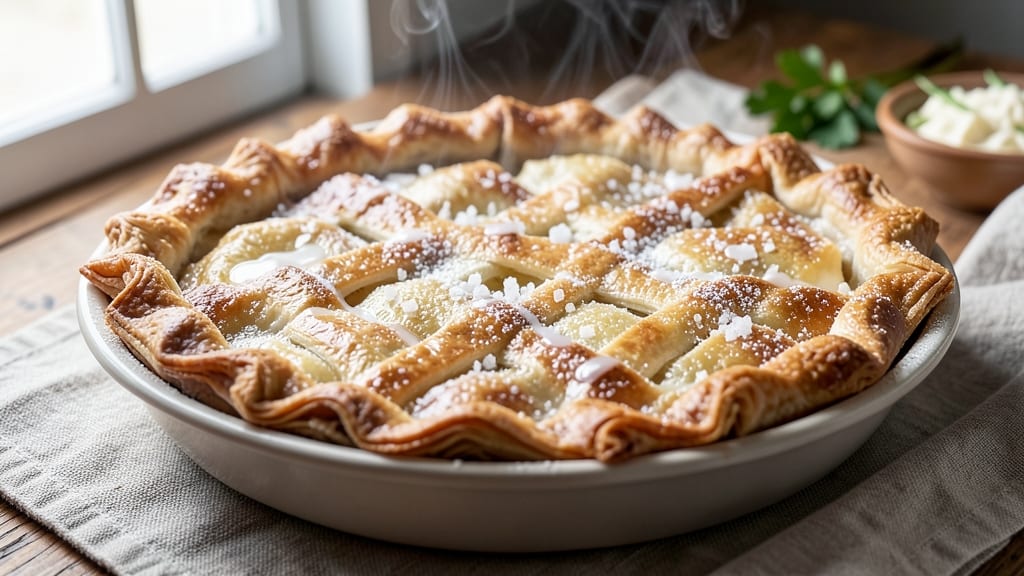
This 9 deep dish pie crust recipe delivers the kind of golden, flaky layers that hold up to even the heaviest fillings—no soggy bottoms here. The secret lies in a precise technique that balances cold butter with proper chilling, ensuring each layer stays crisp even after hours in the oven.
I’ve perfected this method over years of baking pies that impress at holiday tables and weeknight dinners alike.
What sets this crust apart is the foolproof approach to rolling and layering, which guarantees a sturdy base that won’t collapse under fruit or custard. We’ll use a high-fat butter ratio and minimal flour handling to preserve those delicate, shatteringly thin layers.
The key? Patience—chilling the dough at every step prevents shrinking and ensures a perfect rise.
By the time you pull this crust from the oven, you’ll have a golden-brown masterpiece with edges that stay crisp while the center remains tender enough to hold any filling—whether it’s sweet apple, rich chocolate, or savory beef.
The crust’s structure is built to last, making it ideal for deep-dish pies that need to feed a crowd without losing their integrity.
Ready to master the art of deep-dish crusts? Let’s dive into the step-by-step process that turns simple ingredients into a showstopping foundation for your next pie. The results speak for themselves—crisp, flaky, and impossible to resist.
Ingredients for 9 deep dish pie crust
Nine simple ingredients for a crust that stays crisp and golden even after hours in the oven.
| Ingredient | Amount | Notes |
|---|---|---|
| All-Purpose Flour 🌾 | 9 cups | Sifted for light texture |
| Unsalted Butter 🧈 | 3 cups | Cold, cubed, high-fat (80%+) |
| Ice Water 💧 | ½ cup | Chilled, for dough binding |
| Diamond Crystal Kosher Salt 🧂 | 1 ½ tsp | Fine grain preferred |
| Granulated Sugar 🍚 | 2 tbsp | For golden crust color |
| White Vinegar 🍶 | 1 tbsp | Balances sweetness |
| Cornstarch 🌽 | 2 tbsp | Prevents sogginess |
| Large Egg Yolk 🥚 | 1 whole | For egg wash |
| Heavy Cream 🥛 | ¼ cup | For brushing layers |
The butter is non-negotiable here—Plugrá or Land O'Lakes unsalted work best, straight from the fridge in big cubes. Costco sells it in bulk, which saves money for all your baking adventures. The flour? King Arthur or Gold Medal are my go-tos—they handle cold butter better than store-brand stuff. Keep everything cold until the last step, or you'll end up with a greasy mess instead of flaky layers. The ice water might seem weird, but it's what binds the dough without melting the butter too fast.
No cornstarch? Extra 2 tbsp flour works in a pinch, but the crust won't be quite as sturdy. Short on butter? Lard or coconut oil can substitute, but the flavor won't be the same. The egg wash is optional but makes a huge difference for that golden finish—skip it if you're allergic. For deep-dish pies, double the recipe and use two crusts (top and bottom). The vinegar balances the sugar, so don't skip it if you're making a sweet filling—it prevents the crust from tasting too flat.
This dough keeps for 3 days in the fridge wrapped tightly in plastic, or 6 months in the freezer. For best results, chill the rolled-out dough between layers for at least 30 minutes—this prevents shrinking. I like to pre-roll and freeze one crust at a time so I'm ready whenever inspiration (or Thanksgiving) strikes. The secret to deep-dish success? Don't overfill—leave room for the crust to expand, or you'll end up with a pie that looks like a bowl.
Why You'll Love This Recipe
- Fewer Ingredients, Same Magic: I swear by this crust because it’s that simple—just flour, butter, ice water, and a pinch of salt. No fancy ratios, no stressing over exact measurements. The butter stays cold thanks to the ice water, so the crust turns out flaky without me needing a food scale or fancy tricks.
- Buttery Crispy Edge: That first bite? Pure satisfaction. The sugar in the butter mixture caramelizes just enough to give it a golden, slightly sweet edge, while the center stays tender. It’s the kind of crust that makes people pause mid-bite and go, “Wait, you made this?”
- Doubles as a Blank Canvas: Need a pie crust for a potluck? A last-minute dessert? This one’s your secret weapon. Use it for savory galettes, sweet pies, or even a buttery tart shell—it holds its shape and tastes amazing every time. (Yes, even when my kids “help” roll it.)
- Budget Breakthrough: Honestly, this is the most cost-effective crust I’ve ever made. A stick of butter and a bag of flour stretch far, and the ice water trick means no wasted ingredients. Plus, leftovers? Just wrap and freeze—perfect for when I’m too lazy to bake from scratch.
Step-by-step instructions for deep dish pie crust
Here’s how to build layers so crisp they hold up to hours of baking—no shrinking or soggy spots.
Cut and Chill the Butter
Cut the 3 cups unsalted butter into ½-inch cubes and place them on a plate. Freeze for 15 minutes—this keeps them firm during mixing. Cold butter creates those signature flaky layers. If any pieces soften, return them to the freezer for another 5 minutes. Never use warm butter or your crust will turn greasy instead of flaky.
While the butter chills, sift the 9 cups all-purpose flour into a large bowl. This removes lumps and ensures even distribution. I like to use a fine-mesh sieve for a light, airy texture. Add the 2 tbsp granulated sugar, 2 tbsp cornstarch, and 1.5 tsp Diamond Crystal kosher salt to the flour. Whisk everything together until fully combined—this dry mix is your foundation.
Mix Dough Until Crumbly
Add the chilled butter cubes to the flour mixture. Using your fingertips, work the butter into the flour with a light, quick motion—don’t overmix. You’re aiming for pea-sized crumbs with some larger pieces still visible. The goal is to coat each flour particle with butter fat, which will melt and create steam during baking, giving you that flaky texture.
Sprinkle the 1 tbsp white vinegar and 0.5 cup ice water over the mixture. The vinegar helps tenderize the dough, while the ice water binds everything together. Use a wooden spoon or silicone spatula to gently fold the wet ingredients into the dry. Stop mixing as soon as the dough comes together—it should look shaggy and uneven, not smooth. Overworking develops gluten, which makes the crust tough.
Form and Rest the Dough
Turn the dough onto a lightly floured surface and gently press it into a 12-inch circle about ½-inch thick. Wrap it tightly in plastic wrap and refrigerate for at least 2 hours (overnight is even better). This long rest relaxes the gluten and firms up the butter, preventing shrinking during baking. I like to place the dough on a baking sheet before wrapping—it’s easier to handle later.
Here’s the thing—don’t skip the rest. If you try to roll out cold dough straight from the fridge, it’ll crack or shrink. The butter needs time to firm up completely. While it rests, preheat your oven to 375°F and prepare your pie dish by greasing it lightly with butter or spraying with oil. A well-greased dish prevents sticking and ensures even baking.
Roll and Fit the Crust
Remove the dough from the fridge and let it sit at room temperature for 5-10 minutes—just enough to soften slightly but not melt the butter. On a floured surface, roll the dough into a 12-inch circle, about ⅛-inch thick. If it resists, let it rest another 5 minutes—forcing it will tear the layers. Roll from the center outward, rotating the dough as you go for even thickness.
Carefully transfer the rolled dough to your prepared pie dish. Press it gently into the bottom and up the sides, letting it drape slightly over the edge. Trim any excess dough hanging over the rim with kitchen shears. For extra flakiness, I like to use my fingers to crimp the edges decoratively, but a fork works too. The key is to handle the dough as little as possible—every fold or press can disrupt those delicate butter layers.
Blind-Bake for Perfect Structure
Line the crust with parchment paper, then fill it with dried beans or pie weights to prevent shrinking. Bake at 375°F for 15 minutes. Remove the weights and paper, then return the crust to the oven for another 5-7 minutes until it’s golden brown and firm to the touch. This pre-baking step is critical—it creates a sturdy base that won’t absorb filling moisture and turn soggy.
Brush the hot crust with a mixture of the 1 whole large egg yolk and 0.25 cup heavy cream for a glossy finish. This egg wash also adds a subtle richness that pairs perfectly with sweet or savory fillings. Return the crust to the oven for 2-3 minutes to set the wash. Let it cool slightly before adding your filling—this prevents melting and ensures clean layers when slicing.
Pro Tips For Making 9 Deep Dish Pie Crust
- CHILL THE BUTTER FIRST: Take that unsalted butter straight from the fridge—no thawing, no softening at room temp. Cold butter creates flaky layers, and deep-dish crusts need every advantage. I used to rush this, and my crusts turned out dense and greasy.
- MEASURE SALT BY WEIGHT: Diamond Crystal kosher salt clumps like crazy. Use a kitchen scale for the 1 teaspoon—it’s the thing that matters most for flavor balance. I learned this the hard way after under-salting three batches and wondering why my crust tasted bland.
- WORK FAST WITH ICE WATER: Keep that ice water in the freezer until you’re ready to mix—no waiting. The moment flour hits liquid, start cutting it in immediately. Letting it sit too long makes the dough tough. (Yes, even if you’re impatient like me.)
- PRESS THE CRUST HARD: Don’t be gentle when fitting the dough into your pan. Press it firmly into the corners and up the sides—this prevents shrinking during baking. I skip this when I’m lazy, but the edges always pull away if I don’t.
Best sauces and condiments for this 9 deep dish pie crust
Sweet Filling Pairings
This crust shines with classic apple pie filling—use a mix of Granny Smith and Honeycrisp apples for tart-sweet balance. Simmer 4 cups peeled, sliced apples with ½ cup brown sugar, 2 tbsp lemon juice, and 1 tsp cinnamon until tender.
For extra richness, add 2 tbsp cornstarch slurry to thicken. 🍏
For peach pie, macerate 6 cups ripe peaches with ¼ cup honey and 1 tbsp vanilla extract for 30 minutes. Mix with ½ cup sugar and 1 tbsp cornstarch before baking. The crust’s sturdy structure handles juicy fruit without collapsing.
Savory Filling Ideas
Try a savory beef and mushroom filling for a twist. Brown 1 lb ground beef with ½ lb sliced mushrooms, then mix with 1 cup tomato paste, 1 tsp Worcestershire sauce, and ½ tsp thyme. Simmer until thickened—this crust holds up beautifully to hearty fillings. 🍄
A spinach and ricotta filling works wonderfully too. Sauté 10 oz frozen spinach with 1 cup ricotta, 1 egg, and ½ cup grated Parmesan. Season with salt, pepper, and nutmeg—the crust’s flakiness contrasts perfectly with creamy fillings.
Condiment Finishes
Drizzle baked pies with vanilla bean ice cream or whipped cream for a classic finish. For savory pies, offer sharp cheddar cheese or sour cream on the side. A sprinkle of flaky sea salt enhances sweet pies, while fresh herbs like thyme or rosemary elevate savory versions. 🧂
For extra flair, brush the top crust with honey before baking, or sprinkle with crushed nuts like pecans or walnuts. These toppings add texture and complement the crust’s buttery richness.
Nutrition facts
Frequently asked questions
Why does this crust recipe use so much butter?
The high butter ratio (3 cups) is key for that signature flaky texture in deep-dish pies. Cold butter creates steam pockets during baking, which separate the layers and give you that signature shatteringly thin, crispy result. The extra fat also helps prevent sogginess when filled with juicy ingredients like fruit or custard.
Can I make this crust ahead of time?
The dough keeps for 3 days in the fridge wrapped tightly in plastic, or 6 months in the freezer. For best results, chill the rolled-out crust between layers for at least 30 minutes before baking. I recommend pre-rolling and freezing one crust at a time so you're always ready for pie emergencies.
What's the best way to prevent a soggy bottom?
Blind-baking is your secret weapon. Pre-bake the crust with weights for 15 minutes at 375°F before adding filling. The cornstarch in the recipe also helps absorb moisture. For extra insurance, brush the bottom with a thin layer of apricot jam before adding filling—it creates a moisture barrier.
How do I adapt this for a savory deep-dish pie?
This crust works perfectly for savory pies too! Try a beef and mushroom filling or spinach and ricotta combination. The sturdy structure holds up to hearty ingredients, and the buttery flavor complements savory fillings beautifully. Just reduce the sugar in the crust to 1 tbsp if you prefer a more neutral taste.
What if my crust shrinks during baking?
Shrinking usually happens when the dough isn't chilled enough or the butter melts too quickly.