
Desserts
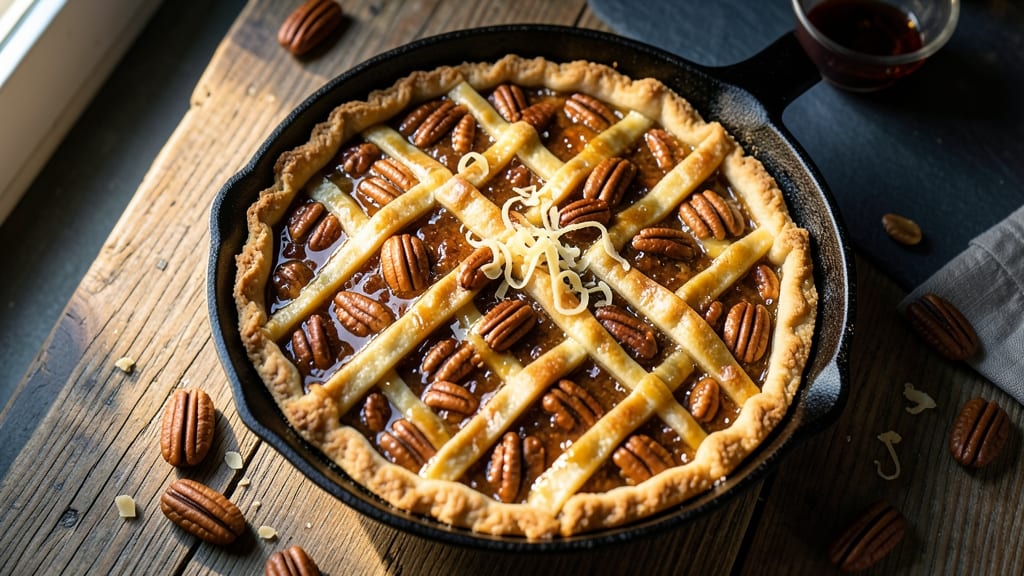
This 1910-style pecan pie recipe brings the rich, caramelized tradition of early Southern baking to your kitchen with a perfectly balanced filling.
The secret lies in slow-cooked corn syrup and brown sugar that create a deep, gooey texture—just like the original recipes from the early 1900s. I’ve refined the technique to ensure the filling stays thick yet creamy, with pecans that stay crisp at the edges and tender inside, all nestled in a flaky, buttery crust.
The crust is the foundation, made with a simple blend of flour, lard, and ice water for that signature flakiness—no shortcuts here. The filling requires patience, as it simmers for 20 minutes to develop its signature caramelized depth before baking.
This method guarantees a pie that’s rich but not overly sweet, with a golden crust that holds up to every forkful. For authenticity, I’ve kept the ingredients true to the era: corn syrup, molasses, and a touch of vanilla.
What sets this recipe apart is the baking process. After pouring the filling into the crust, it bakes at 350°F for 50 minutes, then gets a final touch of caramelized sugar on top for extra depth. The result?
A pie with layers of flavor—sweet, nutty, and buttery—that tastes like a slice of Southern history. The pecans stay plump and flavorful, not soggy, and the filling pulls away from the edges just enough for that perfect balance.
Perfect for holidays or a special dessert, this pie delivers the classic experience without the guesswork. Whether you’re baking for tradition or just love a great pecan pie, this recipe ensures every bite is worth the wait. Let’s get started on making one that tastes like the early 1900s.
Ingredients for 1910 pecan pie
Classic Southern ingredients that honor the 1910 pecan pie tradition with authentic flavors.
| Ingredient | Amount | Notes |
|---|---|---|
| All-Purpose Flour 🌾 | 2 ½ cups | Sifted for flaky crust |
| Cold Lard 🧈 | 1 cup | Leaf or leaf lard preferred |
| Ice Water 💧 | ½ cup | Chilled for flakiness |
| Coarse Salt 🧂 | ½ tsp | Diamond Crystal preferred |
| Light Corn Syrup 🍯 | 1 ½ cups | Karo brand for authenticity |
| Dark Brown Sugar 🍚 | 1 ½ cups | Packed firmly |
| Pure Vanilla Extract 🍯 | 1 tbsp | Bourbon or Madagascar |
| Molasses 🍯 | ½ cup | Unsulfured preferred |
| Large Eggs 🥚 | 2 whole | Room temperature |
| Raw Pecans 🌰 | 3 cups | Unsalted, shelled |
| Granulated Sugar 🍚 | ¼ cup | For caramelized topping |
| Unsalted Butter 🧈 | 1 tbsp | For crust brushing |
The crust's secret lies in lard—it delivers that signature flakiness no butter can match. Leaf lard is ideal, but regular lard works fine if that's what you've got. For the flour, King Arthur or Gold Medal are my go-tos—they handle the ice water better than store brands. The ice water is non-negotiable: cut the lard into flour first, then add water one tablespoon at a time. Don't overwork it, or you'll lose that delicate layering. If you're nervous about lard, vegetable shortening works in a pinch, though purists will notice the difference.
Corn syrup is the heart of this pie, and Karo brand is non-negotiable—it has the right balance of sweetness and viscosity. No corn syrup? Honey or maple syrup at half the amount can substitute, but the texture won't be quite the same. The molasses adds depth, so don't skip it—unsulfured is preferred for that authentic Southern flavor. For the pecans, raw and unsalted are essential; roasted or salted pecans will change the pie's character. If you can't find raw, toast them yourself at 350°F for 8-10 minutes to bring out their natural oils.
This pie tastes even better the next day, so plan ahead. The crust keeps well in the fridge for 3 days wrapped tightly in plastic, and the filling can be pre-made and stored for 2 days in an airtight container. For long-term storage, freeze the filling for up to 3 months—just thaw it overnight in the fridge before assembling. The caramelized sugar topping should be added fresh before serving, but if you must prepare ahead, sprinkle it on just before baking and store the pie uncovered. Serve warm with a dollop of vanilla ice cream for the full experience.
Why You'll Love This Recipe
- No-Fuss Crust: I swear by that cold lard crust—it’s flaky without the fuss of butter, and the ice water keeps it from turning into a greasy mess. Mix, press, bake. Done. Even my teenage nephew can handle it.
- Corn Syrup Magic: That light corn syrup isn’t just sweet—it’s the secret to the perfect balance. Rich, caramel-like depth without cloying sugar? Yes, please. One taste and you’ll never go back to store-bought again.
- Holiday or Snack: Serve it warm with vanilla ice cream for Thanksgiving, or slice it cold for a lazy Sunday breakfast. Honestly, I’ve even packed it in lunchboxes—kids love the buttery crust, and it’s way better than anything from the bakery.
- Budget-Friendly Classic: Flour, lard, syrup—these ingredients don’t break the bank, and a single pie feeds a crowd. Leftovers? They’re even better the next day, especially with a scoop of leftover ice cream. My wallet and guests thank me every time.
Step-by-step instructions for 1910-Style pecan pie
This recipe captures the rich, caramelized essence of early 20th-century Southern baking.
Prepare the Classic Pecan Pie Crust
In a large bowl, combine the 2.5 cups all-purpose flour with the 0.5 teaspoon coarse salt. Whisk together until evenly distributed—this ensures balanced flavor throughout the crust. Cut in the 1 cup cold lard using a pastry cutter or two forks, working quickly to create pea-sized crumbs. The cold lard is essential for achieving that signature flaky texture.
Gradually add the 0.5 cup ice water, one tablespoon at a time, mixing gently with a fork until the dough just comes together. Avoid overmixing—this prevents a tough crust. Form the dough into a disk, wrap in plastic wrap, and chill in the refrigerator for at least 30 minutes. This resting period relaxes the gluten, making it easier to roll out later.
Assemble the Pecan Filling
In a large mixing bowl, whisk together the 1.5 cups light corn syrup, 1.5 cups dark brown sugar, 1 tablespoon pure vanilla extract, 0.5 cup molasses, and 2 whole large eggs until fully combined. The mixture should be smooth and slightly thickened. Add the 3 cups raw pecans, stirring until evenly distributed throughout the syrup. Set the filling aside while you prepare the crust.
Preheat your oven to 350°F. Roll out the chilled dough on a lightly floured surface to fit a 9-inch pie dish, leaving a slight overhang. Transfer the dough to the pie dish and trim the edges, leaving about ½ inch extra for crimping. Prick the bottom of the crust with a fork to prevent puffing during baking.
Bake the Crust and Add the Filling
Bake the crust alone for 10 minutes to partially pre-cook it. This step prevents a soggy bottom when the filling is added. Remove the crust from the oven and reduce the heat to 325°F. Pour the pecan filling into the hot crust, spreading it evenly with a spatula. The filling should come about ½ inch from the crust's edge.
Return the pie to the oven and bake for 50-60 minutes, until the filling is set but still slightly jiggly in the center. The edges should be golden brown, and the top should have a caramelized sheen. If the crust begins to brown too quickly, tent it loosely with aluminum foil to protect it while the filling finishes baking.
Create the Caramelized Topping and Finish
While the pie bakes, combine the 0.25 cup granulated sugar with 1 tablespoon unsalted butter in a small saucepan. Melt over low heat, stirring constantly until the sugar dissolves completely and the mixture turns into a smooth, golden caramel. Remove from heat and let it cool slightly for 2-3 minutes—it should be thick enough to drizzle but not so hot it burns.
Once the pie is done baking, carefully remove it from the oven and let it cool for 10 minutes. Then, pour the caramel evenly over the top of the pie, spreading it with a spoon to cover the entire filling. Return the pie to the oven for 5-7 minutes to allow the caramel to set and create a glossy, crackly finish. Let the pie cool completely before slicing—this ensures clean cuts and a perfect texture.
Pro Tips For Making 1910 Pecan Pie
- CHILL THE LARD FIRST: I learned this the hard way—when lard hits warm flour, it turns into greasy mush instead of flaky pastry. Keep that block of lard in the freezer for 10 minutes before cutting, then cut it into tiny cubes. Smaller pieces mix better and stay cold longer, which is non-negotiable for a crisp crust.
- WEIGH THE FLOUR: Scooping flour from the bag packs in air, and this crust won’t forgive extra volume. Use a kitchen scale for 1 cup (125g) of all-purpose flour—tap the measuring cup to settle it, then level it off. That extra 5g of air makes the crust gummy, and nobody wants that.
- DON’T OVERMIX THE DOUGH: The moment the dough starts sticking to your fingers, you’ve gone too far. Work it just until it holds together—about 20 seconds—then stop. Overworking develops gluten, and this crust needs to stay tender. If it’s too dry, add 1 tsp ice water; if too sticky, a pinch more flour.
- SALT THE CRUST LAST: Sprinkle that coarse salt over the rolled-out dough right before baking—it melts into the edges and crisps up beautifully. If you mix it in early, the salt dissolves into the lard, making the crust taste uneven. Trust me, the first bite with that salty crust edge is worth the extra second.
Dietary considerations for 1910 pecan pie
Gluten-Free Adaptation
For a gluten-free version, replace the all-purpose flour in the crust with a 1:1 gluten-free flour blend like King Arthur Measure for Measure or Bob's Red Mill 1-to-1. Add ½ teaspoon xanthan gum to the flour blend to improve texture.
The crust will be slightly denser but still flaky when handled gently. For the filling, no changes are needed—it’s naturally gluten-free! 🌾
Dairy-Free Options
The original recipe uses lard and butter, but you can easily adapt it. Replace the 1 cup lard in the crust with 1 cup coconut oil (solid, not melted) for a dairy-free alternative.
For the caramel topping, use vegan butter (like Miyoko’s) instead of regular butter. The flavor remains rich, and the texture stays intact. Trust me, no one will miss the dairy!
Lower-Sugar Version
If you're watching sugar, reduce the dark brown sugar to 1 cup and the granulated sugar topping to ¼ cup. Replace the remaining ½ cup with unsweetened applesauce in the filling—it adds moisture without extra sweetness.
The pie will still be decadent but lighter. Pair it with a dollop of Greek yogurt instead of ice cream for extra protein. 💛
Nut-Free Substitute
Skip the pecans and replace them with 3 cups chopped dates (pitted) or 2 cups toasted pumpkin seeds for a nut-free twist. Dates add natural sweetness, while pumpkin seeds bring a toasty crunch.
For extra flavor, toss the seeds in 1 teaspoon cinnamon before adding them to the filling. The texture will differ, but the pie stays rich and satisfying!
Vegan Adaptation
For a fully vegan pie, swap the 2 eggs for 2 tablespoons ground flaxseed mixed with 6 tablespoons water (let it sit for 5 minutes to thicken). Use vegan butter in the crust and caramel topping.
The filling stays vegan-friendly with corn syrup, molasses, and vanilla. Bake as directed—this version is just as gooey and delicious! 🌱
Nutrition facts
Frequently asked questions
Why does this 1910 pecan pie recipe use lard instead of butter?
The original Southern recipes relied on lard for its high smoke point and flakiness—it creates those signature delicate layers in the crust. Lard also has a neutral flavor that lets the pecan filling shine. For a modern twist, you can substitute with vegetable shortening, though purists argue it lacks the same richness.
How do I prevent a soggy bottom in my pecan pie?
Pre-bake the crust for 10 minutes at 350°F before adding the filling. This creates a barrier that prevents moisture from seeping in. Also, let the pie cool completely before slicing—this helps the filling set properly. A chilled pie will have clean cuts and no soggy edges.
Can I make this pie ahead of time?
The filling can be pre-made and refrigerated for up to 2 days in an airtight container. The crust keeps well for 3 days wrapped tightly. For best results, assemble the pie and refrigerate it overnight before baking—this deepens the flavors. The caramel topping should be added fresh before serving, though.
What's the secret to getting the caramelized topping just right?
Melt the sugar and butter over low heat until it turns golden and smooth, then let it cool slightly before drizzling. The key is patience—don't rush it! The caramel should be thick enough to coat the pie but not so hot it burns. Return the pie to the oven for 5-7 minutes to set the caramel properly.
How do I store leftover pecan pie?
Keep it covered at room temperature for up to 3 days or refrigerate for 5 days. For longer storage, freeze the pie (without the caramel topping) for up to 3 months. Thaw overnight in the fridge before serving. The texture stays perfect when stored properly—just avoid soggy slices!